
Wi-Fi 8 White Paper: Redefining the Connected Experience: From Peak Speed to Deterministic Reliability
Chapter 1: Executive Summary
The evolution of Wi-Fi technology is reaching a historic turning point.
For the past two decades, each generational shift in Wi-Fi has revolved around one core metric: peak throughput. From 600 Mbps in Wi-Fi 4 to 46 Gbps in Wi-Fi 7, the relentless surge in numbers vastly expanded the boundaries of wireless networking. With the arrival of Wi-Fi 8 (IEEE 802.11bn), however, this speed race has paused for the first time—the maximum theoretical throughput of Wi-Fi 8 remains identical to Wi-Fi 7, at 46 Gbps.
This is not a stagnation of technological progress. It is a profound strategic shift. TP-Link believes that when physical speeds have already far exceeded the broadband ceiling of the vast majority of homes and enterprises, continuing to push extreme numbers in the lab has lost its practical significance. What users truly care about is whether every video call is smooth, whether every gaming session is lag-free, and whether every room has a stable signal with devices far from the router always connected.
Wi-Fi 8 therefore shifts the focus of innovation from Peak Throughput to Ultra High Reliability (UHR). This is the guiding principle behind Wi-Fi 8, emphasizing consistent, predictable, and stable network performance, even in the most demanding environments.
By introducing technologies such as Distributed Resource Unit (DRU), Enhanced Long Range (ELR), Multi-AP Coordination (MAPC), and Dynamic Power Save (DPS), Wi-Fi 8 is purpose-built to solve the most persistent network pain points in the real world:
- Coverage dead zones caused by physical barriers
- Congestion from massive device concurrency
- Latency spikes in demanding applications
- Inefficient power consumption in IoT ecosystems
As a world-leading provider of network devices, TP-Link has always stood at the forefront of Wi-Fi technology evolution. In October 2025, TP-Link completed the world's first Wi-Fi 8 connection; in January 2026, we delivered the world's first Wi-Fi 8 Live Demo at CES. Wi-Fi 8 is not merely a protocol upgrade—it is a decisive step toward home and enterprise networks that are intelligent, seamless, and significantly more reliable.
In the following chapters, we explore how Wi-Fi 8 redefines connectivity, the real-world challenges it addresses, and the technologies that make it possible.
Chapter 2: The Evolution of Wi-Fi — From "Speed Race" to "Deterministic Performance"
2.1 Twenty Years of Breaking Speed Records
Looking back at the history of Wi-Fi is looking at a history of constantly breaking the limits of physical speed. Every generational change has been accompanied by advances in modulation technology, expansion of channel bandwidth, and increases in spatial streams.
|
Generation |
Standard |
Max Theoretical Speed |
Key Innovation |
|
Wi-Fi 4 |
802.11n |
600 Mbps |
MIMO, 40 MHz channels |
|
Wi-Fi 5 |
802.11ac |
4.3 Gbps |
MU-MIMO (downlink), 80/160 MHz |
|
Wi-Fi 6 |
802.11ax |
9.6 Gbps |
OFDMA, BSS Coloring, TWT |
|
Wi-Fi 7 |
802.11be |
46 Gbps |
320 MHz, 4096-QAM, MLO |
|
Wi-Fi 8 |
802.11bn |
46 Gbps |
UHR: Coverage, Reliability, Efficiency |
As shown in the table, each Wi-Fi generation has brought significant leaps in speed except Wi-Fi 8, primarily driven by advances in modulation, bandwidth, and MIMO capabilities. These innovations were essential in meeting the growing demand for bandwidth-intensive applications—from HD streaming to cloud computing.
2.2 Why Does Wi-Fi 8 No Longer Chase Faster Speeds?
In the Wi-Fi 7 era, through 320 MHz bandwidth, 4096-Quadrature Amplitude Modulation (4096-QAM), and 8×8 Multiple-Input Multiple-Output (MIMO), the theoretical peak speed of the protocol reached an astonishing 46 Gbps. Yet the reality is that most smartphones and thin-and-light laptops—constrained by size and power consumption—only support up to 2×2 MIMO, capping their physical limit at around 5.8 Gbps. In fact, most internet plans available in the US are sub-10 Gbps, so higher throughput speeds only benefit intra-network connections.
This means that pushing the protocol ceiling further (to 46 Gbps, for example) delivers no tangible benefit to ordinary users' devices. What matters to users is a reliable 500 Mbps connection through two walls, not a theoretical 5.8 Gbps speed measured in a lab right beside the router—speeds that are rarely, if ever, achieved in real-world conditions.
2.3 Revolutionary Stability: The Core Mission of Wi-Fi 8
The official project name for Wi-Fi 8 (802.11bn) is UHR—Ultra High Reliability. Its core mission is to significantly improve real-world throughput in complex environments, reduce latency, enhance coverage, and optimize power efficiency, without increasing peak speed. The first batch of Wi-Fi 8 consumer products is expected to reach the market in 2026 or 2027.
Chapter 3: Industry Challenges — Network Pain Points in the Real World
Although Wi-Fi 7 is already highly capable, many pain points in real user environments remain unresolved. These challenges are precisely the driving force behind Wi-Fi 8.
1. Physical Barriers and Coverage Dead Zones
In multi-room apartments or multi-story villas, load-bearing walls and floors cause severe attenuation of high-frequency signals (5 GHz and 6 GHz). The limited uplink transmission power of mobile devices often becomes the bottleneck, resulting in the frustrating experience of "seeing the signal but unable to use the network."
2. Congestion from Surging Device Density
With the proliferation of smart home devices, an ordinary household now connects 30 or more Wi-Fi devices simultaneously; enterprise environments easily reach hundreds. Massive concurrent devices competing for channel resources cause network efficiency to drop sharply.
3. Latency Demands of Real-Time Apps
Cloud gaming, VR/AR, and HD video conferencing have near-zero tolerance for network jitter. Traditional Wi-Fi scheduling mechanisms are prone to occasional severe latency spikes. This experience of "good average latency but occasional stuttering" severely destroys immersion and productivity.
4. Signal Interference in Complex Environments
In apartment buildings, cafes, or high-density offices, neighboring routers and hotspots interfere with each other. Additionally, 5G cellular radios operating simultaneously inside a smartphone create severe in-device interference with Wi-Fi reception.
5. Power Consumption Pressure on IoT Devices
For battery-powered IoT devices such as smart door locks, sensors, and doorbells, frequent network wake-ups and retransmissions rapidly deplete power. Existing power-saving mechanisms still leave significant room for optimization.
Chapter 4: Wi-Fi 8 Core Technologies — A Closer Look
Wi-Fi 8's UHR mission is realized through seven interconnected technology directions. Each addresses a specific real-world pain point, working together to deliver a fundamentally more reliable and efficient wireless experience.
4.1 Enhanced Coverage
Core technologies: Distributed-Tone Resource Unit (DRU); Enhanced Long Range (ELR)
The Experience
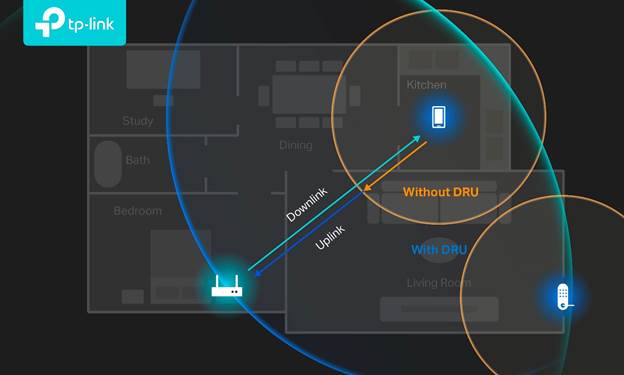
Tom keeps his router in the bedroom for convenience. Walking to the kitchen on a video call, his phone still shows three bars of signal—but the call lags and eventually drops. His smart doorbell near the front door can detect the Wi-Fi signal but struggles to stay connected.
Signals appear fine, but devices at the edges of the home simply don't work.
The Challenge
The coverage limitations of traditional Wi-Fi networks stem from two fundamental constraints:
- The Uplink Bottleneck.
- Signal degradation over distance.
Due to regulatory limits on power spectral density (PSD), especially in the 6 GHz band, and clients supporting much narrower bandwidth than access points, devices tend to transmit weaker uplink signals to their routers. This means while downlink communication from the router may be strong, small or low-power devices often bottleneck the overall coverage and performance.
Wi-Fi links also naturally degrade over distance due to signal attenuation, noise, and interference, making long-range connections increasingly unreliable.
The Solution
Wi-Fi 8 addresses these two challenges with complementary innovations.
• Distributed-Tone Resource Unit (DRU) overcomes PSD limits by spreading a device’s signal across a wider band. This effectively increases the total uplink transmit power available to a device, while still complying with regulations, making it easier for access points to receive signals at longer distances.
• Enhanced Long Range (ELR) strengthens each individual uplink by adding extra redundancy, spreading backup data packets for more resilience to noise and fading. Uplink packets are far more likely to be decoded successfully on the first attempt—even under weak signal conditions. This reduces retransmissions, stabilizes long-range links, and delivers a smoother experience for users and IoT devices operating at the edge of Wi-Fi coverage.
Together, DRU and ELR ensure that the last room in a large home and the smallest IoT sensor near the front door receive the same reliable connection as a device sitting next to the router.
4.2 Stabler Throughput
Core technologies: Unequal Modulation (UEQM); New Modulation and Coding Schemes (New MCS); Low Density Parity Check Code (LDPC) Enhancement
The Experience
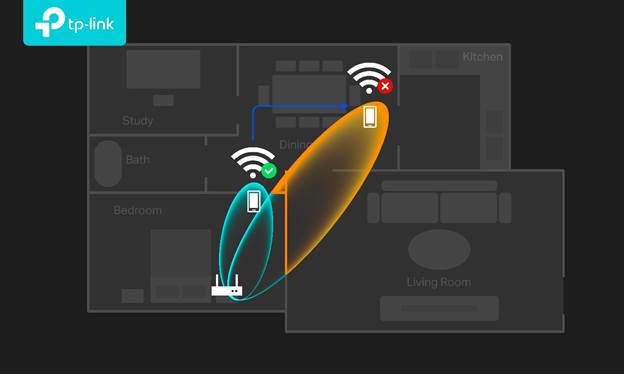
Steve walks through his apartment while downloading content. In one corner, moving slightly closer to the access point causes download throughput to jump significantly. Stepping just a small distance away, partially behind a wall, causes throughput to drop sharply—even though the signal indicator on his phone barely changes.
The Challenge
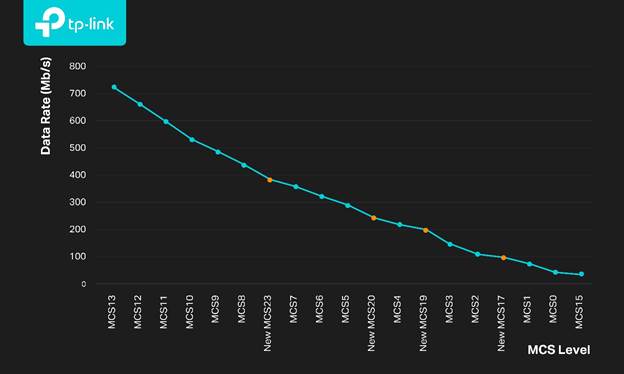
Wi-Fi adapts its transmission rate dynamically by selecting an appropriate Modulation and Coding Scheme (MCS) based on real-time channel conditions. However, available MCS levels are predefined and discrete—meaning a slight change in position can trigger a sudden switch to a much lower MCS, causing perceived data rates to drop sharply despite minimal movement. In a multi-antenna Wi-Fi system, individual spatial streams between the access point and a device can experience very different channel qualities due to reflections, obstructing walls, and multipath geometry. Some streams remain strong while others suffer severe attenuation—creating a Signal-to-Noise Ratio imbalance.*
Legacy Wi-Fi requires all spatial streams within a single transmission to use one common MCS, forcing the system to default to the weakest stream's capability.
* SNR (Signal-to-Noise Ratio) measures how strong a signal is compared to background noise. In real-world environments, signals bounce off walls and objects—a phenomenon called multipath—which can cause some Wi-Fi streams to be weaker than others.
The Solution
Unequal Modulation (UEQM) breaks this constraint by allowing different spatial streams within the same transmission to use different modulation schemes. Stronger streams operate with higher-order modulation, while weaker streams adopt more robust modulation, significantly improving overall spectral efficiency and eliminating the sharp throughput cliff caused by spatial-stream SNR imbalance.
New Modulation and Coding Schemes (New MCS) options in Wi-Fi 8 provide finer granularity between adjacent rate levels, enabling smoother rate adaptation and more stable throughput across a wide range of channel conditions—rather than the jarring step-changes of previous generations.
4.3 Multi-AP Coordination
Core technologies: Coordinated Beamforming (Co-BF); Coordinated Spatial Reuse (Co-SR); Coordinated Time-Division Multiple Access (Co-TDMA); Coordinated Restricted Target Wake Time (Co-RTWT); Coordinated Channel Recommendation (Co-CR)
The Experience
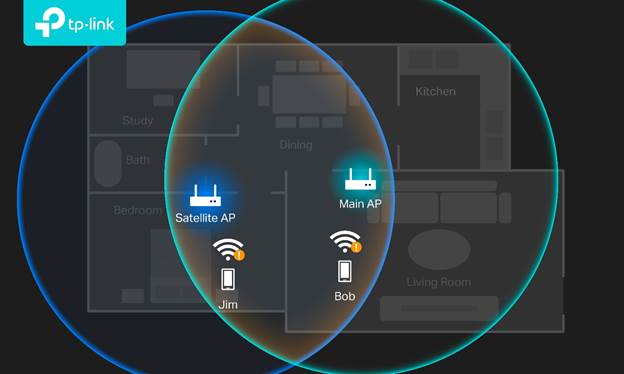
Jim and Bob are connected to different APs in the same house. Jim is streaming 4K video on the satellite AP in the bedroom, while Bob plays mobile games online on the main AP in the living room. Even though they’re connected to different APs, both run into lag.
The two APs are using overlapping channels without any awareness of each other.
The Challenge
As Wi-Fi networks expand to cover larger homes, offices, and public spaces, multiple access points are deployed to improve coverage and capacity. However, in today's Wi-Fi systems, these APs typically operate independently. While this increases signal availability, it also introduces inter-AP interference, inconsistent performance, and unpredictable user experience as devices move through the network.
The Solution
Wi-Fi 8 introduces a suite of Multi-AP Coordination (MAPC) mechanisms that transform a collection of independent APs into a unified, intelligent wireless system.
4.3.1 Coordinated Beamforming (Co-BF) Multiple APs exchange channel state information (CSI), working together to steer their signals more precisely. Each AP focuses on its own clients while leaving areas open for other APs to fill. The result: clearer connections and higher speeds for everyone.
4.3.2 Coordinated Spatial Reuse (Co-SR) APs calculate and estimate the minimum power required for reliable communication. By lowering power when they receive a transmission opportunity (TXOP), coordinated APs can transmit just far enough to avoid interference. This means more connections at the same time with steadier speeds and smoother networking, even with multiple APs.
4.3.3 Coordinated Time-Division Multiple Access (Co-TDMA) Rather than competing for channel access, coordinated APs can share TXOP resources. One AP can contend for a TXOP on behalf of itself and neighboring APs, then allocate unused transmission time to another AP. Multiple APs effectively behave as one during channel access—reducing contention overhead, improving channel utilization, and enabling more predictable performance in dense and latency-sensitive scenarios.
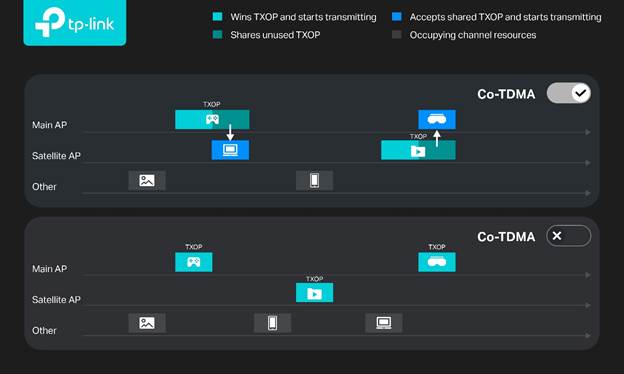
Figure 4.3.3: Legacy operation (bottom) shows APs competing independently for channel access. With Co-TDMA (top), an AP that wins a TXOP can share its unused transmission time with a neighboring AP, dramatically improving channel utilization.
4.3.4 Coordinated Restricted Target Wake Time (Co-RTWT) Multiple APs exchange TWT (Target Wake Time) scheduling information to coordinate restricted wake-up periods across overlapping networks. By aligning or separating TWT service periods, Co-RTWT reduces inter-AP interference during critical transmission windows and ensures that latency-sensitive or power-constrained devices communicate reliably when they wake up.
This is particularly beneficial for real-time gaming, voice, industrial control, and IoT devices requiring predictable latency and extended battery life.
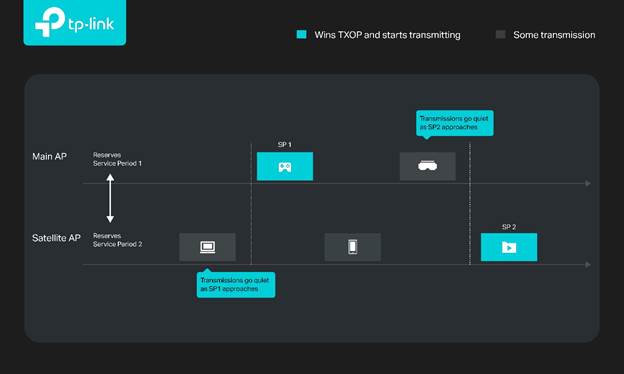
Figure 4.3.4: The Main AP and Satellite AP negotiate their respective Service Periods (SP1 and SP2), ensuring each AP's latency-sensitive transmissions occur in a protected window free from interference.
4.3.5 Coordinated Channel Recommendation (Co-CR) When two devices from different APs need to establish a peer-to-peer (P2P) connection, their respective APs may recommend different channels—complicating setup.
With Co-CR, neighboring APs coordinate their channel recommendations so that both devices are guided to a common channel. Co-CR also supports time-aware recommendations, highlighting channels that are particularly suitable during specific time windows when interference is lower, enhancing P2P connectivity and reducing channel selection overhead.
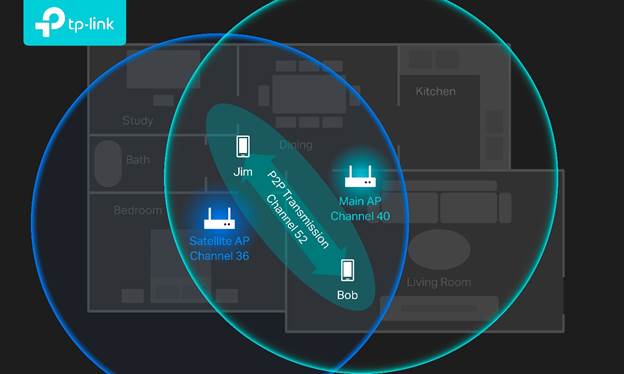
Figure 4.3.5: With Co-CR, Jim (connected to Satellite AP on channel 36) and Bob (connected to Main AP on channel 40) are both guided to channel 52 for direct P2P communication, eliminating the channel mismatch that would otherwise prevent the connection.
4.4 Smarter Spectrum Utilization
Core technologies: Non-Primary Channel Access (NPCA); Dynamic Sub-Band Operation (DSO); Dynamic Bandwidth Extension (DBE)
The Experience
Steve's Wi-Fi 7 router delivers impressive speed test results at midnight. But during the day, downloads slow down suddenly, video streams briefly buffer, and apps feel sluggish—despite the router's advanced capabilities.
The culprit is spectrum congestion from neighboring networks, which disappears late at night.
The Challenge
Even with a high-performance router, real-world performance often falls short of expectations during peak hours. Neighboring networks, overlapping channels, and partial interference frequently occupy portions of the available spectrum. Devices typically rely on a single primary channel and fixed bandwidth, so when that channel is busy, they must wait—even if other parts of the spectrum are available.

The Solution
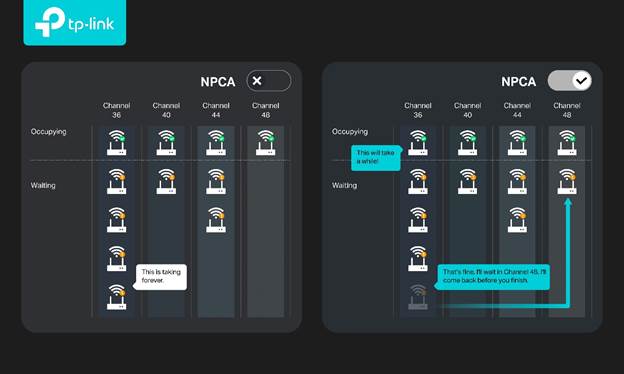
Wi-Fi 8 introduces three complementary spectrum-efficiency enhancements that allow the network to adapt flexibly to real-world conditions.4.4.1 Non-Primary Channel Access (NPCA) When a device observes that its primary channel will remain busy for an extended period, NPCA allows it to switch and attempt transmission on a pre-declared alternate channel—similar to moving to a backup queue rather than waiting indefinitely.
The AP returns to the primary channel before the announced occupation ends, ensuring legacy clients are unaffected.
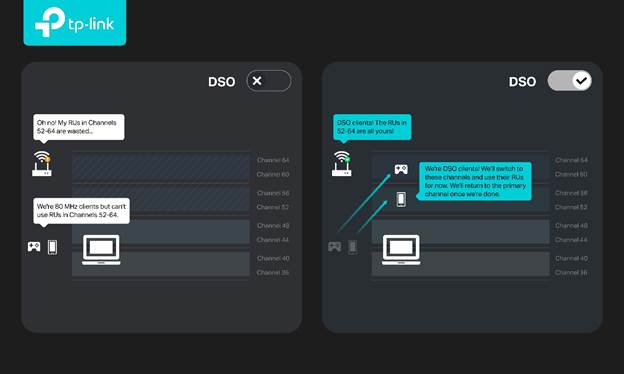
4.4.2 Dynamic Sub-Band Operation (DSO) DSO allows an AP to schedule clients on different portions of its available bandwidth.
For example, it can serve an 80 MHz client on a secondary part of a wider AP channel to avoid busy spectrum regions and share resources more efficiently. Like a traffic officer redirecting cars to a less congested lane, DSO reduces congestion and increases total system throughput.
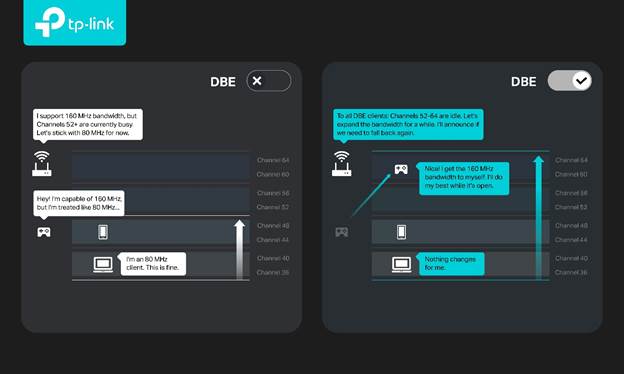
4.4.3 Dynamic Bandwidth Extension (DBE) When wireless conditions permit, DBE enables the access point to temporarily expand its operating bandwidth beyond the BSS bandwidth, giving capable devices access to additional spectrum.
When conditions change—rising interference or reduced availability—the AP seamlessly scales back to the original bandwidth without affecting legacy devices. Like an extra lane that opens when traffic allows and closes when it doesn't, DBE makes smart use of available spectrum.
Together, these technologies enable Wi-Fi 8 to steer around congestion, redistribute traffic dynamically, and take advantage of available spectrum whenever opportunities arise—delivering smoother performance and more stable speeds in environments where wireless spectrum is heavily shared.
4.5 Reliability, Low Latency, and QoS
Core technologies: Interference Mitigation (IM); Low-Latency Indication (LLI); Low Latency, Low Loss, Scalable Throughput (L4S); Prioritized Enhanced Distributed Channel Access (P-EDCA); In-Device Coexistence (IDC); BSR Enhancement; P2P
The Experience
Emily's router advertises high speeds, and her phone shows a strong signal. But during online games she notices sudden input lag; video calls freeze or their audio glitches; even smart home devices feel slow—especially when her roommate is downloading a large file.
These issues appear when multiple apps are active or when nearby networks are busy.
The Challenge
A strong Wi-Fi signal does not guarantee a smooth experience. Reliability and responsiveness are affected not just by signal strength but by interference, congestion, and how urgently different types of traffic are handled.
The Solution
First, Wi-Fi 8 enhances stability with Interference Mitigation (IM), helping signals remain more reliable even in crowded and noisy environments.
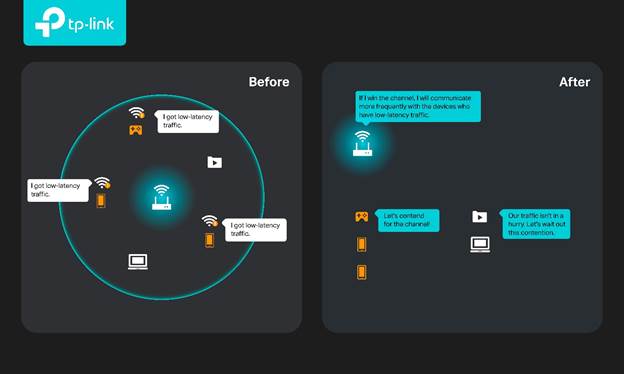
Building on this foundation, Wi-Fi 8 improves its Low-Latency Indication (LLI) capability, allowing devices to signal to the network when they need fast and timely delivery—such as for gaming, voice, or real-time apps. This works alongside Low Latency, Low Loss, Scalable Throughput (L4S), which enables end-to-end latency management across the network stack.
Wi-Fi 8 also introduces Prioritized Enhanced Distributed Channel Access (P-EDCA), which prioritizes latency-sensitive traffic when accessing the network. By letting these devices go first while others wait, it reduces wait time and eliminates sudden delays.
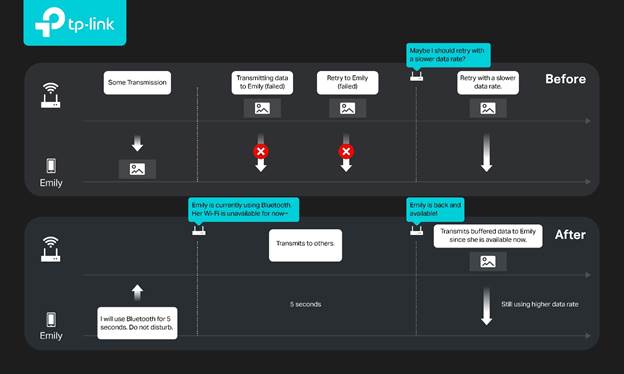
Additionally, Wi-Fi 8 addresses In-Device Coexistence (IDC). Smartphones simultaneously running Wi-Fi and 5G/Bluetooth can experience severe internal interference. Wi-Fi 8 lets devices indicate periods when they will be temporarily unavailable due to other wireless activities, so the network avoids unnecessary transmission attempts during these windows—reducing wasted effort and improving overall reliability.
The combined effect: gaming feels smooth even when the household network is busy; video calls stay clear; smart home commands respond instantly.
4.6 Seamless Mobility
Core technology: Seamless Mobility Domain (SMD)
The Experience
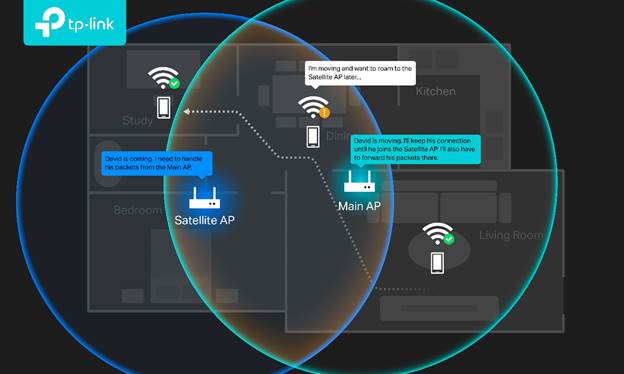
David is on a video call in the living room. He walks to the study to grab a document. As he crosses the dining room, the video freezes, audio drops for a second, and he must repeat himself. Wi-Fi coverage, however, is strong throughout the house.
The problem is the roaming handoff between APs.
The Challenge
In a multi-AP home or office network, the moment a device switches from one AP to another is often the moment the experience breaks down—not because of a lack of signal, but because of how the handoff is handled.
The Solution
In traditional Wi-Fi roaming, the transition is a "break-then-reconnect" process. When David's device decides to roam, it first disconnects from the original AP before establishing a new connection with the target AP. During this gap, buffered data packets—video and audio frames for the ongoing call—are dropped.
Wi-Fi 8 introduces a more coordinated approach based on the Seamless Mobility Domain (SMD). By allowing devices to connect to the new AP before disconnecting from the old one, Wi-Fi 8 ensures applications continue without interruption.
Furthermore, Wi-Fi 8 enables buffered data to be transferred as part of the roaming process rather than being discarded. By preserving and forwarding in-flight packets during the transition, applications such as video calls continue without visible disruption.
With Seamless Mobility, roaming becomes a silent, background process. Users stay connected, conversations stay smooth, and movement through the network feels effortless.
4.7 Power Efficiency
Core technology: Dynamic Power Save (DPS)
The Experience
Emma's smart wireless doorbell can transmit high-resolution video, but its battery drains every few days. The doorbell only needs to transmit video occasionally, yet it's consuming power as if it's always active.
The Challenge
Modern IoT devices face a fundamental tension: they must support high-bandwidth, high-quality transmissions when needed, yet spend most of their time idle. Traditional Wi-Fi designs keep devices in a high-capability operating state at all times to ensure responsiveness—consuming energy continuously even when no data needs to be sent.
The Solution
Wi-Fi 8 addresses this inefficiency with Dynamic Power Save (DPS), which allows devices to adjust their operating behavior based on actual needs. With DPS, a device like a smart doorbell can dynamically switch between:
• A higher-capability mode when high-resolution video transmission is required
• A lower-capability, energy-efficient mode during long idle periods—reducing radio activity, simplifying reception behavior, and spending more time in sleep states
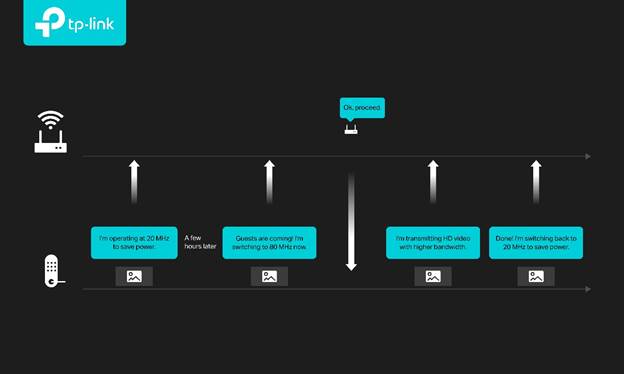
When an event occurs (e.g., motion detection or a live video request) the device quickly returns to the higher-capability mode without noticeable delay. By aligning power usage with real usage patterns, DPS enables IoT devices to achieve dramatically longer battery life.
For users like Emma, this means fewer interruptions for charging or maintenance, and a more practical and reliable smart home experience.
Chapter 5: Real User Scenarios — How Wi-Fi 8 Changes Lives
Scenario 1: Whole-Home Dead-Zone-Free Coverage in Complex Large-Layout Homes
Type of User
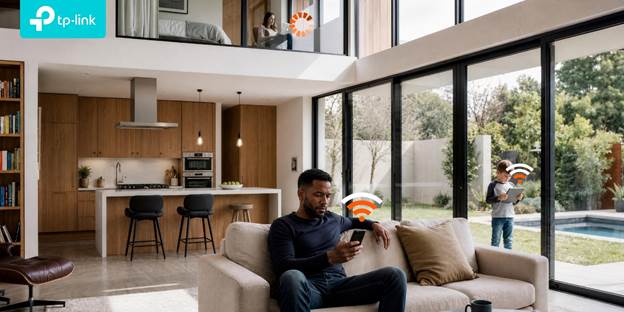
Families living in multi-room apartments or multi-story villas with complex structures—load-bearing walls, stair partitions, and edge areas far from the main router (e.g., master bedroom with ensuite, basement home theater, or outdoor garden).
Pain Points
Severe signal attenuation through walls; extremely slow uplink speeds in edge rooms (e.g., stuttering during video calls in the bedroom); network disconnection when walking between floors.
Wi-Fi 8 Solution
Through DRU and ELR technologies, Wi-Fi 8 breaks through physical barriers, significantly improving uplink speed and connection reliability in edge areas. Coupled with seamless roaming via SMD, it achieves whole-home, dead-zone-free coverage.
Outcome
Whether in the basement, on the top floor, or in the garden, users enjoy uninterrupted streaming, smooth video calls, and seamless device control.
Scenario 2: Bidding Farewell to "Fast Speed Test but Laggy Gaming"
Type of User
Hardcore gamers who are extremely sensitive to network latency and professionals working from home.
Pain Points
Speed tests look great, but severe frame drops still occur during gaming. When a smartphone runs 5G and Wi-Fi simultaneously, internal signals interfere with each other, causing stuttering.
Wi-Fi 8 Solution
P-EDCA and LLI/L4S technologies offer priority scheduling for gaming and video conferencing traffic to tackle occasional stuttering. The IDC mechanism solves the interference problem between 5G and Wi-Fi inside the smartphone, delivering an extremely smooth low-latency experience.
Outcome
Gamers enjoy uninterrupted gameplay, and professionals experience crystal-clear video calls—even in high-demand, multi-radio environments.

Scenario 3: Orderly Scheduling and Extreme Power Saving for Hundreds of Smart Home Devices
Type of User
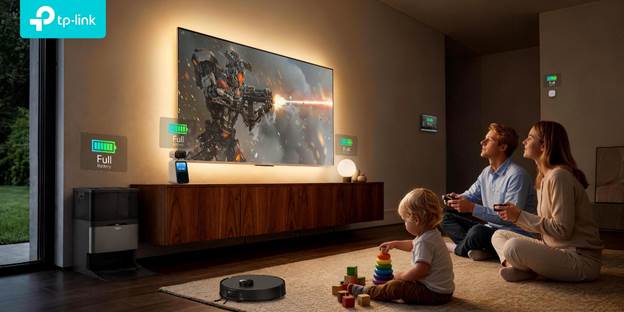
Smart home enthusiasts with dozens or even hundreds of IoT devices (e.g., smart lights, robot vacuums, thermostats, and sensors) deployed throughout their home.
Pain Points
Too many devices overwhelm the router, causing network congestion. Battery-powered sensors consume power too fast and require frequent battery replacement.
Wi-Fi 8 Solution
DPS and Co-RTWT technologies precisely schedule the sleep and wake cycles of dozens of IoT devices, significantly extending battery life while keeping the entire smart home ecosystem online in real time.
Outcome
Users enjoy a fully connected smart home with fewer battery replacements, less network congestion, and real-time responsiveness.
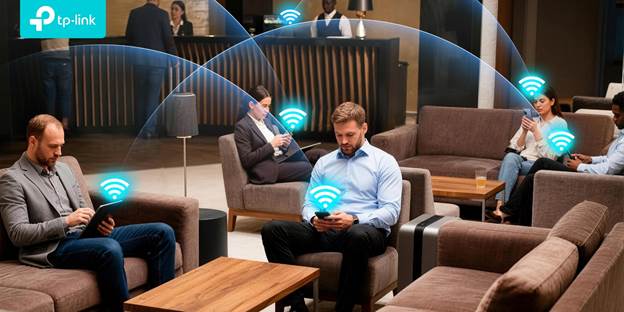
Scenario 4: Powerful Anti-Interference in Complex Public Environments
Type of User
Business professionals who frequently work on the go in airport lounges, high-speed rail stations, or crowded cafes.
Pain Points
Public spaces are saturated with hotspots and wireless signals. Interference is severe, resulting in highly unstable connections and slow page loading.
Wi-Fi 8 Solution
Through IM (Interference Mitigation) and NPCA technologies, Wi-Fi 8 actively identifies and avoids external interference sources, carving out a clean and stable channel for users in crowded wireless environments.
Outcome
Users experience faster load times, fewer dropouts, and reliable performance—even in the busiest public spaces.
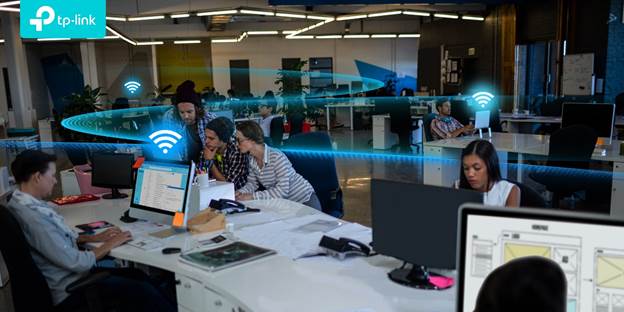
Scenario 5: Multi-AP Coordinated Scheduling in High-Density Enterprise Environments
Type of User
Enterprise employees working in open-plan offices or large conference rooms.
Pain Points
When dozens of people are meeting or working simultaneously, multiple APs interfere with each other, causing the overall network to degrade and collaborative software to become unusable.
Wi-Fi 8 Solution
MAPC technology transforms multiple competing APs into a uniformly scheduled intelligent network. Through coordinated spatial reuse (Co-SR) and coordinated beamforming (Co-BF), the network efficiency of high-density environments is multiplied.
Outcome
Teams enjoy faster, more stable connections, better collaboration, and zero network degradation—even during peak usage.
Chapter 6: TP-Link Perspective — Reshaping the Next-Generation Connection Experience
6.1 Real Experience Trumps Theoretical Data
The evolution of Wi-Fi should not be a parameter race. TP-Link's fundamental judgment on Wi-Fi 8 is this: what users truly care about is not the peak speed on the specification sheet, but whether every video call is smooth, whether every gaming session is lag-free, and whether every room has a stable signal.
When a router's speed test shows 1 Gbps, but games still lag and video conferences still freeze, that router has not fulfilled its mission. In TP-Link's view, Wi-Fi 8 is first and foremost a leap in reliability.
6.2 Keeping Every Corner Connected
Coverage and reliability are the highest priorities in TP-Link's product design. This judgment comes from a deep understanding of users' real pain points. In TP-Link's user research and product feedback, "unstable signal" and "no signal in certain areas" are consistently the most concentrated user complaints.
Wi-Fi 8 brings coverage-enhancement technologies—ELR and DRU—at the protocol level, giving us the first opportunity to approach wired-like stability in typical home conditions. We believe a truly good Wi-Fi product should make users completely forget that the network exists.
6.3 From Single Device to Intelligent Network Node
Over the past two decades, Wi-Fi's evolution has always centered on the single device. This logic was reasonable in the early days, but it overlooked a profound change taking place: homes are getting larger, and devices are multiplying.
Wi-Fi 8 marks a fundamental shift: each router is no longer an isolated signal transmitter, but a node in an intelligent network system. The coordination, perception, and scheduling between APs make the overall network capability far exceed the simple sum of its parts. This is TP-Link's core judgment on the next-generation home network, and it is the direction we invest most heavily in Wi-Fi 8 product design.
6.4 TP-Link's Leading Position in Wi-Fi 8
In October 2025, TP-Link completed the world's first Wi-Fi 8 connection, demonstrating multiple core Wi-Fi 8 capabilities including New MCS and UEQM. In January 2026, TP-Link delivered the world's first Wi-Fi 8 Live Demo at CES, showcasing the true capabilities of Wi-Fi 8 technology to global channel partners and media. This is not a marketing gesture—it is a public verification of technological maturity. As a key contributor to the IEEE 802.11bn standard, TP-Link continues to shape the future of Wi-Fi from the ground up.
TP-Link is committed to maintaining industry leadership at every key milestone of Wi-Fi 8 and translating that leadership into a product experience that users can genuinely feel.
6.5 Bringing the Best Technology to Every Home
TP-Link's mission has never been to serve only enthusiasts pursuing the extreme. Our planned Wi-Fi 8 product line—from flagship to entry-level—covers all user tiers and price ranges. We believe the true value of a new generation of Wi-Fi technology lies in its ability to benefit as many users as possible: allowing young people in city apartments, families in large suburban homes, and entrepreneurs in small offices to enjoy the real experience improvements of Wi-Fi 8 at a reasonable cost.
The democratization of technology is the product philosophy TP-Link has always upheld.
6.6 Sustainable Ecosystem and Green Design
TP-Link's understanding of Wi-Fi 8 extends beyond connection performance to the sustainability of the entire product ecosystem. At the protocol level, DPS and enhanced TWT mechanisms allow terminal devices to significantly reduce power consumption while maintaining connections.
At the product level, TP-Link's AI ecosystem enables routers to intelligently perceive network status and automatically optimize scheduling, reducing unnecessary energy consumption.
At the packaging level, we are continuously advancing the use of recyclable materials and reducing plastic usage. TP-Link believes that a good product must not only serve users well today but also support a more sustainable future.
6.7 Wi-Fi 8 Is Just the Beginning
TP-Link believes the value of Wi-Fi 8 will not stop at the protocol itself. AI-driven intelligent network scheduling allows routers to perceive network status in real time and make optimal decisions. Wi-Fi Sensing technology will make wireless signals a medium for perceiving the physical world.
TP-Link's goal is to make these technologies genuinely benefit users' daily lives—not remain confined to laboratory benchmarks. Wi-Fi 8 is the starting point of this journey, not the end.
Chapter 7: Future Outlook — Ecosystem Maturity and Technology Convergence
7.1 802.11bn Standardization and Commercial Timeline
The ecosystem maturity of Wi-Fi 8 is a gradual process. From the establishment of the IEEE 802.11bn Task Group in 2023, to the expected launch of the first batch of consumer-grade products in the second half of 2026, and then to comprehensive enterprise-market adoption in 2028, the entire industry chain is collaborating closely to realize the Ultra High Reliability vision.
|
Milestone |
Timeframe |
|
IEEE 802.11bn Task Group established |
2023 |
|
TP-Link world's first Wi-Fi 8 connection |
October 2025 |
|
TP-Link world's first Wi-Fi 8 Live Demo (CES) |
January 2026 |
|
First consumer Wi-Fi 8 products to market |
H2 2026 |
|
802.11bn standard finalized |
2026–2027 |
|
Wi-Fi 8 ecosystem broad adoption |
2027–2028 |
|
Enterprise and industrial market penetration |
2028+ |
7.2 Technology Convergence Trends
Looking ahead, Wi-Fi 8 will no longer be an isolated communication protocol. It will deeply converge with a variety of cutting-edge technologies:
Deep Integration of AI and Machine Learning: From underlying Channel State Information (CSI) analysis to upper-layer traffic scheduling, AI will comprehensively take over the optimization of Wi-Fi networks—making routers that learn, adapt, and self-optimize a reality for everyday users.
Popularization of Wi-Fi Sensing: Using the reflection of Wi-Fi signals to perceive environmental changes—personnel movement, fall detection, sleep monitoring—will become a standard feature of smart homes, turning the router into a silent guardian of the household.
Seamless Coordination with 5G/6G: In mobile office and industrial scenarios, Wi-Fi 8 will achieve deeper integration and seamless switching with cellular networks, ensuring users experience uninterrupted connectivity regardless of which radio technology is serving them at any given moment.
Chapter 8: Conclusion
From pursuing extreme speed to returning to the essence of reliability, Wi-Fi 8 has completed a meaningful transformation. It no longer competes on exaggerated numbers but is committed to providing rock-solid connections in every ordinary daily moment—an important remote meeting, a hearty gaming session, or a late-night smart home automation.
TP-Link will always stand with users, bringing the "deterministic performance" of Wi-Fi 8 into millions of homes with the most advanced technology and the most inclusive product philosophy.
About TP-Link
TP-Link is a global provider of reliable networking devices and smart home products, consistently ranked among the world’s leading Wi-Fi device providers. The company is committed to delivering innovative products that improve people’s connected lives through reliable performance, intelligent software, and user-focused design.
For more information, visit https://www.tp-link.com/us/