
How to Set Up OpenVPN on a TP-Link Router and Access Your Home Network Remotely
OpenVPN is a free, open-source virtual private network (VPN) protocol that creates a secure, encrypted connection between your remote device and your home network. In this setup, your TP-Link router acts as the OpenVPN Server, and your remote device connects to it using the OpenVPN client app. This page covers two scenarios for TP-Link OpenVPN setup: a single router in the home network, and a setup with two or more routers.
Key Takeaways
- OpenVPN allows you to securely access your home network from anywhere by turning your TP-Link router into a VPN server.
- The setup has two parts: configuring the OpenVPN Server on your router, and installing and configuring the OpenVPN client on your remote device.
- The page covers two network scenarios: a single-router setup, and a multi-router setup where port forwarding is also required.
- Before enabling the VPN Server, configure Dynamic DNS or assign a static IP address to the router's WAN port, and make sure your system time is synced.
- The first time you configure the OpenVPN Server, you must generate a certificate before enabling it.
In the OpenVPN connection, the home network can act as a server, and the remote device can access the server through the router which acts as an OpenVPN Server gateway. To use the VPN feature, you should enable OpenVPN Server on your router, and install and run VPN client software on the remote device. Please follow the steps below to set up an OpenVPN connection.
You may refer to the video first:
Senario 1: TP-Link OpenVPN Setup: Single Router
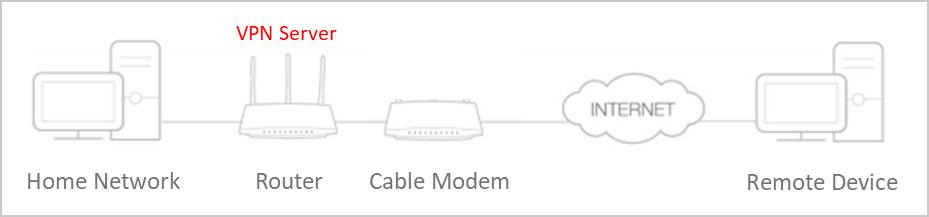
Step 1. Set up OpenVPN Server on Your Router
1. Log in to the web-based interface of the router by entering tplinkwifi.net in a browser‘s address box after connecting to the router. If you don’t know how to do that, please refer to
How do I log into the web-based Utility (Management Page) of TP-Link wireless router?
2. Go to Advanced > VPN Server > OpenVPN, and select Enable VPN Server.
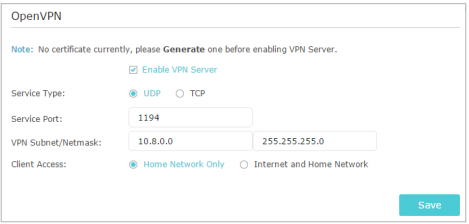
Notes:
- Before you enable VPN Server,configure Dynamic DNS (recommended) or assign a static IP address for the router's WAN port, and sync your system time with the internet.
- For the CG-NAT ISP: Comporium and Direct link - radio service, provide the customer a private IP, that will cause you can’t use the OpenVPN and affect the NAT Type. You can contact the ISP and ask them to offer a Statis IP address.
- The first time you configure the OpenVPN Server, generate a certificate before enabling it.
3. Select the Service Type (communication protocol) for OpenVPN Server: UDP, TCP.
4. Enter a VPN Service Port to which a VPN device connects, and the port number should be between 1024 and 65535.
5. In the VPN Subnet/Netmask fields, enter the range of IP addresses that can be leased to the device by the OpenVPN server.
6. Select your Client Access type. Select Home Network Only if you only want the remote device to access your home network; select Internet and Home Network if you also want the remote device to access internet through the VPN Server.
7. Click Save.
8. Click Generate to get a new certificate.

Note: If you have already generated one, please skip this step, or click Generate to update the certificate.
9. Click Export to save the OpenVPN configuration file which will be used by the remote device to access your router.

Alt: Configuration File section of the OpenVPN settings page with an Export button
Step 2. Configure OpenVPN Connection on Your Remote Device
1. Visit http://openvpn.net/index.php/download/community-downloads.html to download the OpenVPN software, and install it on your device where you want to run the OpenVPN client utility.
Note: You need to install the OpenVPN client utility on each device that you plan to apply the VPN function to access your router. Mobile devices should download a third-party app from Google Play or Apple App Store.
2. After the installation, copy the file exported from your router to the OpenVPN client utility’s “config” folder (for example, C:\Program Files\OpenVPN\config on Windows). The path depends on where the OpenVPN client utility is installed.
3. Run the OpenVPN client utility and connect it to OpenVPN Server.
Senario 2: TP-Link OpenVPN Setup: Two or More Routers
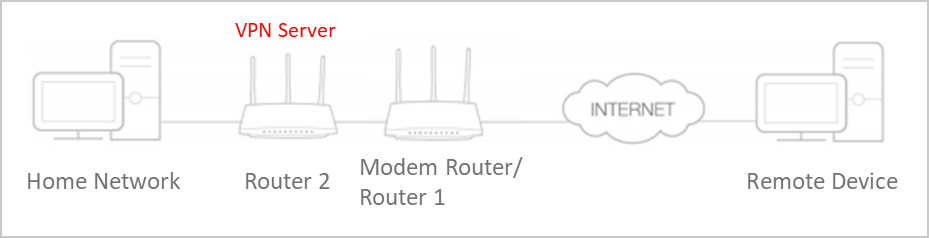
Step 1. Set up OpenVPN Server on Your Router
1. Log in to the web-based interface of the router by entering tplinkwifi.net in a browser‘s address box after connecting to the router. If you need help with this, refer to
How to Log In to Your TP-Link Router
2. Go to Advanced > VPN Server > OpenVPN, and select Enable VPN Server.
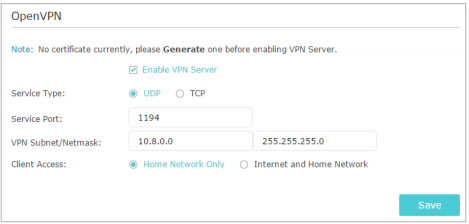
Notes:
- Before you enable VPN Server, we recommend you configure Dynamic DNS Service (recommended) or assign a static IP address for the router's WAN port and synchronize your System Time with the internet.
- The first time you configure the OpenVPN Server, you may need to Generate a certificate before you enable the VPN Server.
3. Select the Service Type (communication protocol) for OpenVPN Server: UDP, TCP.
4. Enter a VPN Service Port to which a VPN device connects, and the port number should be between 1024 and 65535. Write down the Service Port.
5. In the VPN Subnet/Netmask fields, enter the range of IP addresses that can be leased to the device by the OpenVPN server.
6. Select your Client Access type. Select Home Network Only if you only want the remote device to access your home network; select Internet and Home Network if you also want the remote device to access the internet through the VPN Server.
7. Click Save.
8. Click Generate to get a new certificate.

Note: If you have already generated one, please skip this step, or click Generate to update the certificate.
9. Click Export to save the OpenVPN configuration file which will be used by the remote device to access your router.

10. Set up Virtual Server/Port Forwarding for Router 2 on Modem Router/Router 1, please refer to
How to Set Up Port Forwarding on the TP-Link Wi-Fi Router
Notes:
- Make sure the Internal Port matches the VPN Service Port you wrote down.
- Write down the External Port.
11. Go to the Management Interface of the Modem Router/Router1, and write down the WAN IP address.
12. Right-Click the OpenVPN configuration file, open it with the Notepad.
Please modify the following two characters:
- Modify the remote address to the WAN IP address of the Modem Router/Router1 you wrote down in Step 11.
- Modify the Port number to External Port you set for the Router2 in Step 10.
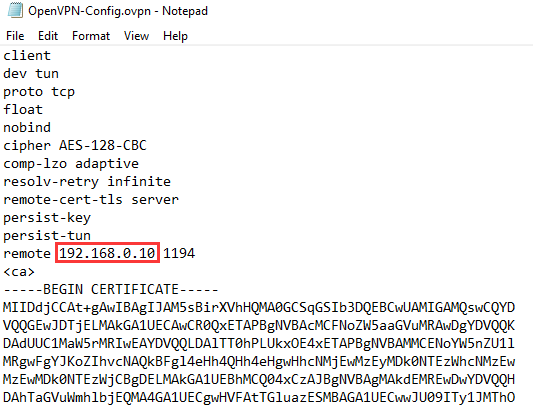
13.Save the OpenVPN configuration file.
Step 2. Configure OpenVPN Connection on Your Remote Device
1. Download and install the OpenVPN software on each device you want to use as a VPN client.
Note: You need to install the OpenVPN client utility on each device that you plan to apply the VPN function to access your router. Mobile devices should download a third-party app from Google Play or Apple App Store.
2. After the installation, copy the file exported from your router to the OpenVPN client utility’s “config” folder (for example, C:\Program Files\OpenVPN\config on Windows). The path depends on where the OpenVPN client utility is installed.
3. Run the OpenVPN client utility and connect it to OpenVPN Server.
Get to know more details of each function and configuration please go to the Download Center to download the manual of your product.
Looking For More
Is this faq useful?
Your feedback helps improve this site.
1.0_normal_20210812031127k.png)



TP-Link Community
Still need help? Search for answers, ask questions, and get help from TP-Link experts and other users around the world.