
How to set up Deco/Router with Sky broadband (UK)
 53655
53655Sky Broadband connections include FTTP and FTTC connections, configurations on the Deco/Router vary depending on the connections available at your home.
If you are a FTTP or full fibre customer, it’s likely you’ll have an Openreach modem (or ONT) installed inside your house and a Wi-Fi hub (Wi-Fi router) provided by Sky. You can connect the Deco to Sky hub.
Fiber optic---Openreach modem---Ethernet cable---sky hub--- Ethernet cable ---Deco

Firstly you may simplify connect Deco to the Ethernet port of the sky Hub with an Ethernet cable and follow the in-app instructions.
At the step where to enter your internet connection type and VLAN ID, Please select “Dynamic IP” and turn “IPTV/VLAN Settings” off.

You will have double NAT in the network this way. If you’d like to avoid double NAT, you can then set up the Deco into AP mode, while you may note that you will lose some advanced features of Deco if Deco works in AP mode. To know the difference between Router mode and AP mode of Deco, please click here.
Once completed, it’s suggested to disable the Wi-Fi of the Sky Hub to reduce interference to the Deco’s wireless network. You may refer to the steps below:
- Make sure you're connected to your sky hub’s network
- Open your browser and type 192.168.0.1 into your address bar.
- When prompted enter the following:
- Username: admin
- Password: sky or, your Wi-Fi password (case sensitive)
- Once logged in, go to Wireless and disable the wireless signal of the hub.
Note: The steps above refer to most Sky Hubs, but if you find yourself stuck while turning off the wireless signal, our advice is to reach out to the Sky support team.
If you are an FTTC customer you will most likely be provided with a Sky Hub (DSL Modem Router). It is recommended to use Deco with Sky hub in preference, or you can use Deco X20-DSL, Deco X50-DSL or Deco X73-DSL to replace your Sky Hub.

Sky do not have the option to put their hubs in Bridge mode, you can simplify connect Deco to the Ethernet port of the Sky hub with an Ethernet cable and follow the in-app instruction.
At the step where to enter your internet connection type and VLAN ID, Please select “Dynamic IP” and turn “IPTV/VLAN Settings” off.
You will have double NAT in the network this way. If you’d like to avoid double NAT, you can then set up Deco into AP mode, while you may note that you will lose some advanced features of Deco if Deco works in AP mode. To know the difference between Router mode and AP mode of Deco, please click this link.
Once completed, it’s suggested to disable the Wi-Fi of the Sky Hub to reduce interference to the Deco’s wireless network. You may refer to the steps below:
- Make sure you're connected to your sky hub’s network
- Open your browser and type 192.168.0.1 into your address bar.
- When prompted enter the following:
- Username: admin
- Password: sky or, your WIFI password (case sensitive)
- Once logged in, go to Wireless and disable the wireless signal of the hub.
Note: The steps above refer to most Sky Hubs, but if you find yourself stuck while turning off the wireless signal, our advice is to reach out to the Sky support team.

Sky use MER (MAC Encapsulation Routing) (IPoE/Dynamic IP) to authenticate the hardware as well as CHAP credentials. You will firstly need to reach out Sky to get your MER username and password, and VLAN ID.
And then please connect the landline/telephone line to Deco’s DSL port, and then follow the in app instruction.
At the step where asks “how do you want to use your Product?” Please select “Use as a DSL modem Router”.
At the step where to “Choose your current region and ISP”, select “Sky (MER) _VDSL”.
At the step where to enter your internet connection type and VLAN ID. Please select “Dynamic IP”, and enter your MER Username and Password provided by Sky, the VLAN ID as 101.
- Internet connection Type= Dynamic IP
- Username: reach out to sky to get one or try to enter “abcdefgh@skydsl”
- Password: reach out to sky to get one or try to enter “1234567890abcdef”
- VLAN ID: 101


If you are a FTTP or full fibre customer, it’s likely you’ll have an Openreach modem (or ONT) installed inside your house and a Wi-Fi hub (Wi-Fi router) provided by Sky. You can connect the TP-Link router to Sky hub.
Fiber optic---Openreach modem---Ethernet cable---sky hub--- Ethernet cable --- TP-Link router
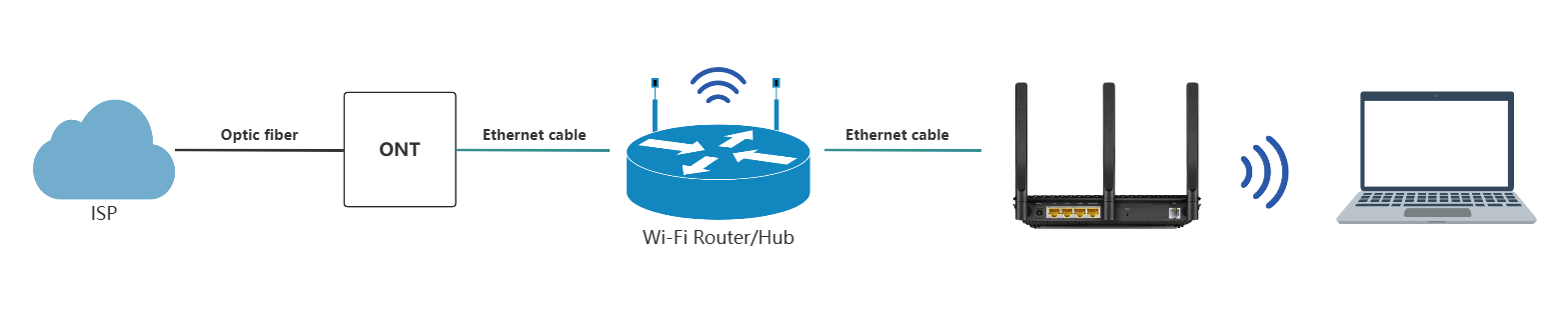
Firstly you may simplify connect Router to the Ethernet port of the sky Hub with an Ethernet cable and follow the instruction.
At the step where to select connection type, please select Dynamic IP.
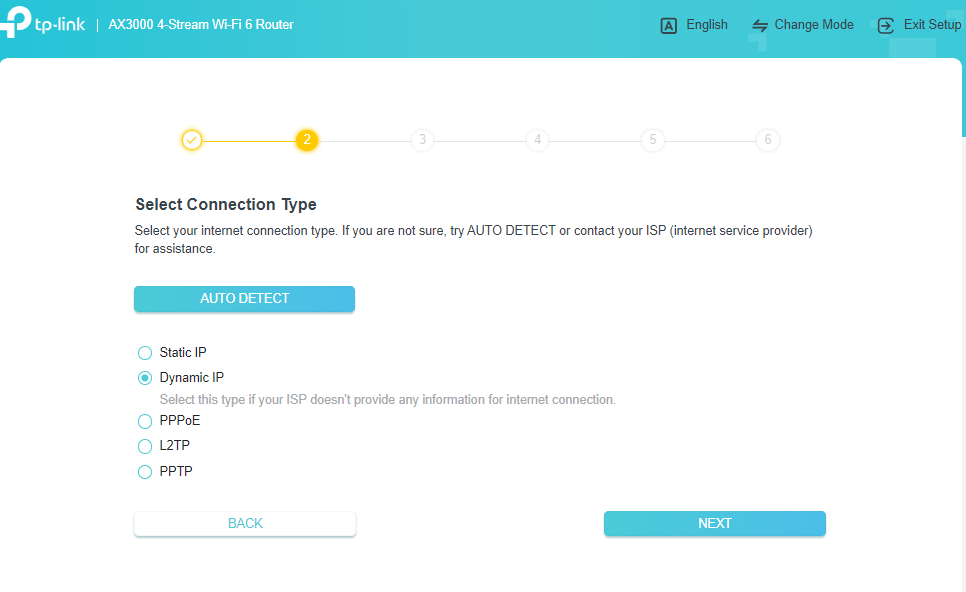
You will have double NAT in the network this way. If you’d like to avoid double NAT, you can then set up the Router in AP mode, while you may note that you will lose some advanced features of TP-Link router if router works in AP mode. To know the difference between Router mode and AP mode of Router, please click here.
Once completed, it’s suggested to disable the Wi-Fi of the Sky Hub to reduce interference to the TP-Link router’s wireless network. You may refer to the steps below:
Step 1. Make sure you're connected to your sky hub’s network
Step 2. Open your browser and type 192.168.0.1 into your address bar.
- When prompted enter the following:
- Username: admin
- Password: sky or, your Wi-Fi password (case sensitive)
Step 3. Once logged in, go to Wireless and disable the wireless signal of the hub.
Note: The steps above refer to most Sky Hubs, but if you find yourself stuck while turning off the wireless signal, our advice is to reach out to the Sky support team.
If you are an FTTC customer you will most likely be provided with a Sky Hub (DSL Modem Router). It is recommended to use router with Sky hub in preference, or you can use Archer VX1800v, Archer VR400, Archer VR2100 or other TP-Link DSL modem router to replace your Sky Hub.

Sky do not have the option to put their hubs in Bridge mode, you can simplify connect TP-Link router to the Ethernet port of the Sky hub with an Ethernet cable and follow the instructions.
At the step where to enter the Internet connection type, please select Dynamic IP.
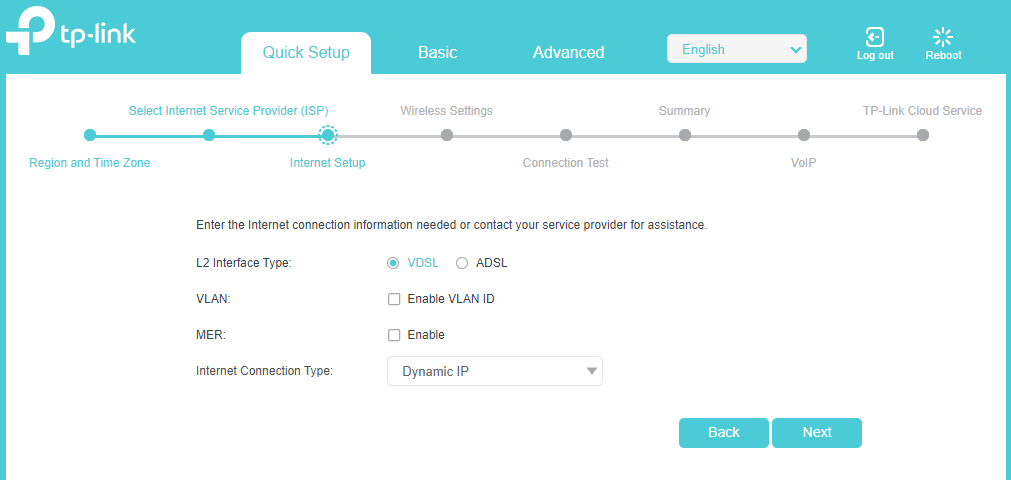
You will have double NAT in the network this way. If you’d like to avoid double NAT, you can then set up the Router into AP mode, while you may note that you will lose some advanced features of TP-Link router if router works in AP mode. To know the difference between Router mode and AP mode of Router, please click this link.
Once completed, it’s suggested to disable the Wi-Fi of the Sky Hub to reduce interference to the TP-Link router’s wireless network. You may refer to the steps below:
Step 1. Make sure you're connected to your sky hub’s network
Step 2. Open your browser and type 192.168.0.1 into your address bar.
- When prompted enter the following:
- Username: admin
- Password: sky or, your WIFI password (case sensitive)
Step 3. Once logged in, go to Wireless and disable the wireless signal of the hub.
Note: The steps above refer to most Sky Hubs, but if you find yourself stuck while turning off the wireless signal, our advice is to reach out to the Sky support team.
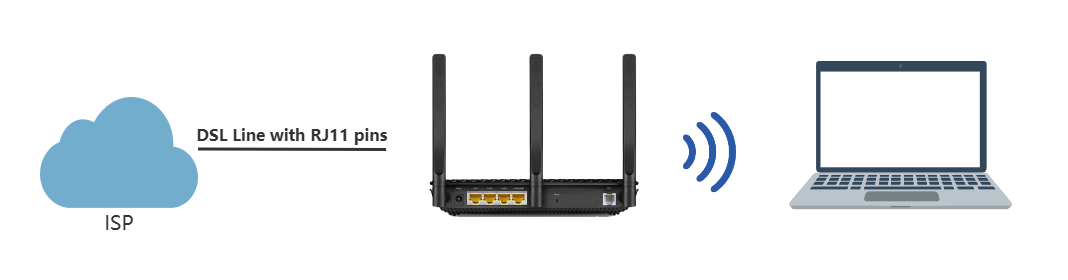
Sky use MER (MAC Encapsulation Routing) (IPoE/Dynamic IP) to authenticate the hardware as well as CHAP credentials. You will firstly need to reach out Sky to get your MER username and password, and VLAN ID.
And then please connect the landline/telephone line to Router’s DSL port, and then follow the instructions.
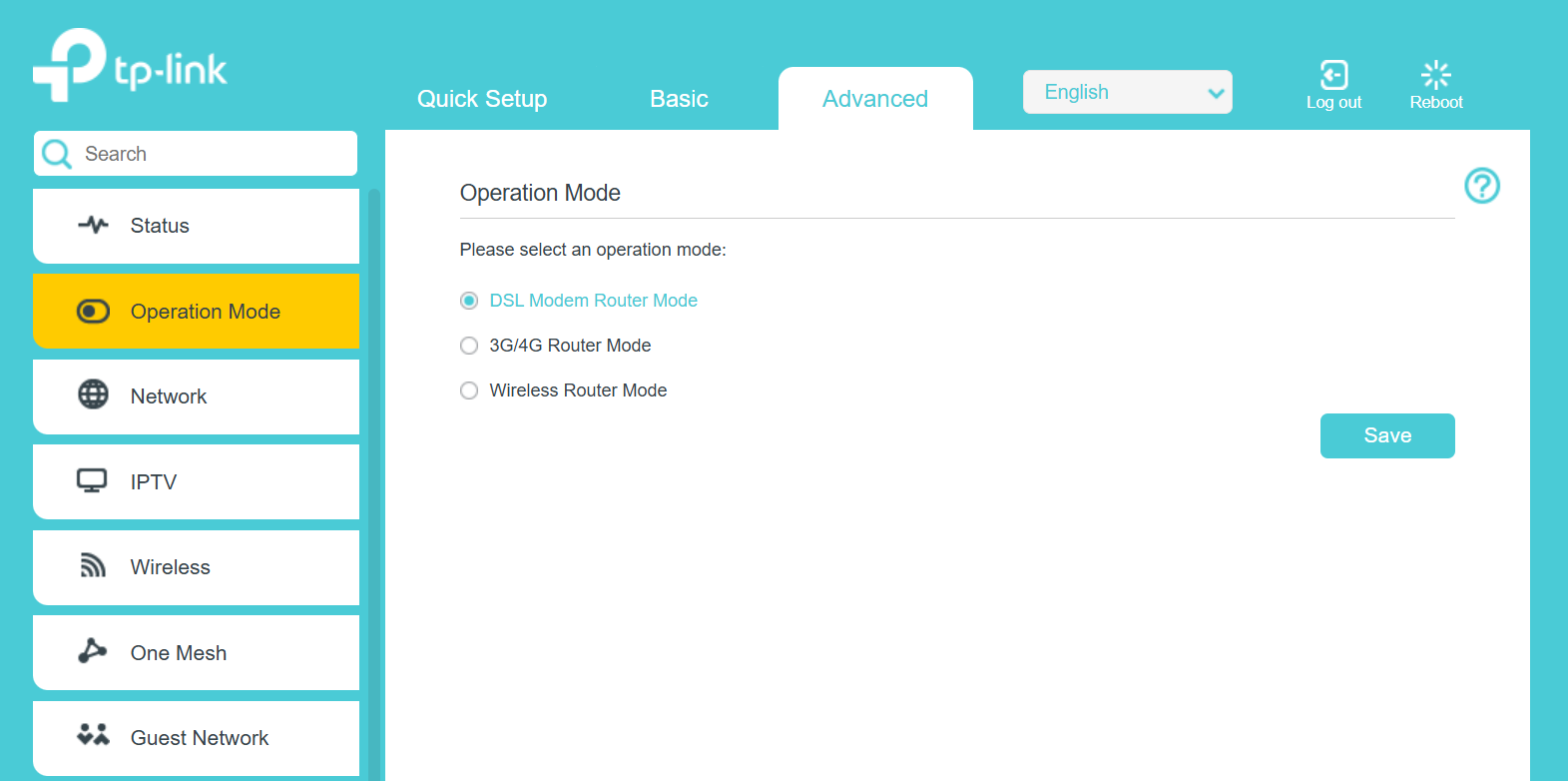
At the step where to select operation mode. Please select DSL Modem Router.
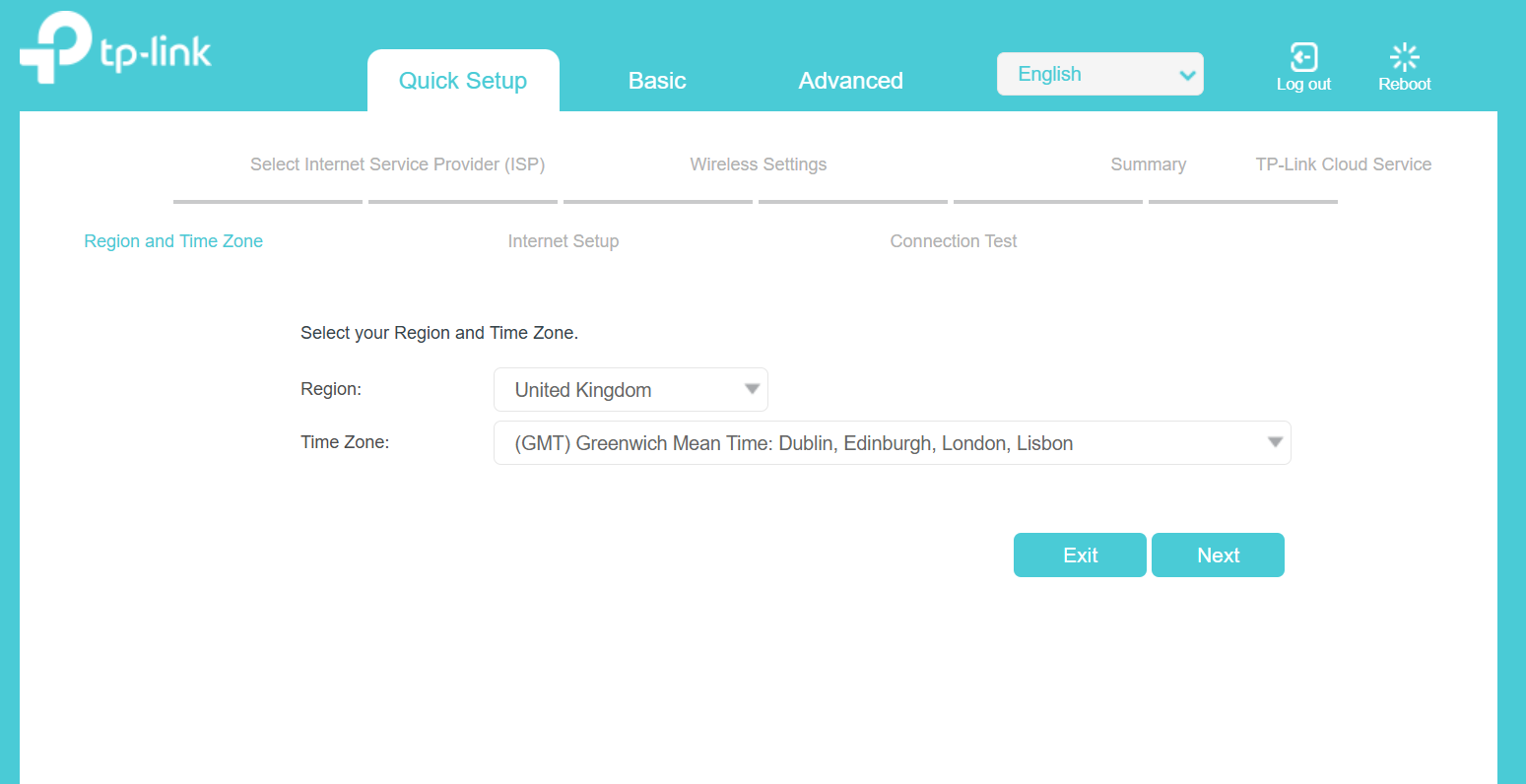
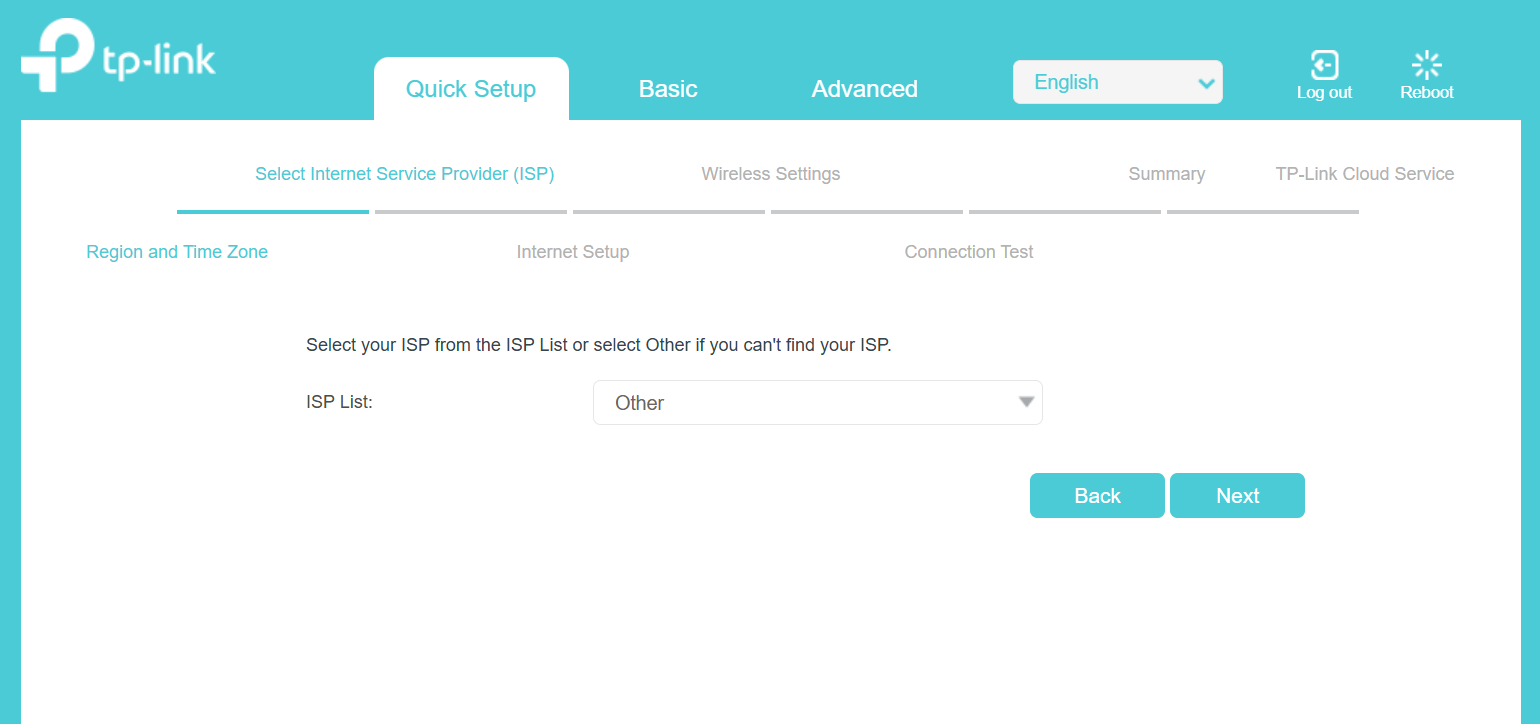
At the step where to “Choose your current region and ISP”, select Sky (MER) _VDSL or Other.
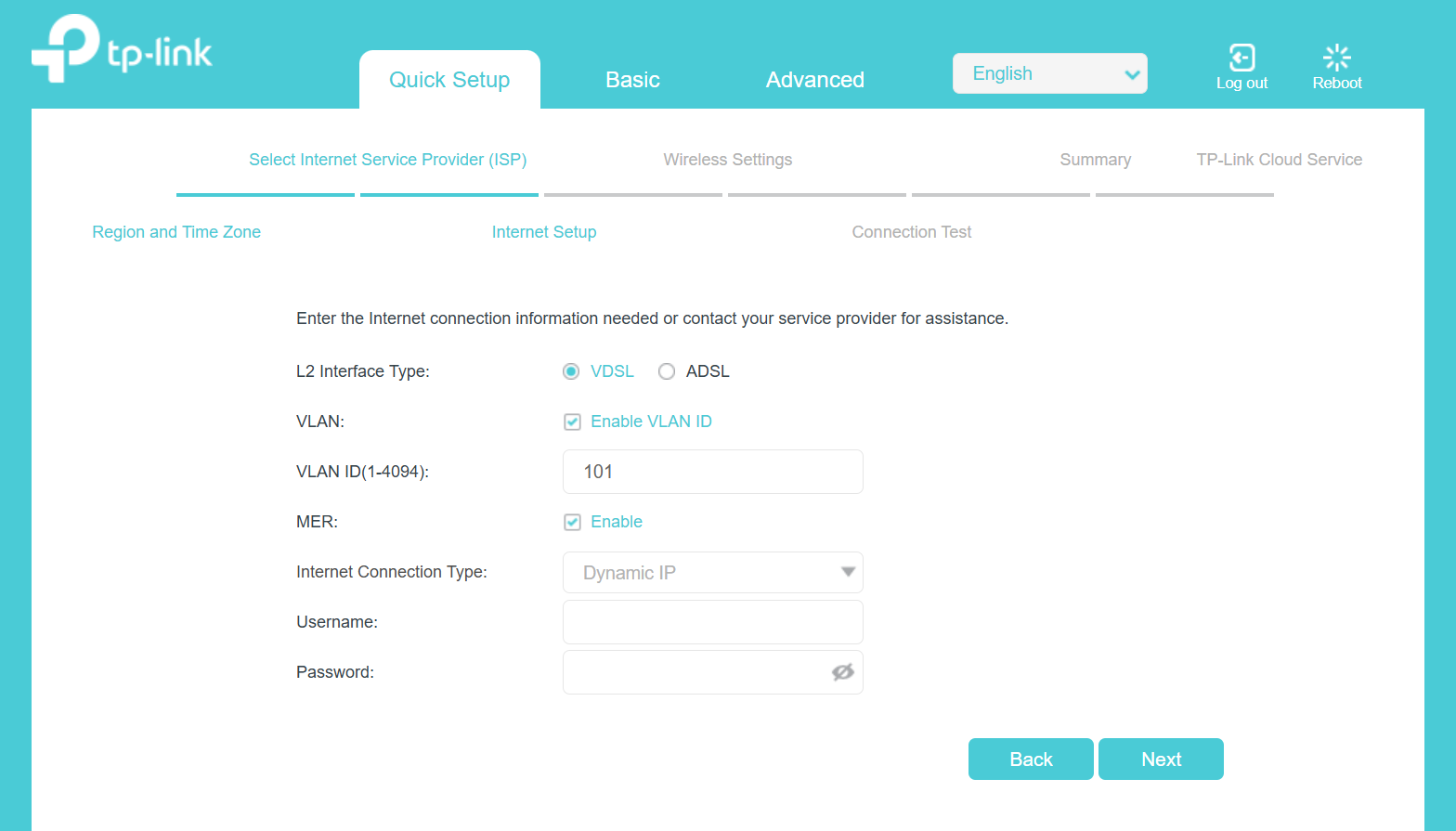
At the step where to enter your internet connection type and VLAN ID. Please select Dynamic IP, and enter your MER Username and Password provided by Sky, the VLAN ID as 101.
- Internet connection Type= Dynamic IP
- Username: reach out to sky to get one or try to enter “abcdefgh@skydsl”
- Password: reach out to sky to get one or try to enter “1234567890abcdef”
- VLAN ID: 101
Note: TP-Link routers support standard DHCP (Dynamic IP). Most Sky Ireland FTTP lines work without any additional configuration. However, some older Sky accounts or certain eir FTTP lines may require DHCP Option 61 authentication, which is not supported on any TP-Link router. If you would like to confirm whether your product supports DHCP Option 61, please contact TP-Link Technical Support.
Is this faq useful?
Your feedback helps improve this site.



TP-Link Community
Still need help? Search for answers, ask questions, and get help from TP-Link experts and other users around the world.