
How to Set Up VPN Server and VPN Client on Deco
Deco supports two VPN features, each serving a different purpose. VPN Server (available as OpenVPN, PPTP, or L2TP/IPSec) lets remote devices securely access your home network over the Internet. VPN Client routes devices in your home network through a third-party VPN provider without requiring software on each device. All Deco VPN setup is handled through the Deco app.
Key Takeaways
- Deco supports several VPN Server types: such as OpenVPN, PPTP, and L2TP/IPSec. Each allows remote devices to access your home network securely.
- Deco VPN Client lets home devices connect to a third-party VPN service without installing VPN software on each individual device.
- All VPN settings are configured in the Deco app under More > VPN.
- For VPN Server, you configure the server on your Deco router and install compatible client software on the remote device.
- For VPN Client, you will need VPN credentials and/or a configuration file from your VPN provider.
Which Feature Do You Need?
Not sure whether to use VPN Server or VPN Client? Here's a quick guide:
- VPN Server: Use this if you want to access your home network remotely. For example, connecting to your home devices while traveling.
- VPN Client: Use this if you want your home devices to route their traffic through a third-party VPN provider, such as a commercial VPN service.
Jump to the section that applies to your use case:
- Set Up OpenVPN Server
- Set Up PPTP VPN Server
- Set Up L2TP/IPSec VPN Server
- Set Up VPN Client
Set Up OpenVPN Server
OpenVPN (virtual private network) offers strong security and stability. It works well in restricted network environments, such as campus or corporate networks, but requires installing OpenVPN client software on each remote device.
Configure OpenVPN Server in the Deco App
- Open the Deco app. Go to More > VPN > VPN Server and tap Add VPN Server.
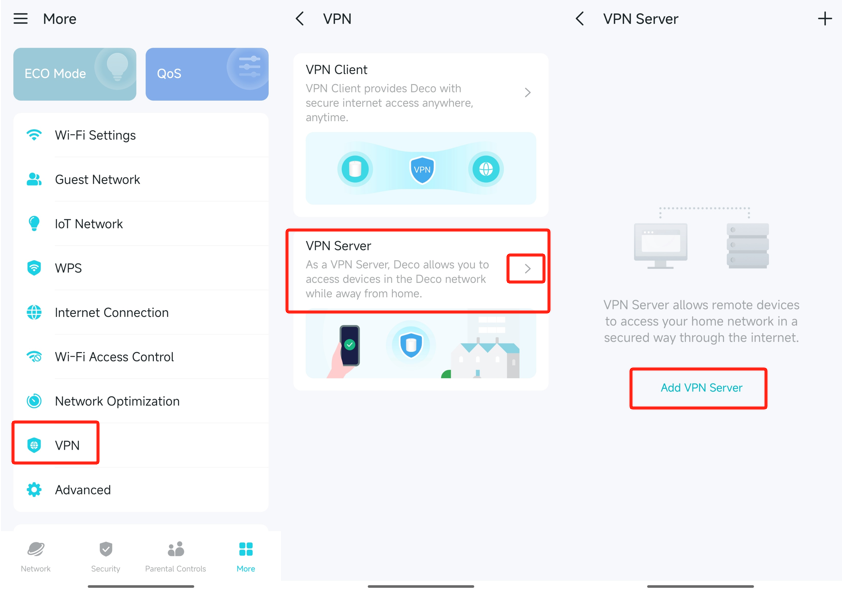
- Select OpenVPN, fill in the required fields, and save your settings.
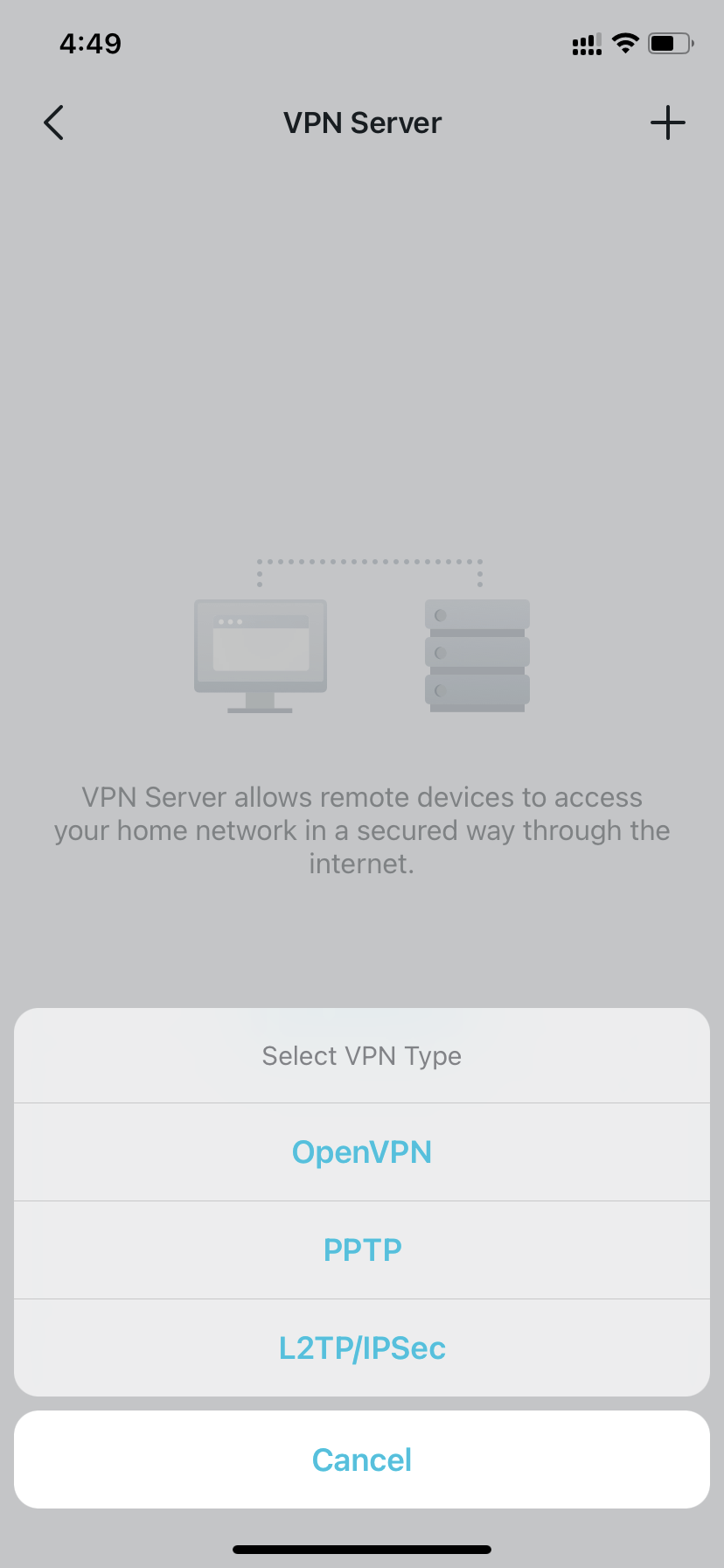
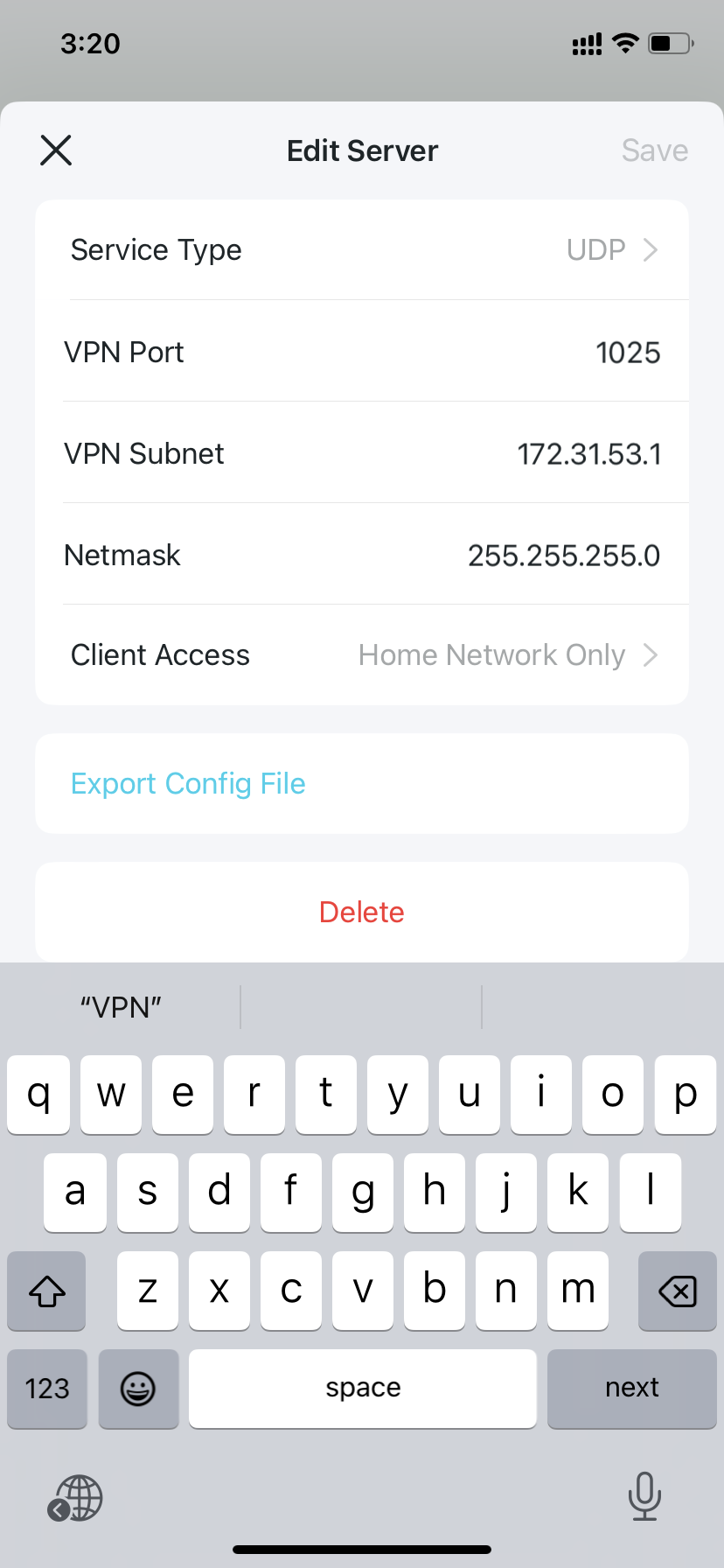
Configure the following fields:
- Description: Enter a name for this VPN.
- Service Type: Choose the communication protocol for OpenVPN: UDP or TCP.
- VPN Port: Enter a port number between 1024 and 65535 for the VPN service.
- VPN Subnet/Netmask: Enter the range of IP addresses the OpenVPN server can lease to connecting devices.
- Client Access: Select Home Network Only to allow remote devices to access your home network only. Select Internet and Home Network to also allow remote devices to access the Internet through the VPN server.
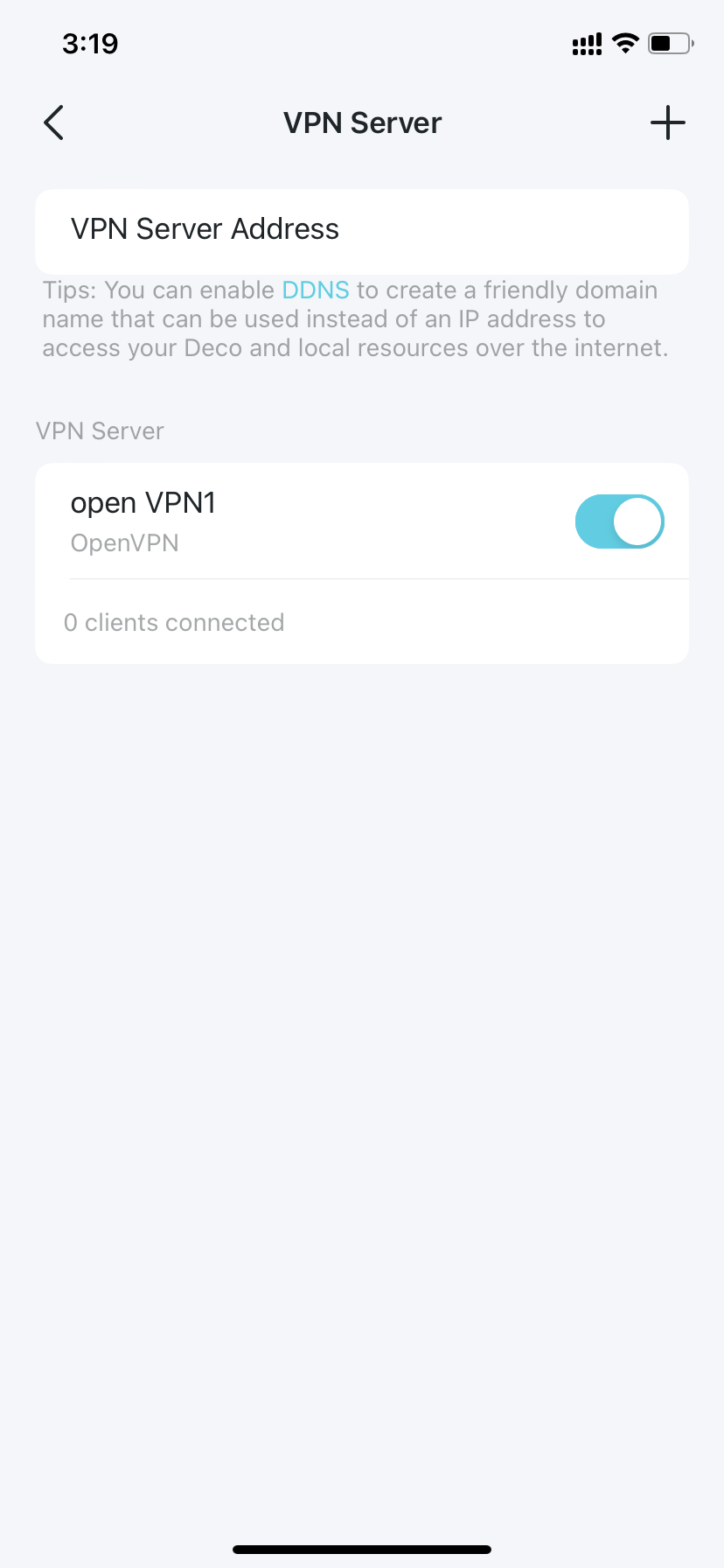
- Tap the VPN profile you saved, then tap Export Config File to save the OpenVPN configuration file. You will need this file to set up the connection on your remote device.
Connect a Remote Device to OpenVPN Server
- On the remote device, visit https://openvpn.net/community-downloads/ to download and install the OpenVPN client software.
Note: You must install the OpenVPN client utility on every device you want to use with the VPN connection. Mobile devices should download a compatible third-party app from the Google Play Store or Apple App Store.
- Copy the configuration file you exported from your router into the OpenVPN client utility's "config" folder (for example, C:\Program Files\OpenVPN\config on Windows). The exact path will depend on where the OpenVPN client is installed.
- Open the OpenVPN client utility and connect to the OpenVPN Server.
For dedicated step-by-step guidance, see how to set up OpenVPN Server on Deco.
Set Up PPTP VPN Server
PPTP (Point-to-Point Tunneling Protocol) VPN is easy to set up using the built-in VPN software on Windows and most mobile devices. Note that PPTP offers less security than OpenVPN or L2TP/IPSec and may be blocked by some Internet service providers.
Configure PPTP VPN Server in the Deco App
- Open the Deco app. Go to More > VPN > VPN Server and tap Add VPN Server.
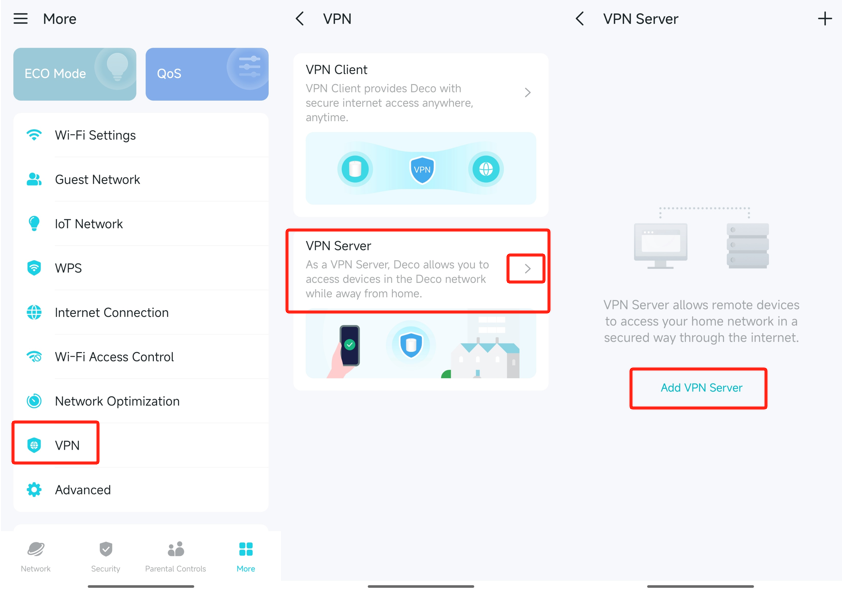
- Select PPTP, fill in the required fields, and save your settings.
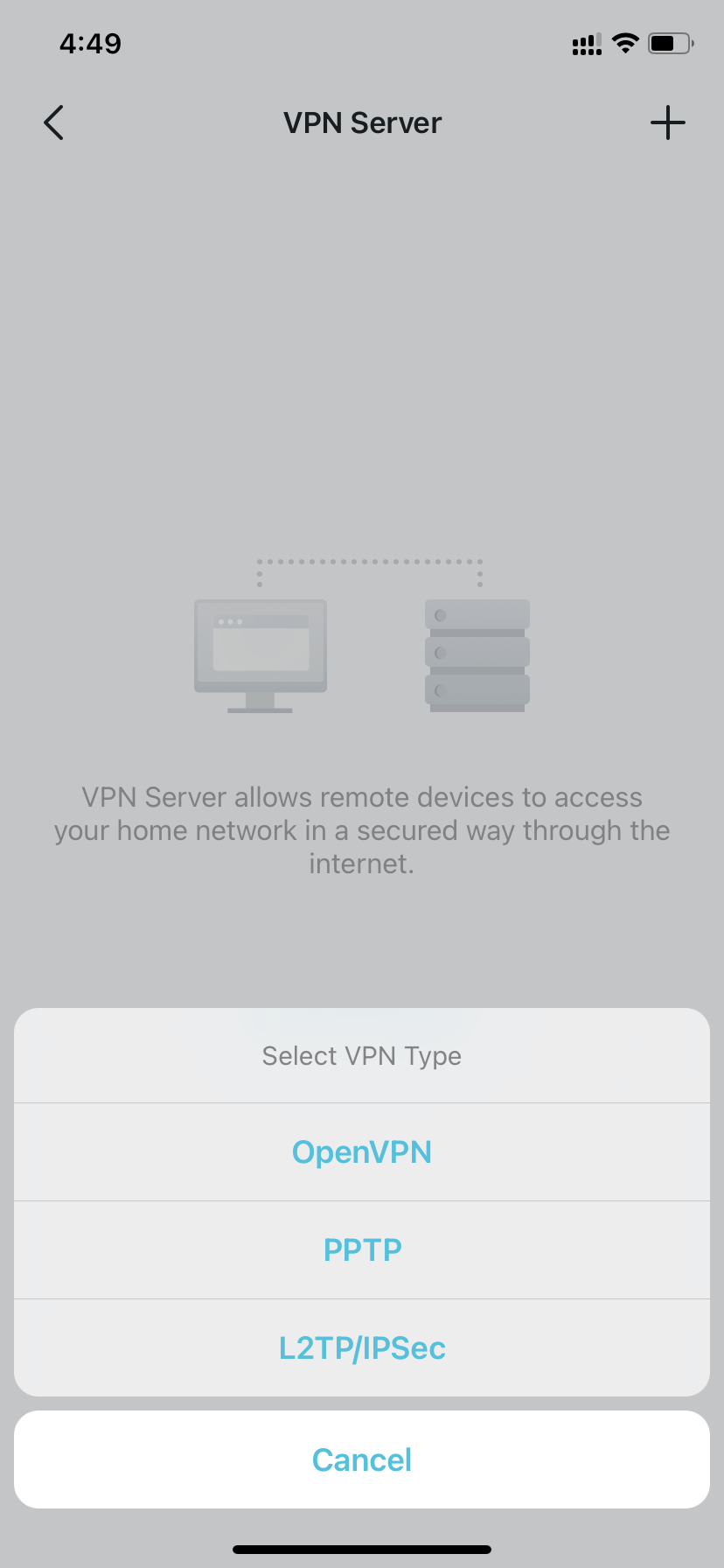
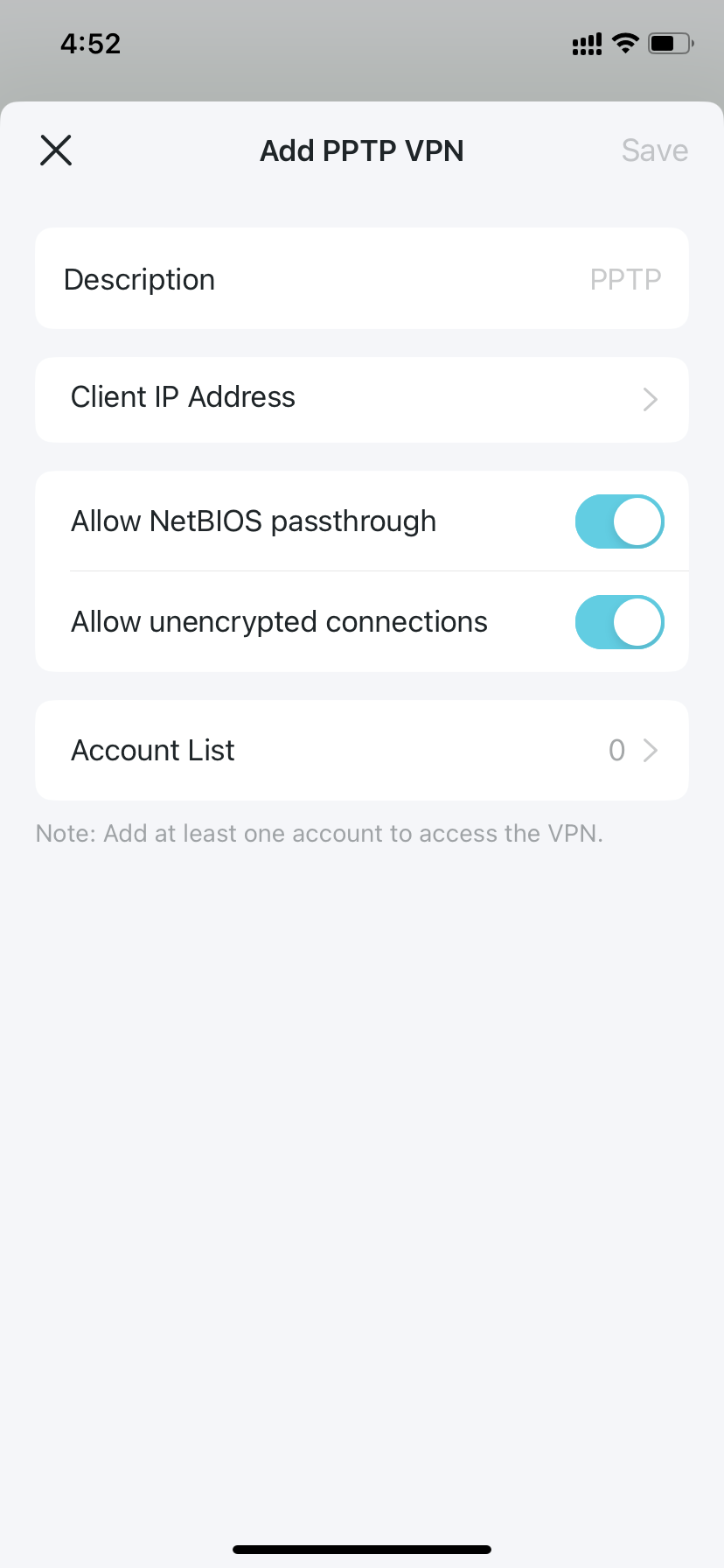
Configure the following fields:
- Description: Enter a name for this VPN.
- Client IP Address: Enter the range of IP addresses (up to 10) that the PPTP VPN server can lease to connecting devices.
- Allow NetBIOS passthrough: Enable this to allow VPN devices to access your Samba server using NetBIOS name.
- Allow unencrypted connections: Enable this to allow unencrypted connections to your VPN server.
- Account List: Add user accounts (username and password) for remote devices connecting to the PPTP VPN server. You can create up to 16 accounts.
Connect a Windows Device to PPTP VPN Server
- On the remote Windows device, use the built-in PPTP client to connect. Third-party PPTP software can also be used. The steps below use the Windows built-in client as an example.
(1) Go to Start > Control Panel > Network and Internet > Network and Sharing Center.
(2) Select Set up a new connection or network.
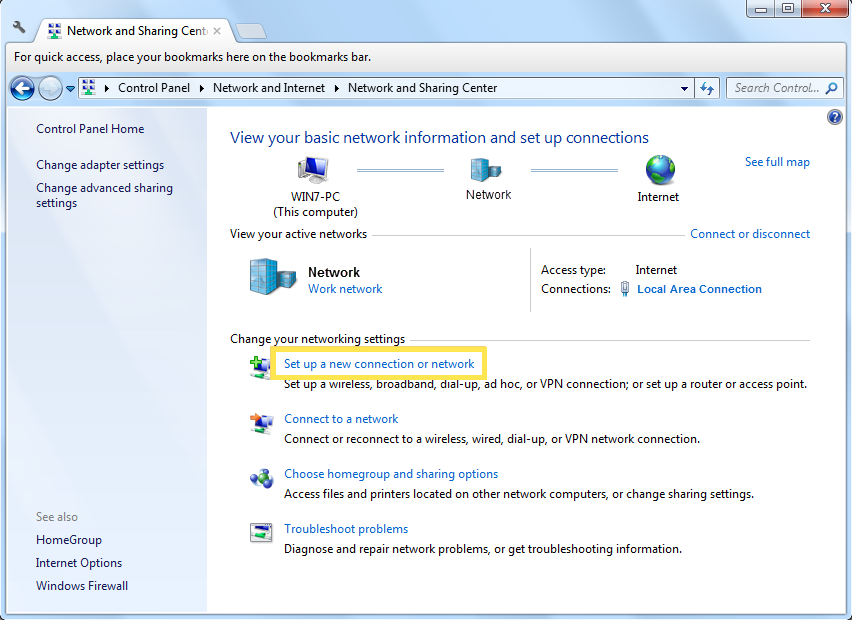
(3) Select Connect to a workplace and click Next.
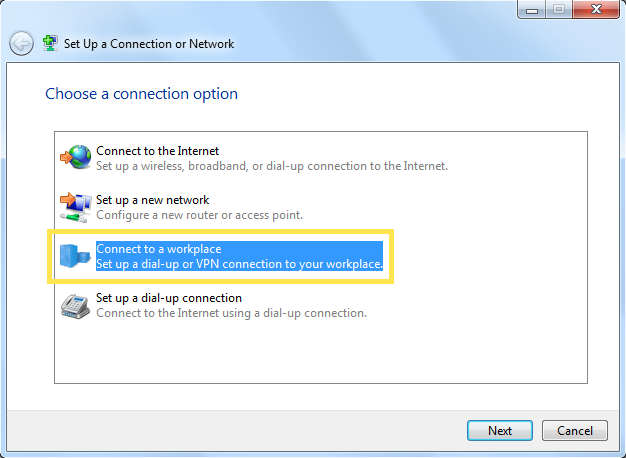
(4) Select Use my Internet connection (VPN).
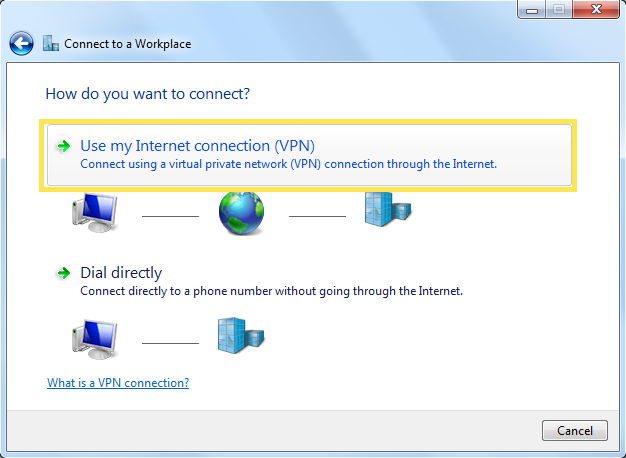
(5) Enter the Internet IP address of your router in the Internet address field and click Next.
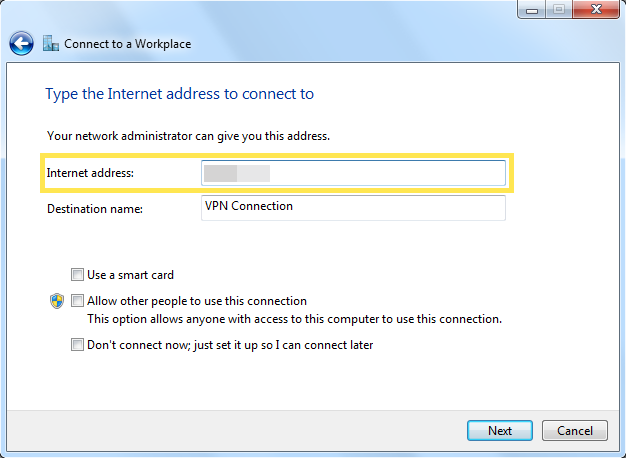
(6) Enter the User name and Password you created for the PPTP VPN server on your router, then click Connect.
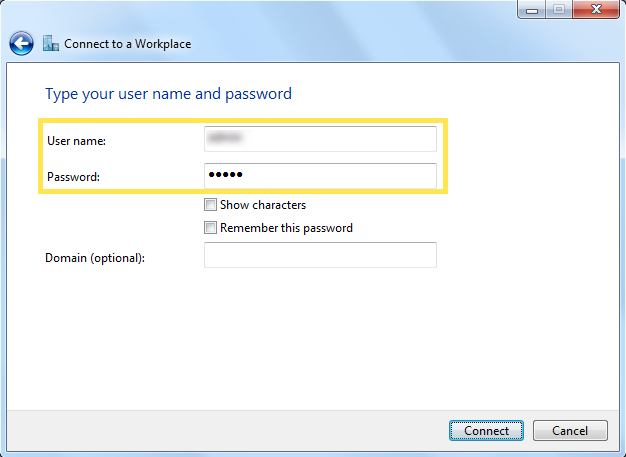
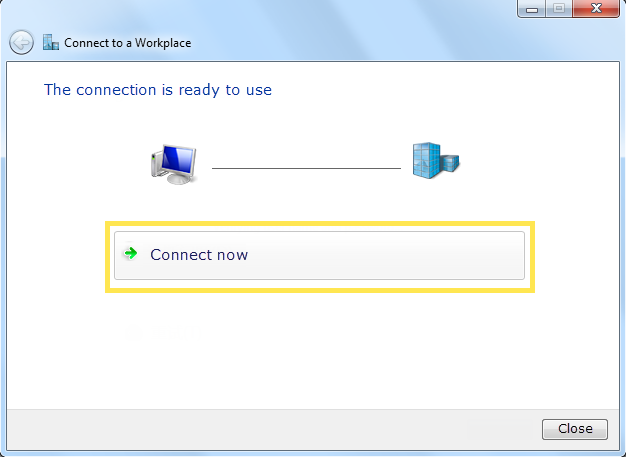
(7) Click Connect Now when the VPN connection is ready to use.
Set Up L2TP/IPSec VPN Server
L2TP/IPSec (Layer 2 Tunneling Protocol with IPSec encryption) offers stronger security than PPTP but may be slower and can sometimes have difficulty getting through certain firewalls. Windows and Mac OS both have built-in L2TP/IPSec clients.
Configure L2TP/IPSec VPN Server in the Deco App
- Open the Deco app. Go to More > VPN > VPN Server and tap Add VPN Server.
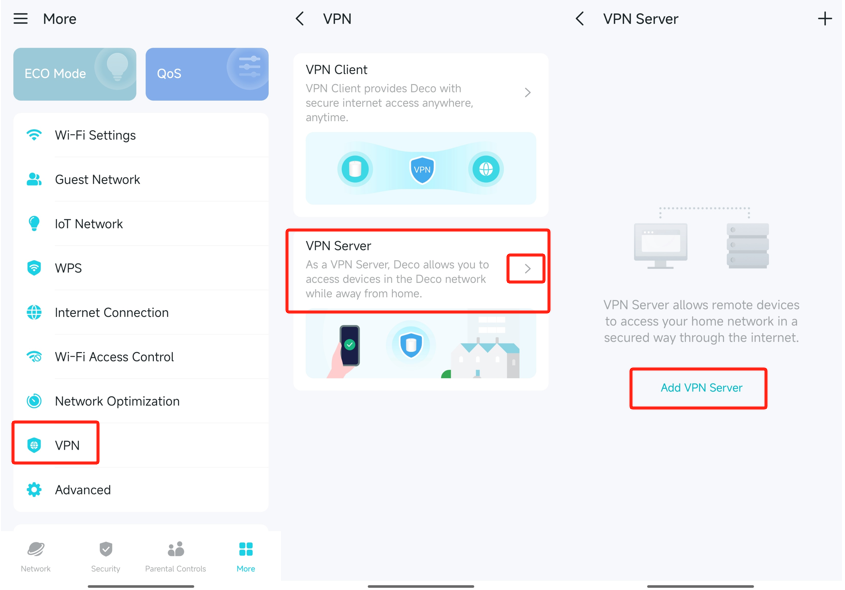
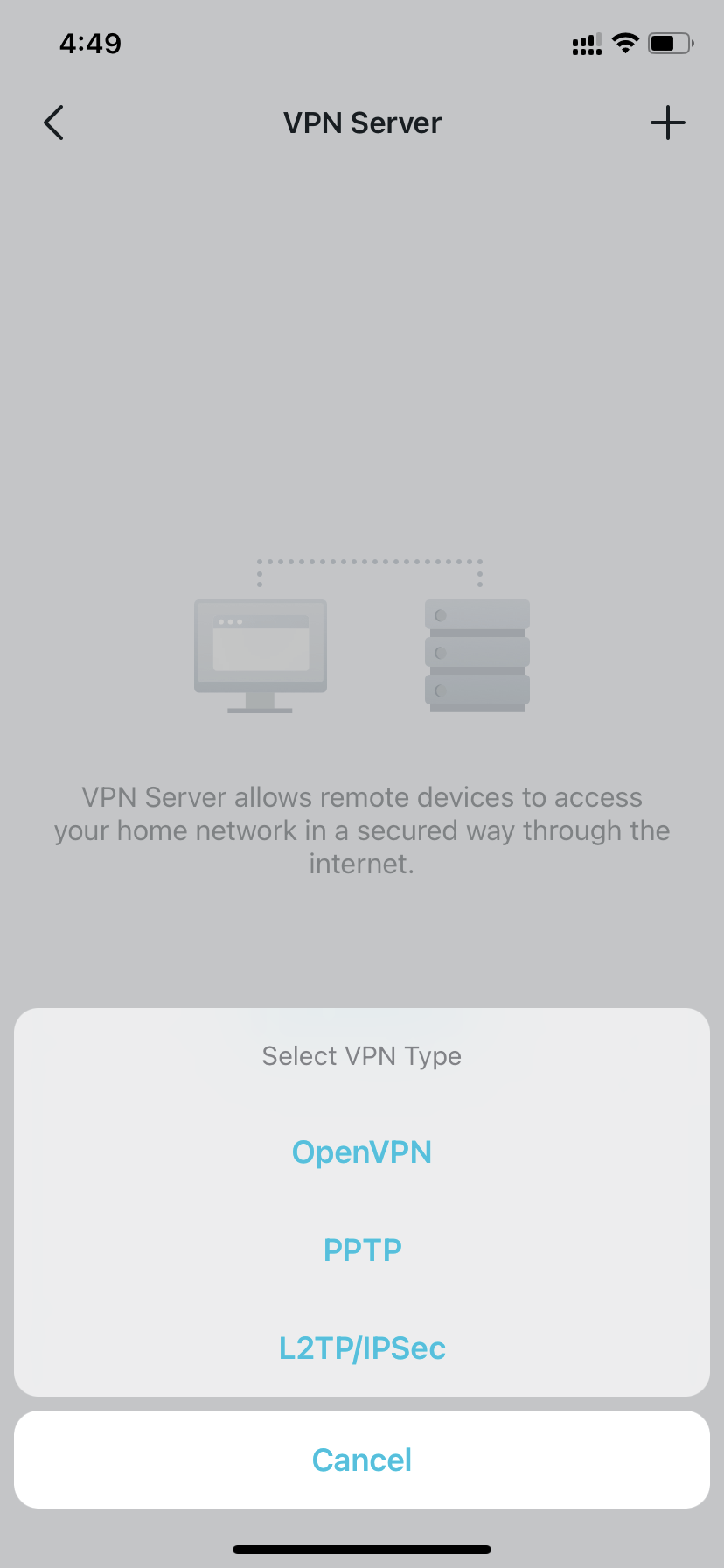
- Select L2TP/IPSec, fill in the required fields, and save your settings.
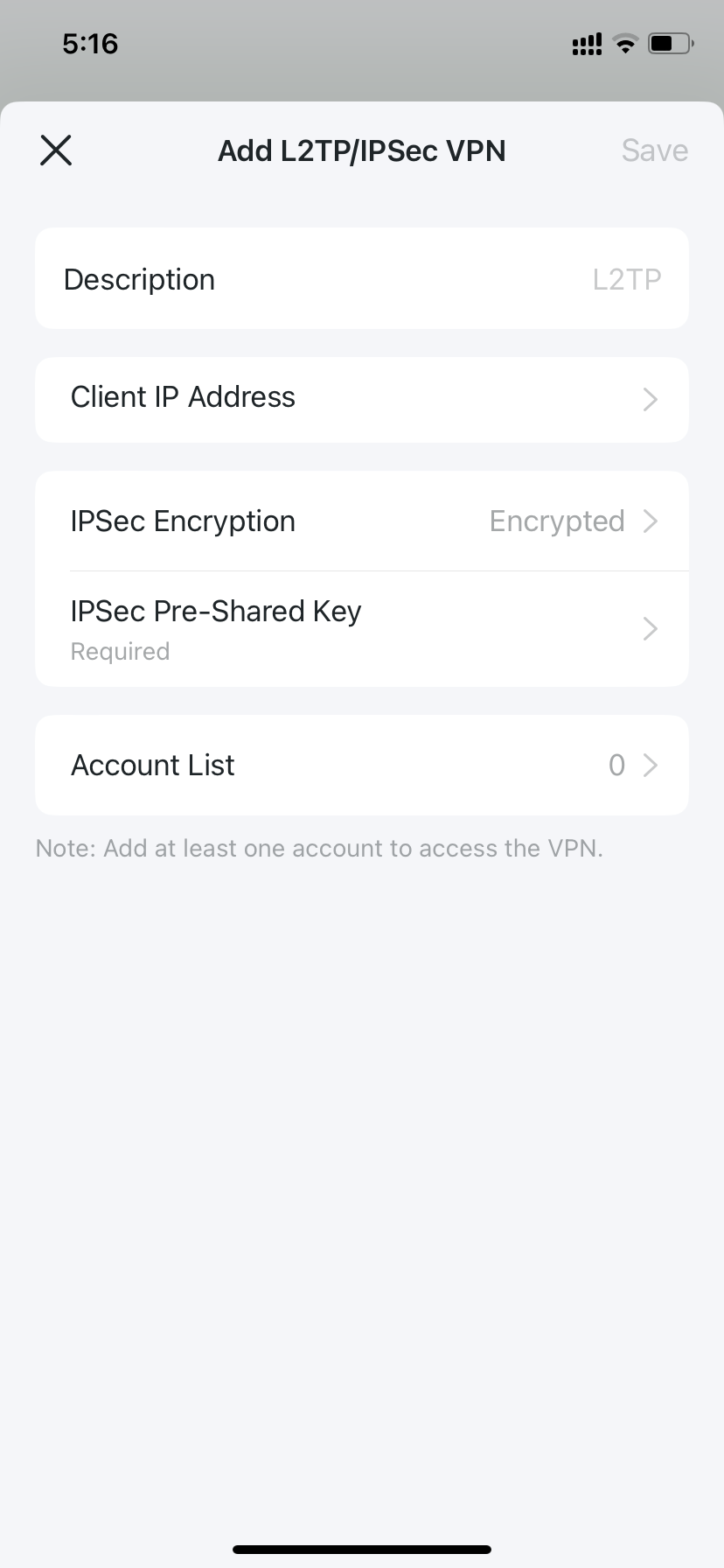
Configure the following fields:
- Description: Enter a name for this VPN.
- Client IP Address: Enter the range of IP addresses (up to 10) that the L2TP/IPSec VPN server can lease to connecting devices.
- IPSec Encryption / IPSec Pre-Shared Key: Keep IPSec Encryption set to Encrypted and create an IPSec Pre-Shared Key.
- Account List: Add user accounts (username and password) for remote devices. You can create up to 16 accounts.
For a dedicated walkthrough, see how to set up L2TP/IPSec VPN Server on Deco.
Connect a Windows Device to L2TP/IPSec VPN Server
- On the remote device, use the built-in Windows or Mac OS L2TP/IPSec client, or a compatible third-party client. The steps below use the Windows built-in client as an example.
(1) Go to Start > Control Panel > Network and Internet > Network and Sharing Center.
(2) Select Set up a new connection or network.
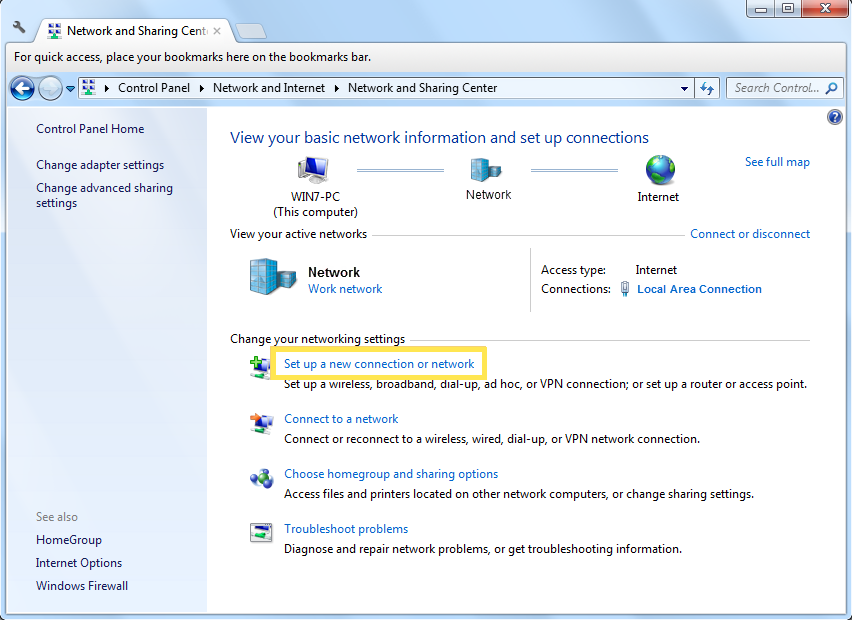
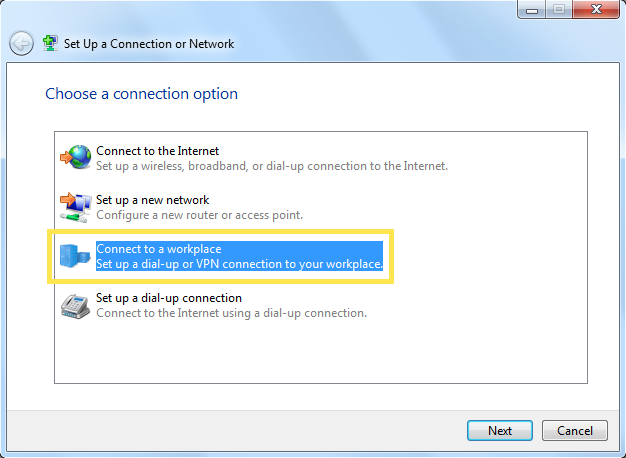
(3) Select Connect to a workplace and click Next.
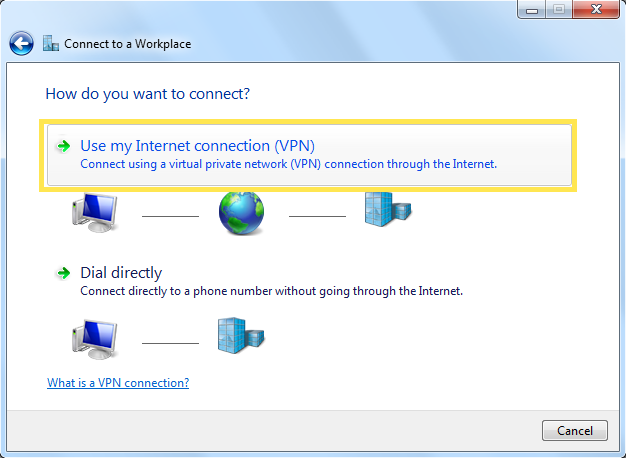
(4) Select Use my Internet connection (VPN).
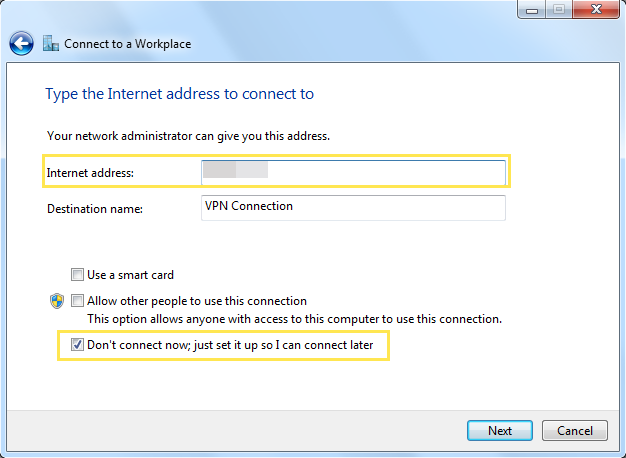
(5) Enter the Internet IP address of your router in the Internet address field. Select Don't connect now; just set it up so I can connect later, then click Next.
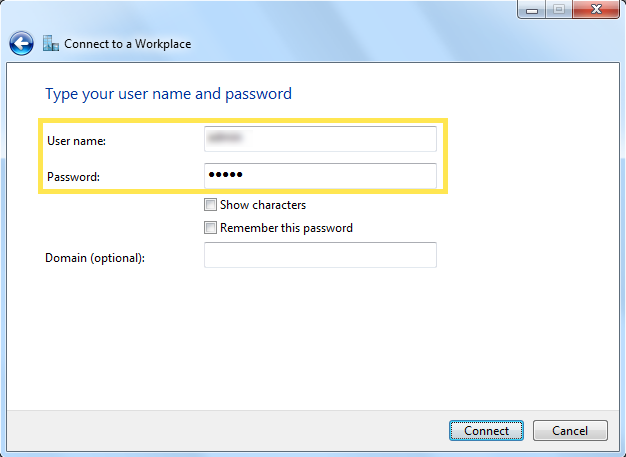
(6) Enter the User name and Password you created for the L2TP/IPSec VPN server on your router, then click Connect.
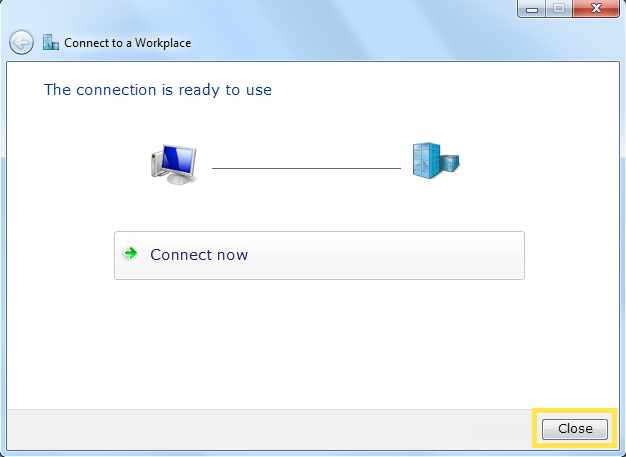
(7) Click Close when the connection is ready to use.
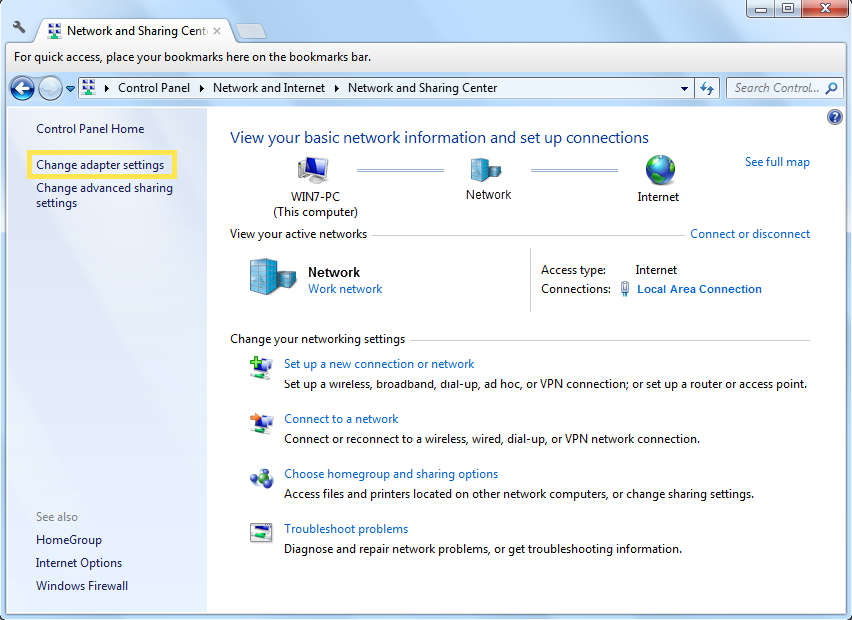
(8) Go to Network and Sharing Center and click Change Adapter Settings.
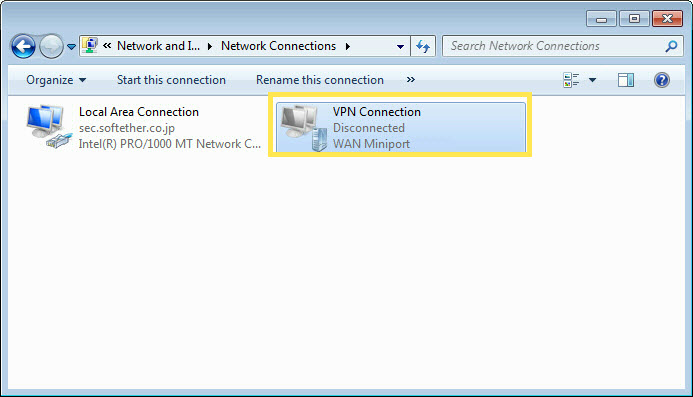
(9) Find the VPN connection you created and double-click it.
(10) Enter the Username and Password for the L2TP/IPSec VPN server on your router, then click Properties.
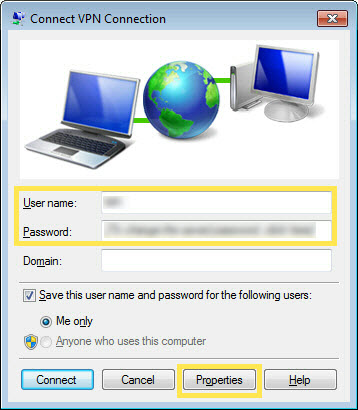
(11) Switch to the Security tab, select Layer 2 Tunneling Protocol with IPsec (L2TP/IPSec), and click Advanced settings.
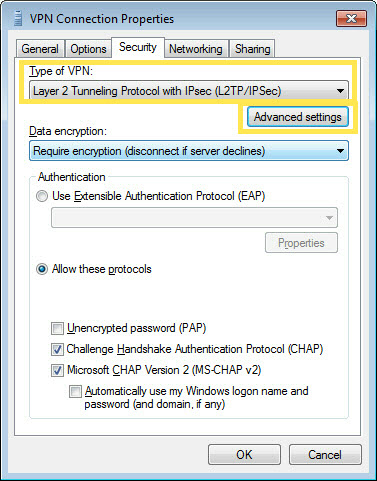
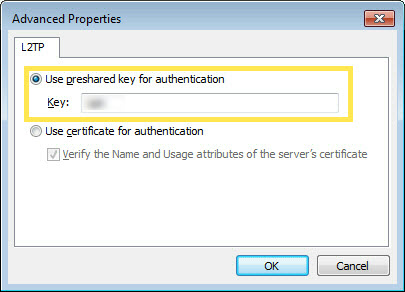
(12) Select Use preshared key for authentication, enter the IPSec Pre-Shared Key you set on your router, and click OK.
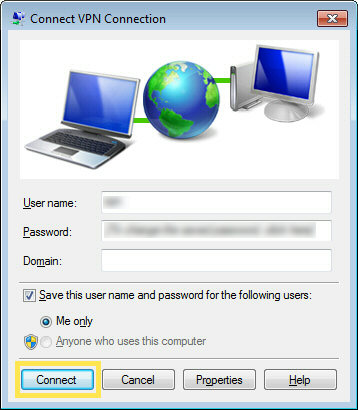
Click Connect to start the VPN connection.
Set Up VPN Client
VPN Client lets all devices on your Deco home network connect to a remote VPN server through your router. No VPN software needs to be installed on individual devices. Before you begin, have your VPN credentials and, if using OpenVPN, your provider's configuration file ready.
If you are setting up a VPN Client on a TP-Link Wi-Fi router instead of a Deco router, see how to set up VPN Client on TP-Link Wi-Fi routers via the web management page.
Configure VPN Client in the Deco App
- Open the Deco app. Go to More > VPN > VPN Client.
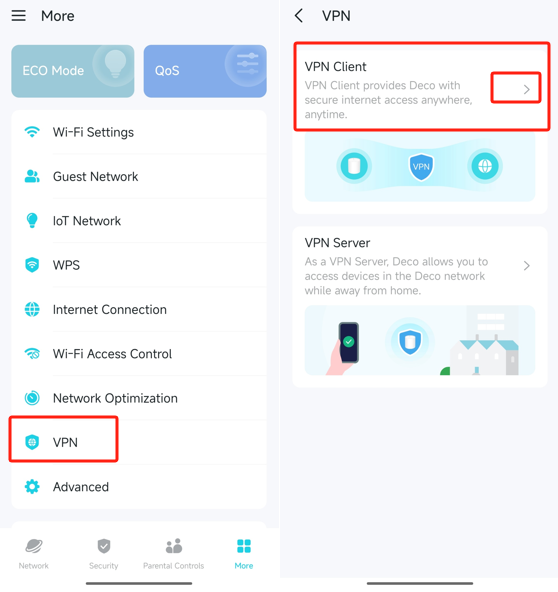
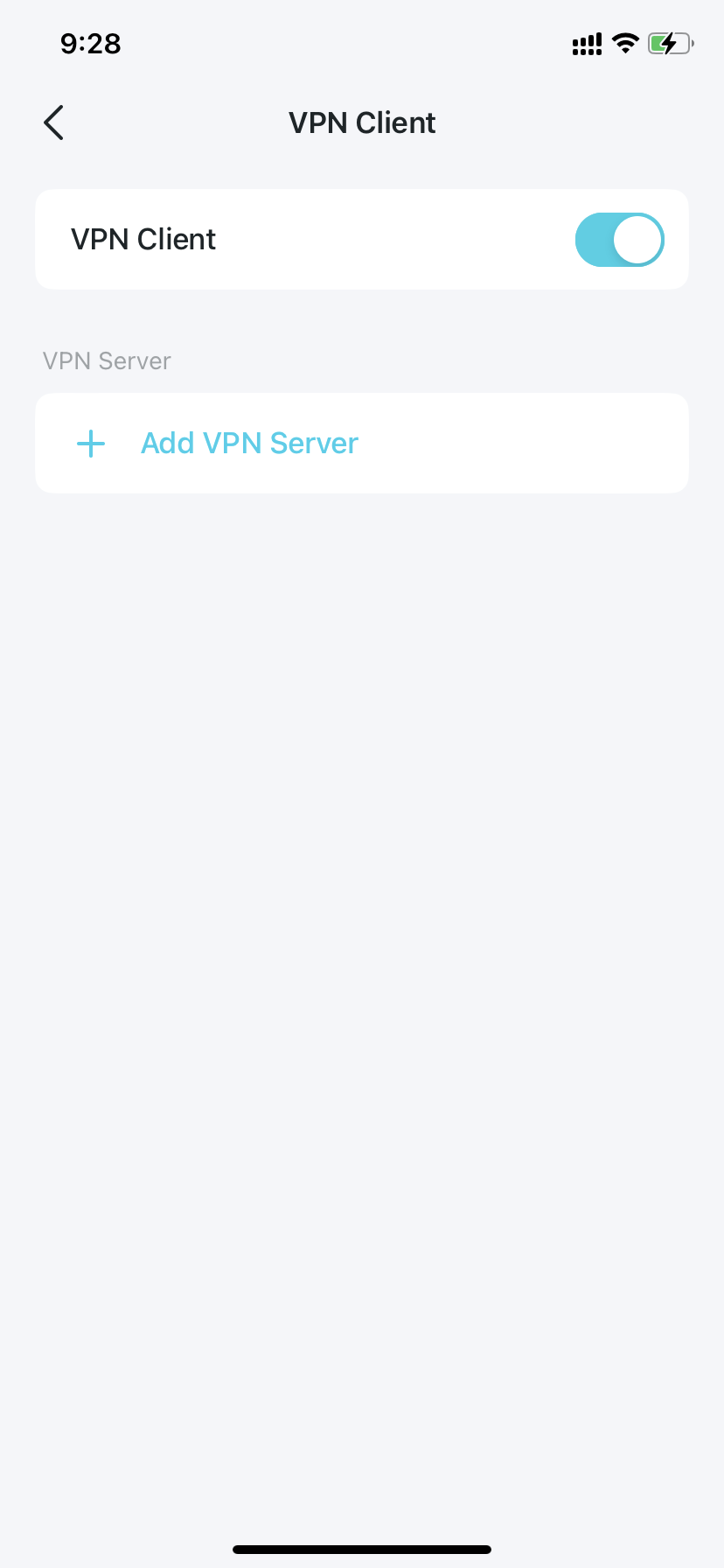
- Enable VPN Client and tap Add VPN Server.
- Select a VPN type and enter the credentials provided by your VPN provider, then save your settings.
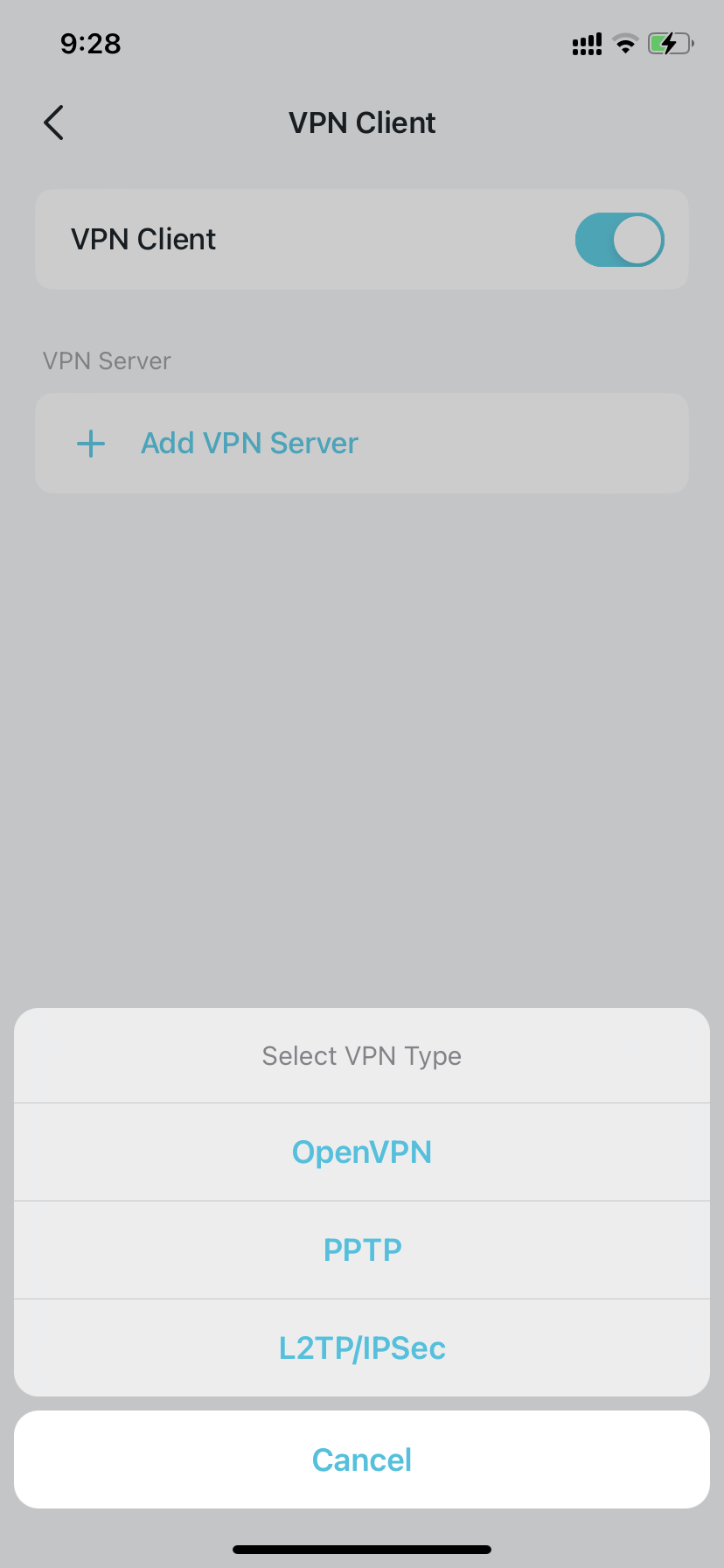
The required information varies by VPN type:
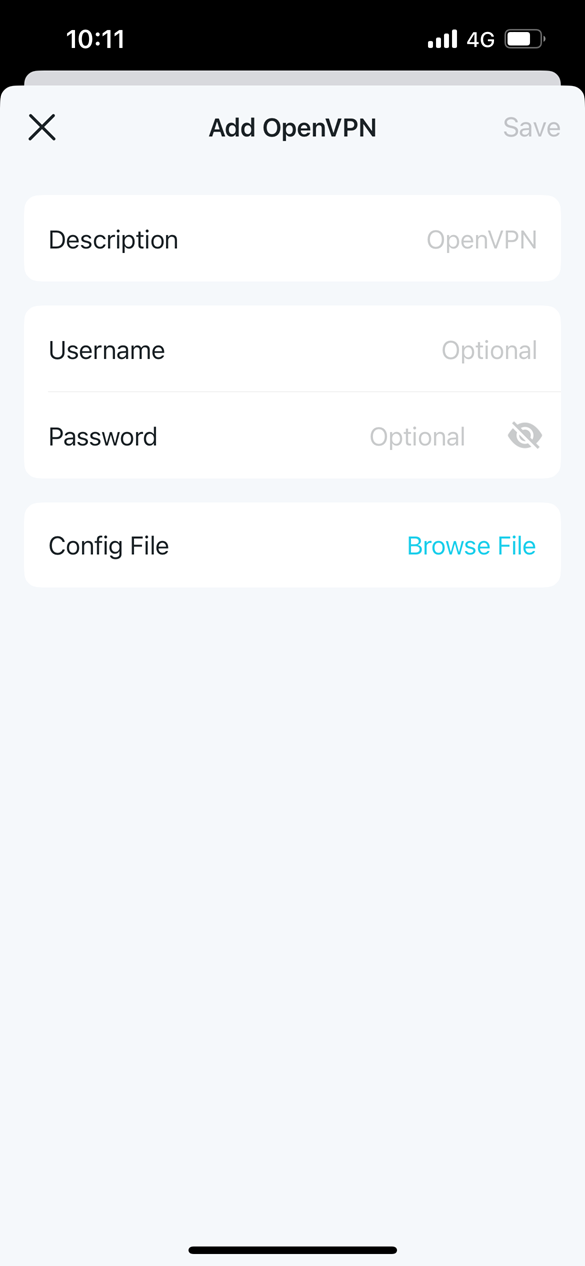
- OpenVPN: Enter a username and password if your VPN provider requires them (otherwise leave these fields empty), then import the configuration file provided by your VPN provider. See how to set up OpenVPN Client on Deco for a full walkthrough.
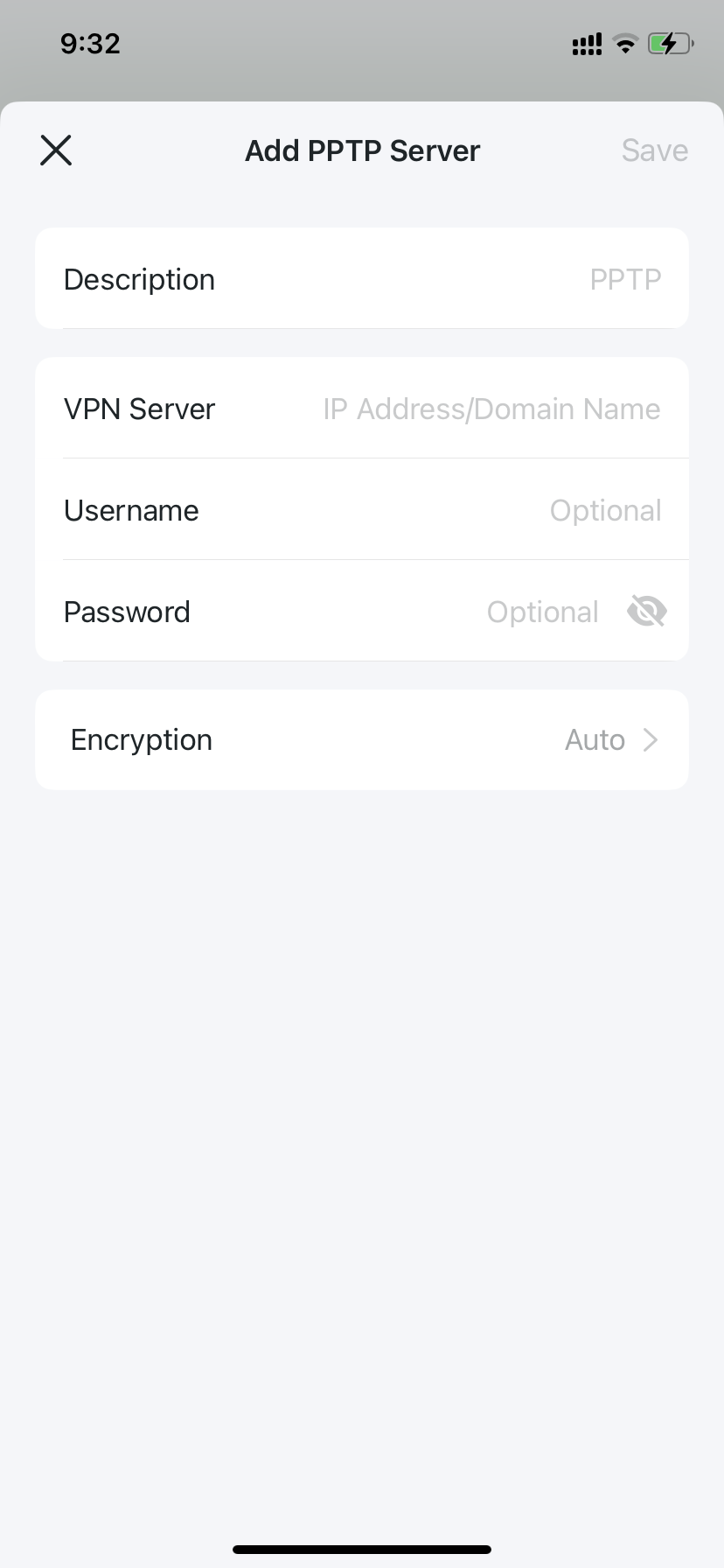
- PPTP: Enter the VPN server address and the username and password provided by your VPN provider. See how to set up PPTP VPN Client on Deco for a full walkthrough.
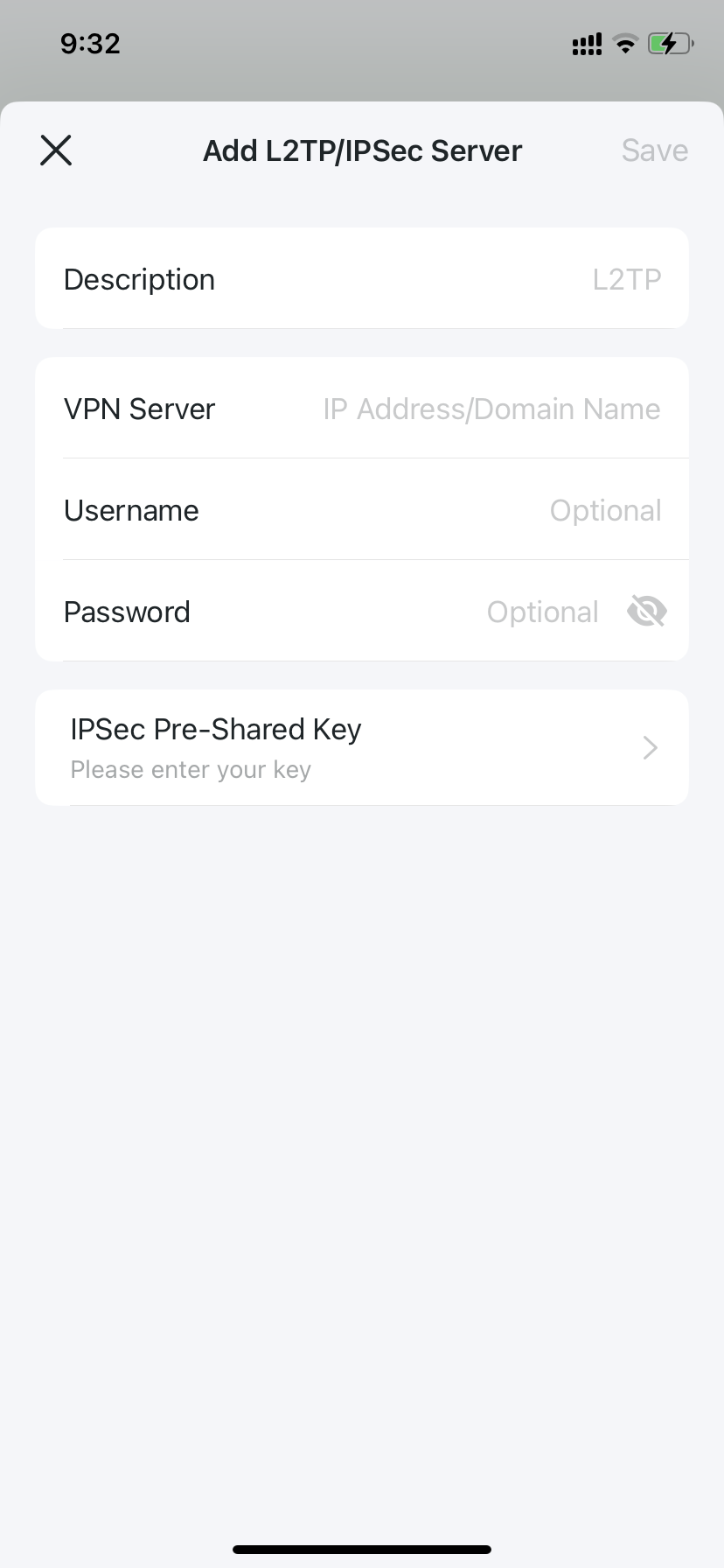
- L2TP/IPSec: Enter the VPN server address, username and password, and the IPSec pre-shared key provided by your VPN provider. See how to set up L2TP/IPSec VPN Client on Deco for a full walkthrough.
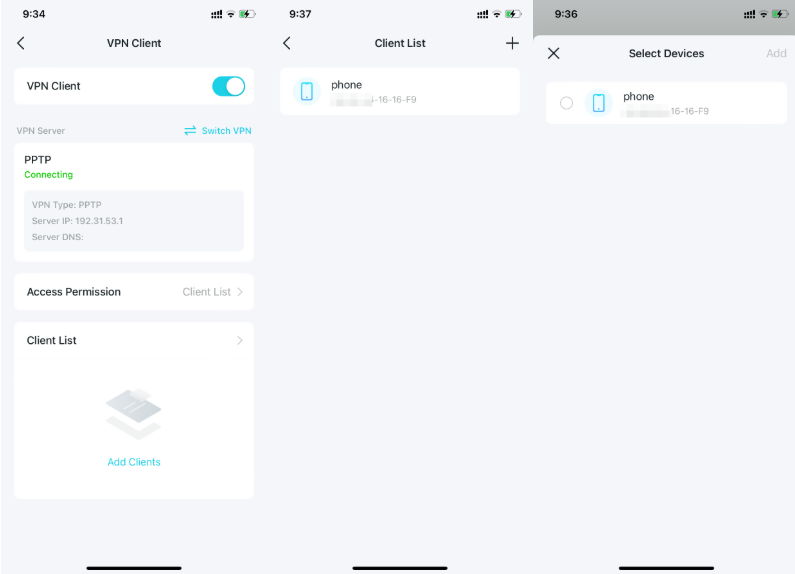
- Tap Client List and the + button to add devices that will use the VPN connection.
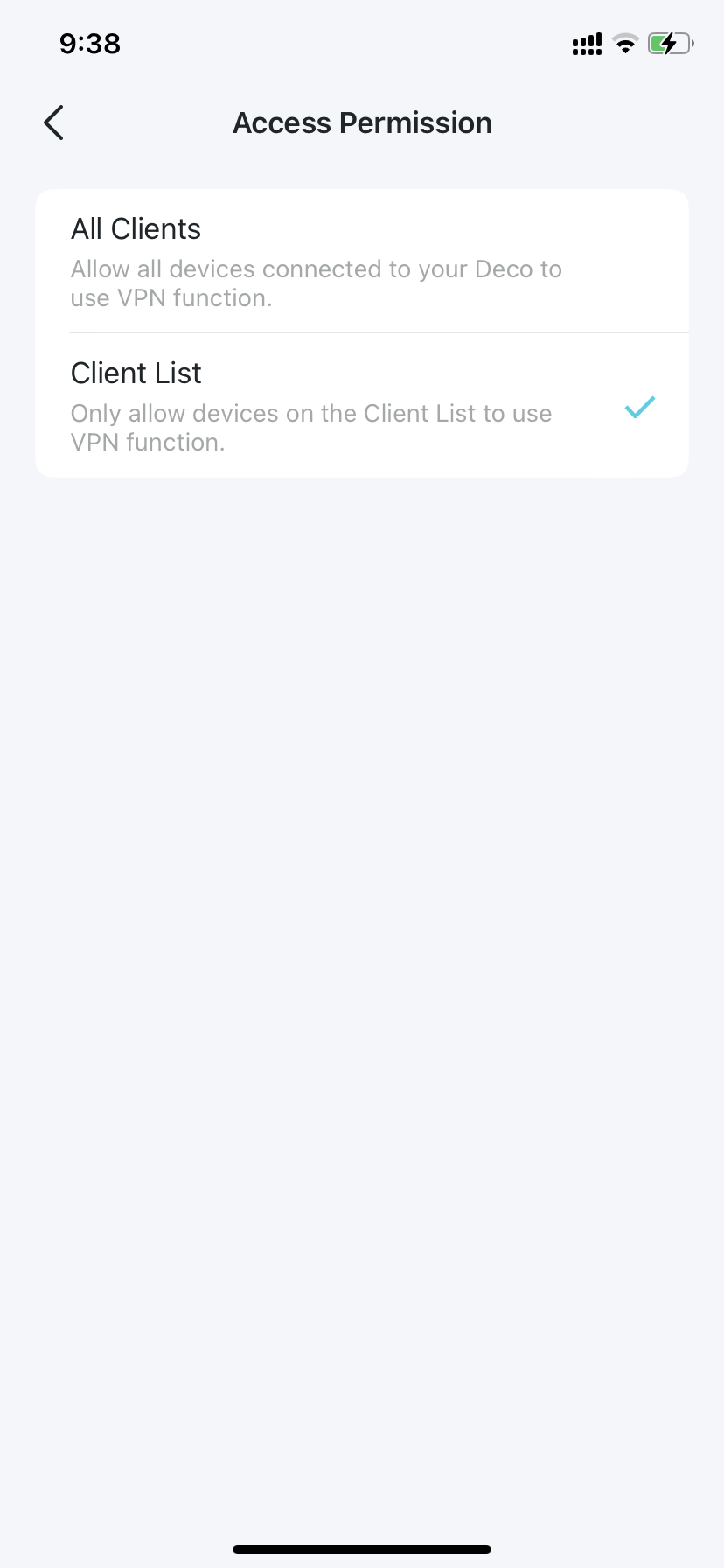
- Tap Access Permission to choose which devices can use the VPN. Select All Clients to route all devices connected to your Deco through the VPN, or select Client List to limit access to only the devices you added.
The devices you specified can now connect to the VPN server you configured.
Looking For More
Questa faq è utile?
Your feedback helps improve this site.
_Overview_normal_20211225093612j.png)



TP-Link Community
Still need help? Search for answers, ask questions, and get help from TP-Link experts and other users around the world.