
Table of Contents
Archer MX700/Archer MX1500_V2_Product and Installation Guide
About This Guide
This guide provides a brief introduction to 4G+ Cat6 AX1500 Wireless Dual Band Gigabit Router and regulatory information.
Note: Features available in this range extender may vary by model and software version. Router availability may also vary by region or ISP. All images, steps, and descriptions in this guide are only examples and may not reflect your actual router experience.
Conventions
In this guide the following conventions are used:
|
Convention |
Description |
|---|---|
|
Underline |
Underlined words or phrases are hyperlinks. You can click to redirect to a website or a specific section. |
|
Bold |
Contents to be emphasized and texts on the web page are in bold, including the menus, items, buttons and so on. |
|
> |
The menu structures to show the path to load the corresponding page. For example, Settings > System Tools > Firmware Upgrade means the Firmware Upgrade page is under the System Tools menu that is located in the Settings tab. |
|
Note: |
Ignoring this type of note might result in a malfunction or damage to the device. |
|
Tip: |
Indicates important information that helps you make better use of your device. |
More Info
The latest software, management app and utility can be found at Download Center at https://www.tp-link.com/support/download/.
The Quick Installation Guide can be found where you find this guide or inside the package of the router.
Specifications can be found on the product page at https://www.tp-link.com.
TP-Link Community is provided for you to discuss our products and share knowledge at https://community.tp-link.com.
Our Technical Support contact information can be found at the Contact Technical Support page at https://www.tp-link.com/support/.
Disclaimer
*Maximum wireless signal rates are the physical rates derived from IEEE Standard 802.11 specifications. Actual wireless data throughput and wireless coverage are not guaranteed and will vary as a result of 1) environmental factors, including building materials, physical objects, and obstacles, 2) network conditions, including local interference, volume and density of traffic, product location, network complexity, and network overhead, and 3) client limitations, including rated performance, location, connection, quality, and client condition.
*Use of Wi-Fi 6 (802.11ax), and features including OFDMA, MU-MIMO, and 1024-QAM require clients to also support the corresponding features.
*Saving clients’ battery power requires clients to also support the 802.11ax Wi-Fi standard. Actual power reduction may vary as a result of network conditions, client limitations, and environmental factors.
*Use of WPA3 requires clients to also support the corresponding feature.
*This router may not support all the mandatory features as ratified in Draft 3.0 of IEEE 802.11ax specification.
*Further software upgrades for feature availability may be required.
Power consumption in off mode: 0.1 W
Power consumption in networked standby: 4.4 W.
Power consumption in networked standby when all network ports are connected: 7.1 W.
The default period of time after which the power management function switches the equipment automatically into a condition providing networked standby: 20 minutes.
How to activate and deactivate wireless network: Enter the webpage of product through wired or wireless connecting. The wireless function can be turn on/off via ‘Basic -> Wireless -> Enable 2.4G/5G Wireless Network’.
1. Get to Know About Your Modem Router
1.1 Product Overview
TP-Link’s Router is a combined wired/wireless network connection device with integrated WAN router, reducing hassle of configuration and saving space.
With Ethernet ports and antennas, the router provides wired and wireless access for multiple computers and mobile devices.
With various features and functions, the modem router is the perfect hub of your home or business network.
Moreover, it is simple and convenient to set up and use the TP-Link router due to its intuitive Tether app and powerful web interface.
1.2 Appearance
1.2.1 Front Panel
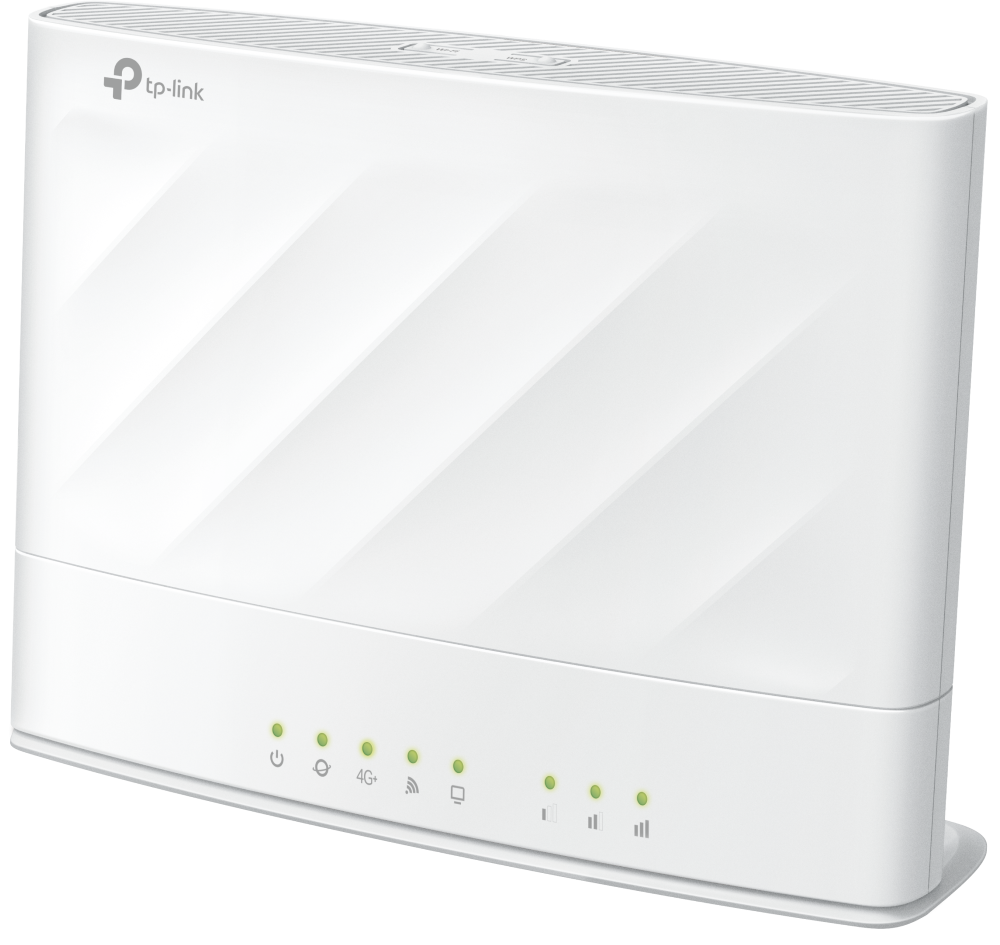
The router’s LEDs (view from left to right) are located on the front. You can check the router’s working status by following the LED Explanation table.
|
Name |
Status |
Indication |
|
(Power) |
On |
Power is on. |
| Flashing | The system is starting up or firmware is being upgraded. Do not disconnect or power off your modem router. | |
| Off |
Power is off. |
|
|
(Internet) |
On |
Internet service is available. |
|
Off |
Internet service is unavailable. | |
|
(Network Type) |
On |
The device is on a 4G+ network. |
|
Off |
The device is not registered on the network. *Note: First check if your SIM card is protected by a PIN, PUK, or SIM lock, or if there are any account arrears. If the problem persists, go to Need Help? > Q2 on the back for further assistance. |
|
|
(Wi-Fi) |
On |
Wi-Fi is enabled. |
| Flashing | WPS connection is in progress. This may take up to 2 minutes. | |
| Off | Wi-Fi is disabled. | |
|
(LAN) |
On | At least one LAN port is connected. |
| Off | No LAN port is connected or LAN port is not connected properly. | |
|
(Signal Strength) |
On |
Indicates the signal strength received from the mobile internet network. More lit bars indicates a better signal strength. |
| Off | There is no mobile internet signal. |



Notes:
1. For better internet connection, make sure  or
or  is lit.
2. If the Signal Strength LED is off, please check your Internet connection first. Refer to Connect the Hardware for more information about how to make Internet connection correctly. If you have already made a right connection, please contact your ISP to make sure your Internet service is available now.
3. If the Internet LED is off, please check your Signal Strength LED first. If your Signal Strength LED is also off, please refer to Note 1. If your Signal Strength LED is ON, please check your Internet configuration. You may need to check this part of information with your ISP and make sure everything have been input correctly.
4. If the Network Type LED is off, please check your Internet LED first. If the Internet LED is also off, please check your internet connection. If you have already made a right connection, please contact your ISP to make sure your 4G/3G network service is available.
1.2.2 Back panel
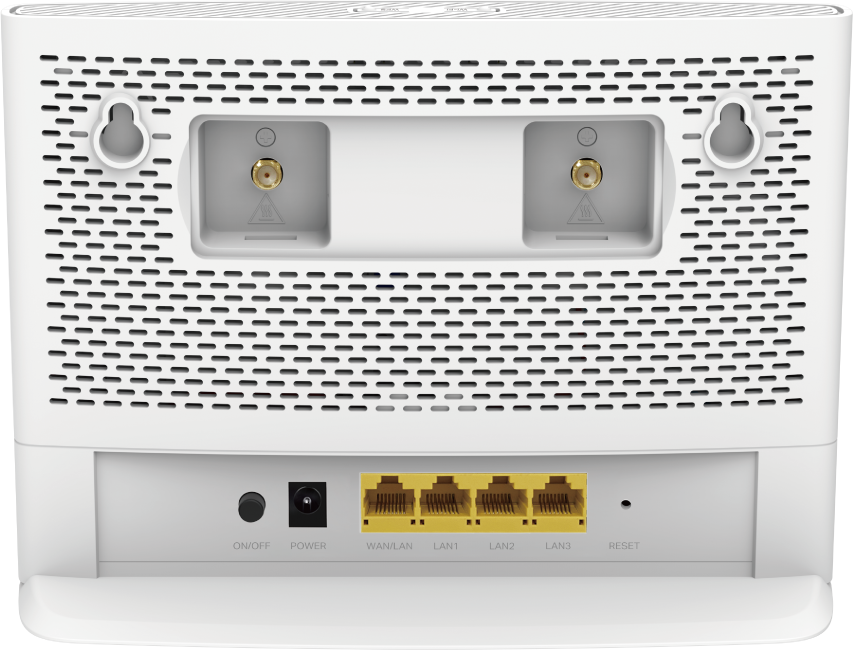
The following parts (view from left to right) are located on the back panel and top panel.
|
Item |
Description |
| ON/OFF | The switch for the power. Press it to power on or off the router. |
| POWER | For connecting the modem router to power socket via the provided power adapter. |
| WAN/LAN, LAN1, LAN2, LAN3 Ports |
For connecting the router to your PC or other Ethernet network devices. In wireless router mode, the WAN port is used for connecting to a Cable/FTTH/VDSL/ADSL device. |
| RESET | Press and hold this button for at least 5 seconds until the Power LED blinks to reset the router to its factory default settings. |
| Wi-Fi | Press and immediately release the button to turn on or off the wireless function of your router. |
| WPS | Press and immediately release the button, and within 2 minutes press the WPS button on your client to start the WPS process. |
2. Connect the Hardware
2.1 Position Your 4G LTE Router
With the router, you can access your network from anywhere within the wireless network coverage. However, the wireless signal strength and coverage varies depending on the actual environment where your router is in. Many obstacles may limit the range of the wireless signal, for example, concrete structures, thickness and number of walls.
For your security and best Wi-Fi performance, please:
-
Do not locate the router in the place where it will be exposed to moisture or excessive heat.
-
Keep away from strong electromagnetic radiation source and electromagneticsensitive devices.
-
Place the router in a location where it can be connected to multiple devices as well as to a power source.
-
Place the router in a location where it can receive a strong mobile internet signal.
-
Make sure the cables and power cord are safely placed out of the way so they do not create a tripping hazard.
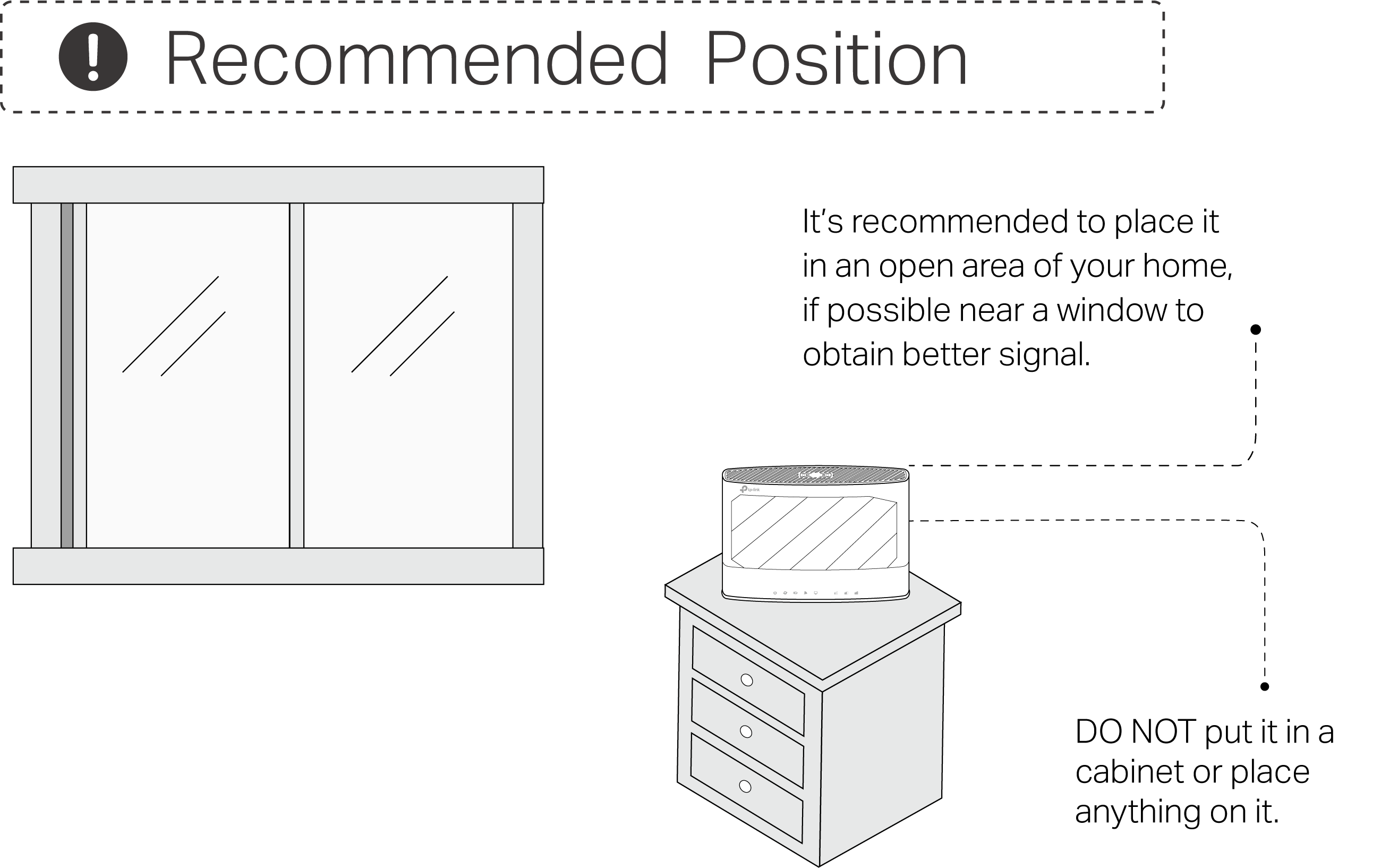
Generally, the router is placed on a horizontal surface, such as on a shelf or desktop. Try relocating the router to a spot that may receive a stronger mobile network signal, such as near a window.
2.2 Connect Your Router
Before you start, turn off your modem, if any, and remove the backup battery if it has one. And place the router horizontally and orient the antennas vertically.
Follow the steps below to connect your router.
There are two dial-up Internet access methods: dial-up Internet access via Mobile WAN (SIM card), and dial-up Internet access via EWAN. You don’t need to connect both Mobile WAN (SIM card) and EWAN.
Method 1: Via Mobile WAN
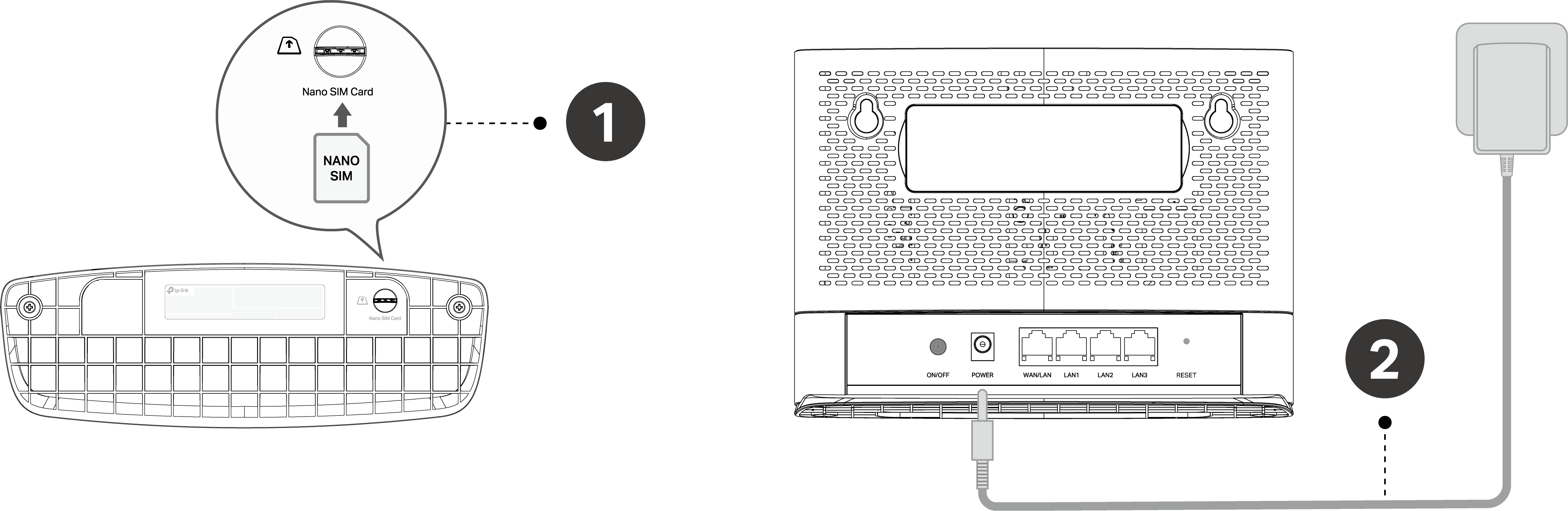
1. With the gold contacts facing right, insert the nano SIM card into the slot until you hear a click.
2. Connect the power adapter to the router and turn on the router.
Method 2: Via EWAN
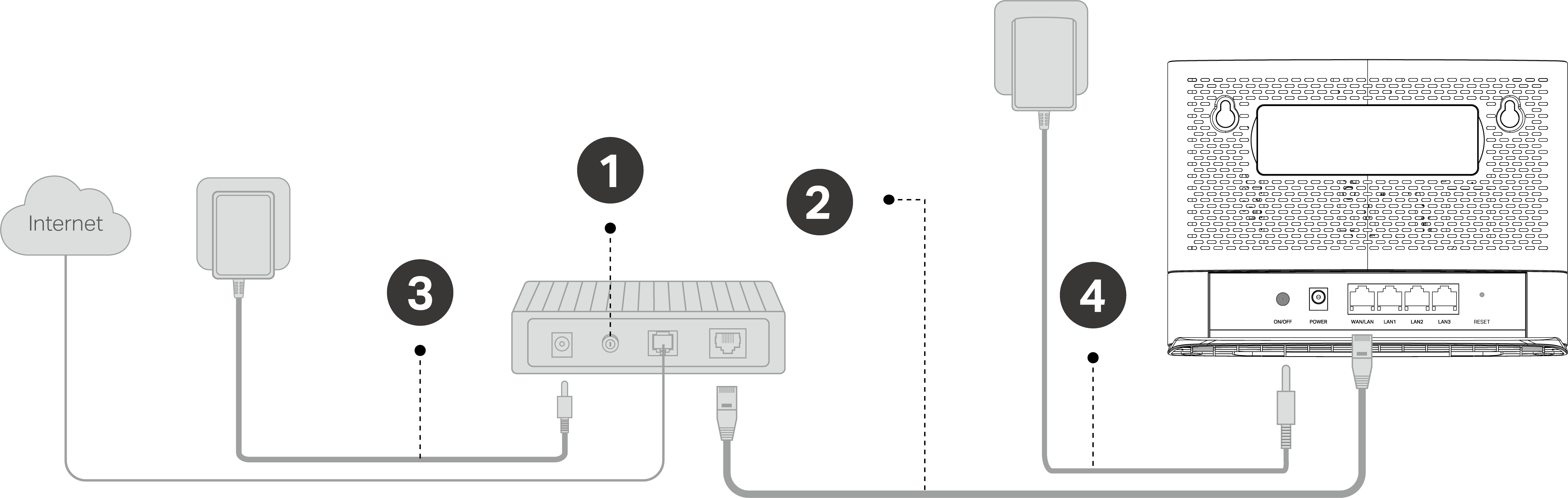
If your internet comes from an Ethernet outlet instead of a DSL / Cable / Satellite modem, connect the router’s WAN/LAN port to it, then follow steps 4 and 5 to complete the hardware connection.
1. Turn off the modem, and remove the backup battery if it has one.
2. Connect the modem to the router’s WAN port with an Ethernet cable.
3. Turn on the modem, and then wait about 2 minutes for it to restart.
4. Connect the power adapter to the router and turn on the router.
5. Verify that the hardware connection is correct by checking the Internet LED.
Note: If the Internet LED is off, please refer to FAQ > Q2.
6. Connect your computer to the router.
Option 1: Wired
Turn off the Wi-Fi on your computer and connect the devices as shown below.

Option 2: Wirelessly
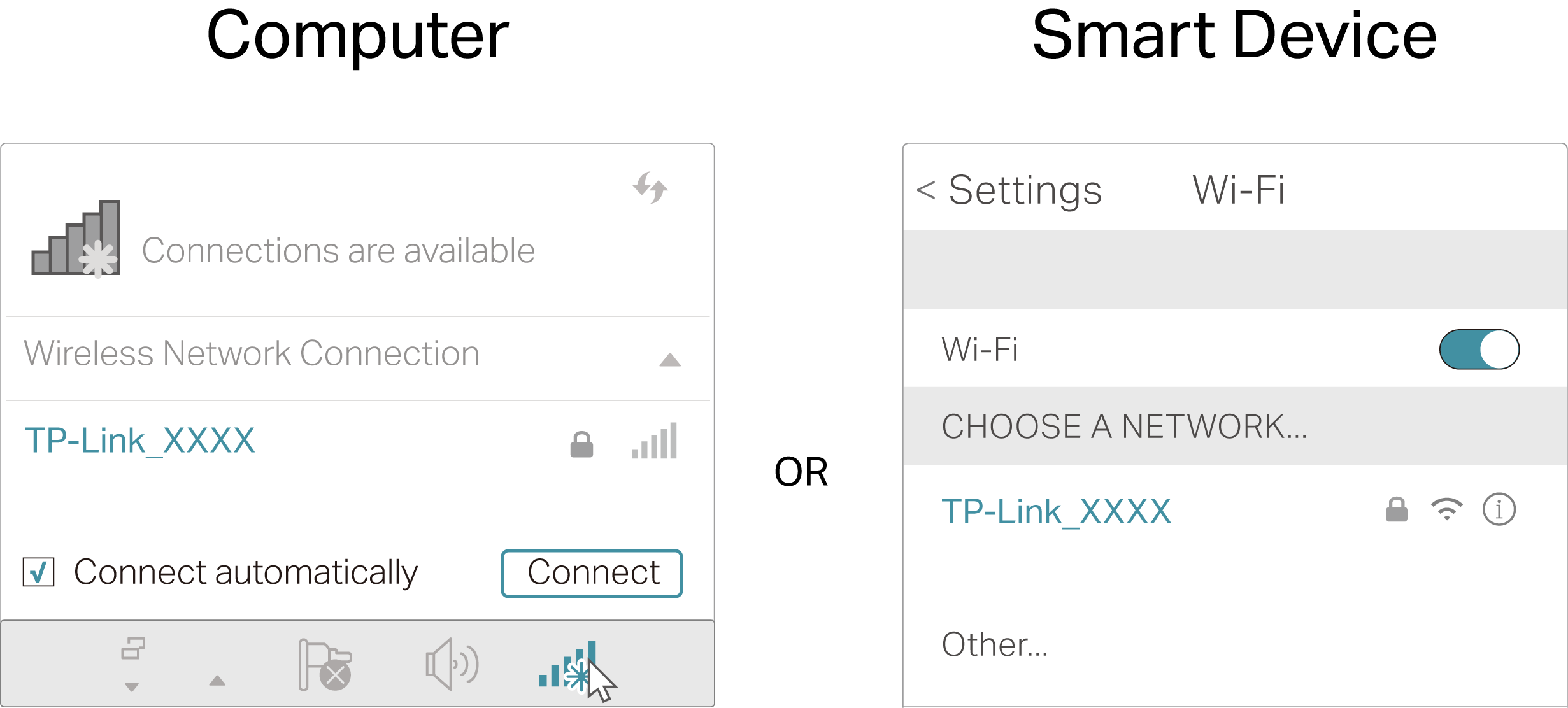
Find the SSID (Network Name) and Wireless Password printed on the label at the bottom of the router.
Click the network icon of your computer or go to Wi-Fi Settings of your smart device, and then select the SSID to join the network.
Option 3: Use the WPS button
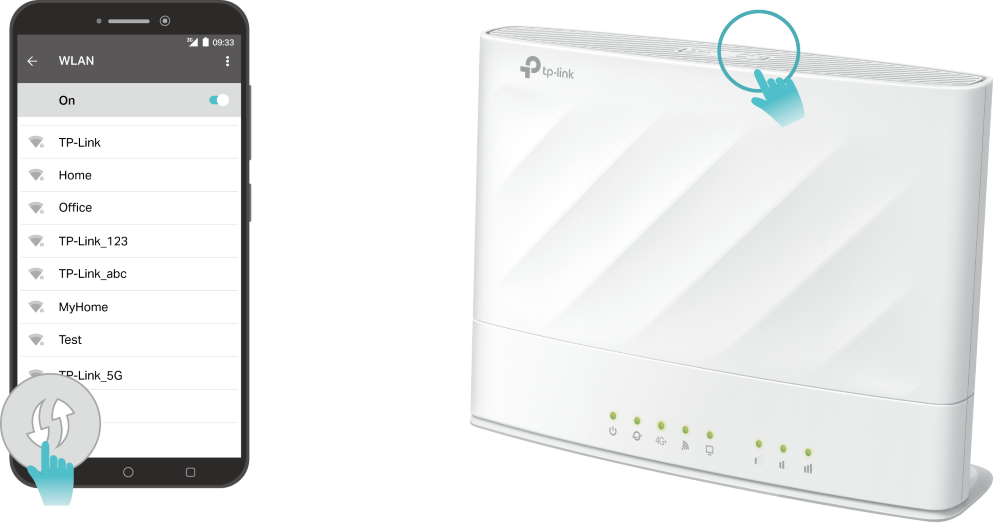
Wireless devices that support WPS, including Android phones, tablets, and most USB network cards, can be connected to your router through this method.
Notes:
• WPS is not supported by iOS devices.
• The WPS function cannot be configured if the wireless function of the router is disabled. Also, the WPS function will be disabled if your wireless encryption is WEP. Please make sure the wireless function is enabled and is configured with the appropriate encryption before configuring the WPS.
1) Tab the WPS icon on your device’s screen. Here we take an Android phone for instance.
2) Within two minutes, press the WPS button on your router.
2.3 (Optional) Install External Antennas
If you have external antennas, you can install them to strengthen the LTE Network.
1. Open the back cover.
2. Connect your external antennas.
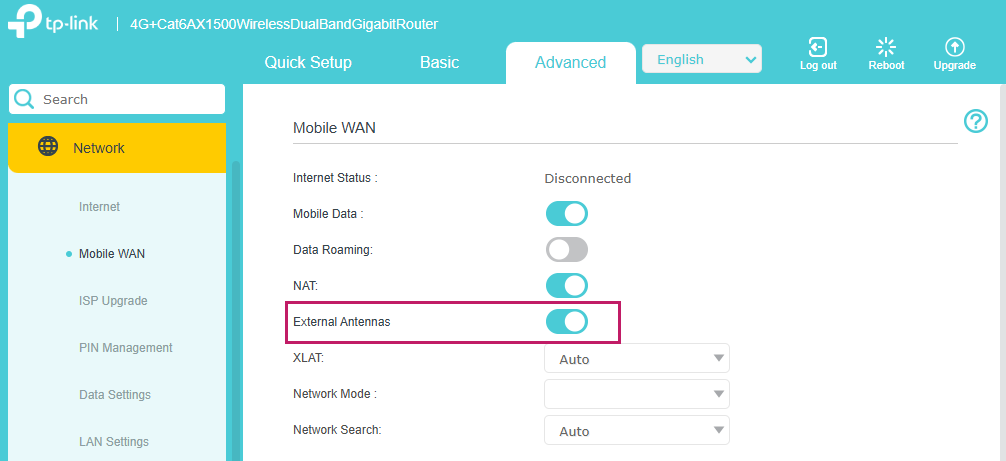
3. Enable external antennas on the web management page.
1) Launch a web browser and visit http://tplinkmodem.net or http://192.168.1.1. Create a password to log in.
2) Go to Advanced > Network > Mobile WAN.
3) Enable External Antennas.

3. Setup Your Modem Router
Method 1: Via the TP-Link Tether App
1. Launch the Apple App Store or Google Play Store and search TP-Link Tether or simply click the button below to download and install the app.


2. Launch the Tether app and log in with your TP-Link ID.
Note: If you don’t have a TP-Link ID, create one first.
3. Tap the + icon on the upper-right corner and select Add a Router. Follow app instructions to set up and connect to the internet.
Method 2: Via the Web Browser
1. Make sure your computer is connected to the router (wired or wireless).
2. Launch a web browser and type in http://tplinkmodem.net or http://192.168.1.1. Create a new password for future logins.
Note: If the login page does not appear, please refer to Q1 of FAQ in this guide.
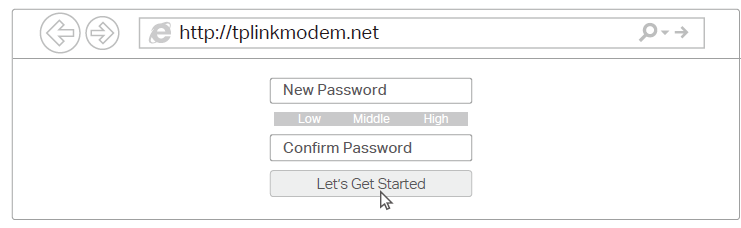
3. Follow the step-by-step instructions of the Quick Setup to complete the initial configuration.
FAQ
Q1. What should I do if I cannot access the web management page?
• If the computer is set to a static IP address, change its settings to obtain an IP address automatically.
• Make sure http://tplinkmodem.net or http://192.168.1.1 is correctly entered in the web browser.
• Use another web browser and try again.
• Reboot your router and try again.
• Disable and enable the active network adapter in use.
Q2. What should I do if I cannot access the internet?
• Verify that your SIM card is an LTE or WCDMA card.
• Verify that your SIM card is in your internet service provider’s service area.
• Verify that your SIM card has sufficient credit.
• Check the LAN connection: Open a web browser and enter http://tplinkmodem.net or http://192.168.1.1 in the address bar. If the login page does not appear, refer to Q1 and then try again.
• Launch a web browser, log in to the web management page, and check the following:
1) Go to Advanced > Network > Mobile WAN to verify the parameters provided by your ISP are correctly entered. If the parameters are incorrect, click Create Profile and enter the correct parameters, then select the new profile from the Profile Name list.
2) Go to Advanced > Network > PIN Management to verify if PIN is required. If it is, enter the correct PIN provided by your ISP, and click Save.
3) Go to Advanced > Network > Data Settings to verify if the Total/Monthly Used exceeds the Total/Monthly Allowance. If it does, click Correct and set Total/Monthly Used to 0 (zero), or disable Data Limit.
4) Go to Advanced > Network > Mobile WAN to verify that Mobile Data is enabled. If it is not, enable it to access the internet.
5) Confirm with your ISP if you are in a roaming service area. If you are, go to Advanced > Network > Mobile WAN to enable Data Roaming.
Q3. How do I restore the router to its factory default settings?
• With the router powered on, use a pin to press and hold the RESET button on the rear panel of the router until the Power LED starts flashing, then release the button. Wait while the router resets.
• Log in to the web management page of the router, and go to Advanced > System Tools > Backup & Restore, click Factory Restore and wait until the reset process is complete.
Q4. What should I do if I forget my web management page password?
• If you are using a TP-Link ID to log in, click Forgot password on the login page and then follow the instructions to reset it.
• Alternatively, refer to Q3 to reset the router, then create a new password to log in.
Q5. What should I do if I forget my wireless network password?
• The default wireless password is printed on the product label of the router.
• Connect a computer directly to the router using an Ethernet cable. Log in to the router's web management page and go to Basic > Wireless to retrieve or reset your wireless password.
Q6. How should I position my router for optimal network connection?
• Don’t place your router in a corner or in a closet.
• Avoid obstacles and high-powered appliances.
• Keep your router in a higher location, ideally near a window.
Authentication
CE Mark Warning

Power Adapter
| Manufacturer | Spec | Model |
|---|---|---|
| TP-Link | US | T120150-2B1 |
| TP-Link | CE | T120150-2C1 |
| TP-Link | UK | T120150-2D1 |
| TP-Link | AU | T120150-2E1 |
| TP-Link | AR | T120150-2F1 |
| TP-Link | KR | T120150-2H1 |
OPERATING FREQUENCY(the maximum transmitted power)
2400MHz~2483.5MHz (20dBm)
5150MHz~5250MHz (23dBm)
LTE Band1,3,5,7,8,20,28,38,40,41 (23 dBm ±1 dB)
WCDMA Band 1,5,8 (23.5 dBm ±1 dB)
EU Declaration of Conformity
TP-Link hereby declares that the device is in compliance with the essential requirements and other relevant provisions of directives 2014/53/EU, 2009/125/EC, 2011/65/EU and (EU)2015/863.
The original EU Declaration of Conformity may be found at https://www.tp-link.com/en/support/ce/
RF Exposure Information
This device meets the EU requirements (2014/53/EU Article 3.1a) on the limitation of exposure of the general public to electromagnetic fields by way of health protection.
The device complies with RF specifications when the device used at 20 cm from your body.
National Restrictions
Frequency band: 5150 - 5250 MHz:
Indoor use: Inside buildings only. Installations and use inside road vehicles and train carriages are not permitted. Limited outdoor use: If used outdoors, equipment shall not be attached to a fixed installation or to the external body of road vehicles, a fixed infrastructure or a fixed outdoor antenna. Use by unmanned aircraft systems (UAS) is limited to within the 5170 - 5250 MHz band.
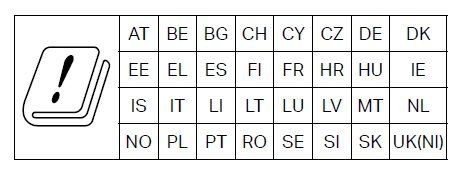
UKCA Mark

UK Declaration of Conformity
TP-Link hereby declares that the device is in compliance with the essential requirements and other relevant provisions of the Radio Equipment Regulations 2017.
The original UK Declaration of Conformity may be found at https://www.tp-link.com/support/ukca/
Attention: This device may only be used indoors in Great Britain.
Korea Warning Statements:
당해 무선설비는 운용중 전파혼신 가능성이 있음.

NCC Notice & BSMI Notice
注意!
取得審驗證明之低功率射頻器材,非經核准,公司、商號或使用者均不得擅自變更頻率、加大功率或變更原設計之特性及功能。
低功率射頻器材之使用不得影響飛航安全及干擾合法通信;經發現有干擾現象時,應立即停用,並改善至無干擾時方得繼續使用。
前述合法通信,指依電信管理法規定作業之無線電通信。
低功率射頻器材須忍受合法通信或工業、科學及醫療用電波輻射性電機設備之干擾。
應避免影響附近雷達系統之操作。
高增益指向性天線只得應用於固定式點對點系統。
減少電磁波影響,請妥適使用。
電波功率密度 MPE 標準值:1mW/cm²,送測產品實測值:0.0743mW/cm²,建議使用時設備天線至少距離人體20公分。
安全諮詢及注意事項
-
請使用原裝電源供應器或只能按照本產品注明的電源類型使用本產品。
-
清潔本產品之前請先拔掉電源線。請勿使用液體、噴霧清潔劑或濕布進行清潔。
-
注意防潮,請勿將水或其他液體潑灑到本產品上。
-
插槽與開口供通風使用,以確保本產品的操作可靠並防止過熱,請勿堵塞或覆蓋開口。
-
請勿將本產品置放於靠近熱源的地方。除非有正常的通風,否則不可放在密閉位置中。
-
不要私自拆開機殼或自行維修,如產品有故障請與原廠或代理商聯繫。
限用物質含有情況標示聲明書
| 設備名稱:4G+ Cat6 AX1500 Wireless Dual Band Gigabit Router 型號(型式):Archer MX700/Archer MX1500 Equipment name Type designation (Type) |
||||||
|---|---|---|---|---|---|---|
| 單元 Unit |
限用物質及其化學符號 Restricted substances and its chemical symbols |
|||||
| 鉛 Lead (Pb) |
汞 Mercury (Hg) |
鎘 Cadmium (Cd) |
六價鉻 Hexavalent chromium (Cr+6) |
多溴聯苯 Polybrominated biphenyls (PBB) |
多溴二苯醚 Polybrominated diphenyl ethers (PBDE) |
|
| PCB | ○ | ○ | ○ | ○ | ○ | ○ |
| 外殼 | ○ | ○ | ○ | ○ | ○ | ○ |
| 電源供應器 | − | ○ | ○ | ○ | ○ | ○ |
| 其他及其配件 | − | ○ | ○ | ○ | ○ | ○ |
| 備考1.〝超出0.1 wt %〞及〝超出0.01 wt %〞係指限用物質之百分比含量超出百分比含量基準值 Note 1:“Exceeding 0.1 wt %” and “exceeding 0.01 wt %” indicate that the percentage content of the restricted substance exceeds the reference percentage value of presence condition. 備考2.〝○〞係指該項限用物質之百分比含量未超出百分比含量基準值。 Note 2:“○” indicates that the percentage content of the restricted substance does not exceed the percentage of reference value of presence. 備考3.〝-〞係指該項限用物質為排除項目。 Note 3:The “−” indicates that the restricted substance corresponds to the exemption. |
||||||

Продукт сертифіковано згідно с правилами системи УкрСЕПРО на відповідність вимогам нормативних документів та вимогам, що передбачені чинними законодавчими актами України.

Safety Information
-
Keep the device away from water, fire, humidity or hot environments.
-
Do not attempt to disassemble, repair, or modify the device. If you need service, please contact us.
-
Do not use damaged charger or USB cable to charge the device.
-
Do not use any other chargers than those recommended.
-
Do not use the device where wireless devices are not allowed.
-
Adapter shall be installed near the equipment and shall be easily accessible.
-
Use only power supplies which are provided by manufacturer and in the original packing of this product. If you have any questions, please don’t hesitate to contact us.
-
Operating Temperature: 0℃~40℃
-
請勿使用損壞的充電器或USB線來供應設備充電。
-
請勿使用推薦充電器以外的任何其他充電器。
-
變壓器應安裝在設備附近且易於操作。
-
運作溫度: 0°C~40°C (32°F~104°F)
This product uses radios and other components that emit electromagnetic fields. Electromagnetic fields and magnets may interfere with pacemakers and other implanted medical devices. Always keep the product and its power adapter more than 15 cm (6 inches) away from any pacemakers or other implanted medical devices. If you suspect your product is interfering with your pacemaker or any other implanted medical device, turn off your product and consult your physician for information specific to your medical device.
Please read and follow the above safety information when operating the device. We cannot guarantee that no accidents or damage will occur due to improper use of the device. Please use this product with care and operate at your own risk.
Explanation of the symbols on the product label
Note: The product label is on the bottom of the product and its I.T.E. power supply. Symbols may vary from products.
| Symbol 符號解釋 |
Explanation 解釋 |
|---|---|
 |
Class II equipment Class II 設備 |
 |
Class II equipment with functional earthing 具有功能接地的Class II 設備 |
 |
Alternating current 交流電 |
 |
DC voltage 直流電壓 |
 |
Polarity of output terminals 輸出端子極性 |
 |
Indoor use only 僅限室內使用 |
 |
Dangerous voltage 危險電壓 |
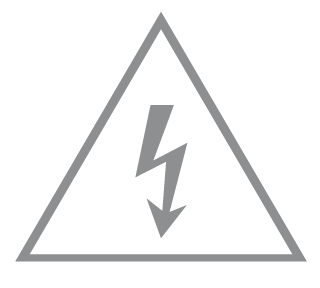 |
Caution, risk of electric shock 注意,有觸電危險 |
 |
Energy efficiency Marking 能源效率標示 |
 |
Protective earth 保護地線 |
 |
Earth 地線 |
 |
Frame or chassis 機架接地 |
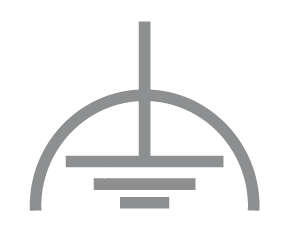 |
Functional earthing 功能地線 |
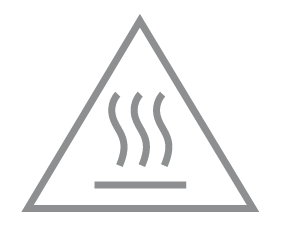 |
Caution, hot surface 警告,表面高溫 |
 |
Caution 警告 |
 |
Operator’s manual 操作手冊 |
 |
Stand-by 待機 |
 |
“ON”/”OFF” (push-push) 「開」/「關」 ( 按壓式) |
 |
Fuse 保險絲 |
 |
Fuse is used in neutral N 保險絲用於中性線N |
 |
RECYCLING This means that this product must be handled pursuant to European directive 2012/19/EU in order to be recycled or dismantled to minimize its impact on the environment. |
| m | Switch of mini-gap construction 微間隙結構的開關 |
| µ | Switch of micro-gap construction (for US version) Switch of micro-gap / micro-disconnection construction (for other versions except US) 微小間隙結構開關(適用於美國版) 微小間隙 / 微小斷開結構開關(適用於美國以外的其他版本) |
| ε | Switch without contact gap (Semiconductor switching device) 無接點間隙開關(半導體開關裝置) |