
How to configure the TP-Link Travel Router in Client mode
 141941
Introduction
The TP-Link Travel Routers support multiple operating modes to accommodate diverse connectivity needs, including Wireless Router/Access Point/Range Extender/Client/Hotspot mode. This article provides step-by-step instructions for configuring them in client mode effectively.
In client mode, it connects to a wired device and functions as a wireless adapter, allowing it to receive signals from your wireless network. For devices like Smart TVs, Media Players, or game consoles that have an Ethernet port, use client mode to enable Wi-Fi connectivity and grant them access to your wireless network.
If it doesn’t match your network environment, identify which operation mode is suitable for you first.
Configuration
Note: This guide uses TL-WR902AC and TL-WR3602BE as reference models to show the installation steps. The actual interface and function options shown in this FAQ may vary slightly from those of your product model. For more details, please refer to your router's User Guide.
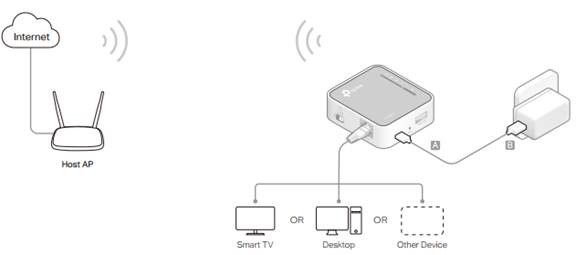
Step 1. Switch the operating mode to AP/Rng Ext/Client, and plug the router into an electrical outlet within the signal range of your host router (host AP).
Note: There is no physical switch button on the TL-WR802N and TL-WR810N to control the operating mode; you can select the mode after accessing the web management.
Step 2. Connect one computer to the router wirelessly or via an Ethernet cable. The Wi-Fi network name (SSID) and password are on the router’s label.
Step 3. Open a browser to visit tplinkwifi.net to log in to the web management page with the username and password you set for the router. The default is admin (all lowercase) for both the username and the password.
Step 4. Click Next to start the Quick Setup.
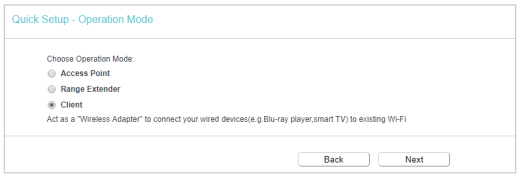
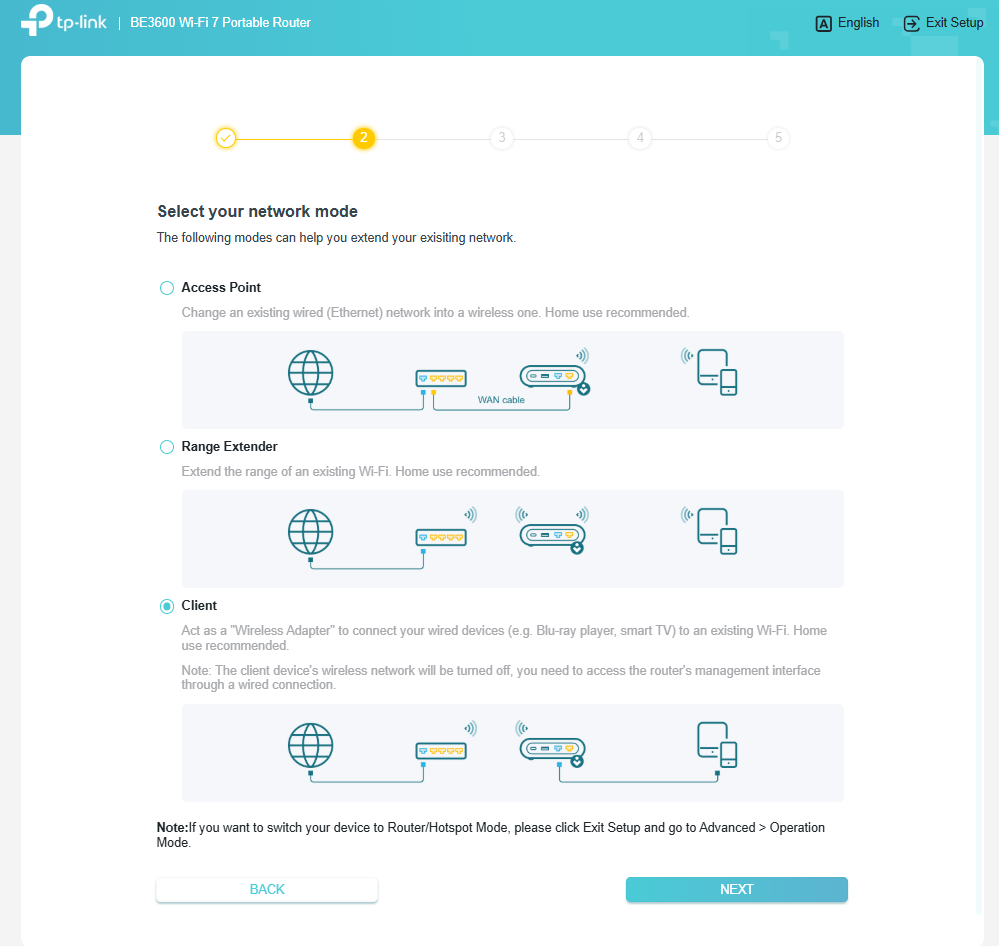
Step 5. Select the Client for the router's operation mode.
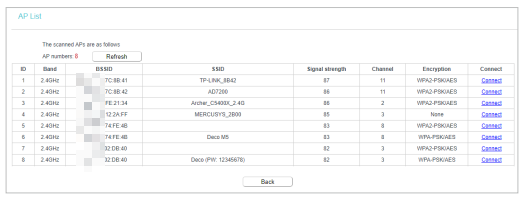
Step 6. Click Connect to connect to the host network in the AP List page.
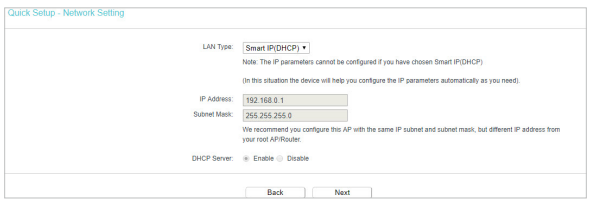
Step 7. Select the LAN IP type for the router, or leave the default Smart IP (DHCP) for most cases, then click Next.
Step 8. Click Finish to apply the settings. Now connect your wired-only device to the router with an Ethernet cable.
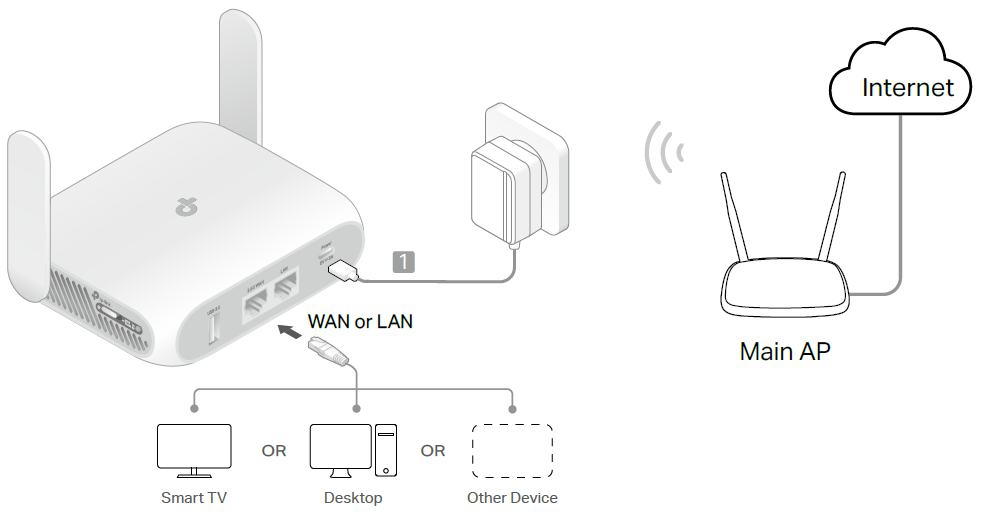
Step 1. Power on the travel router near your main router (main AP) until the LED turns solid (red or blue), then move on.
Step 2. Connect one device to the travel router wirelessly or via a wired connection.
- Wirelessly: Connect your computer to the router’s Wi-Fi. The default wireless network name (SSID) and wireless password are printed on both the Wi-Fi info card and the label at the bottom of the router.
- Wired: Turn off the Wi-Fi on your computer and connect to the LAN port of the router with an Ethernet cable.
Step 3. Open a browser to visit tplinkwifi.net or 192.168.0.1, and create a local password to sign in to the web management page. If you have already configured this device, it will ask you to enter the local password. Once sign in, go to Step 6.
Note: If you do not remember the local password, get a pin to press the reset hole for 6 seconds to perform a hard reset.
Step 4. Select your time zone, and click NEXT.
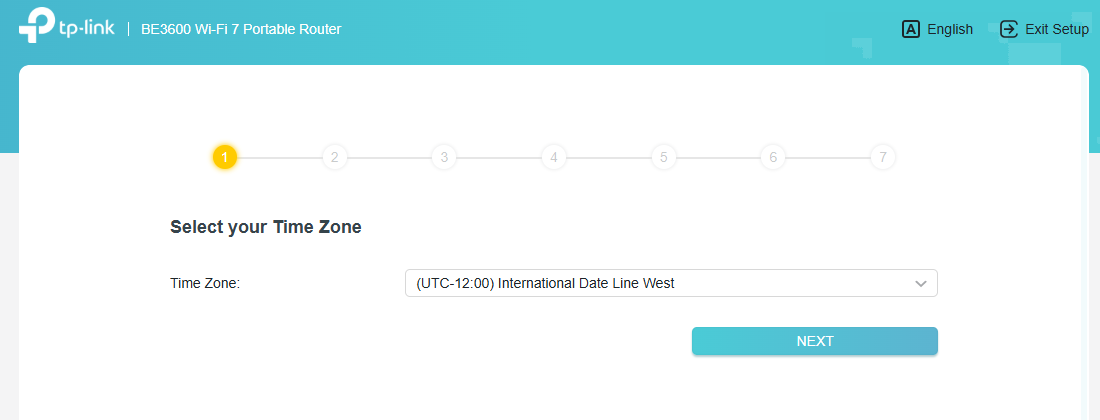
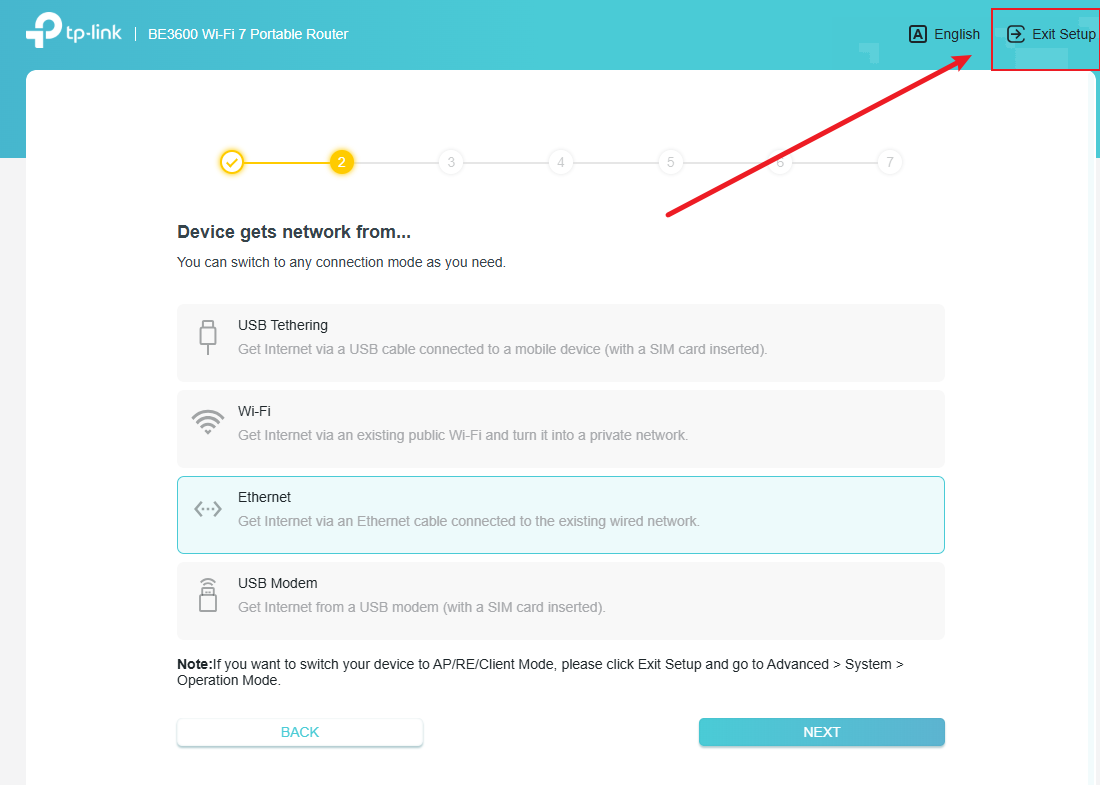
Step 5. On the next page, select Exit Setup, then click EXIT in the pop-up dialog to terminate the current configuration.
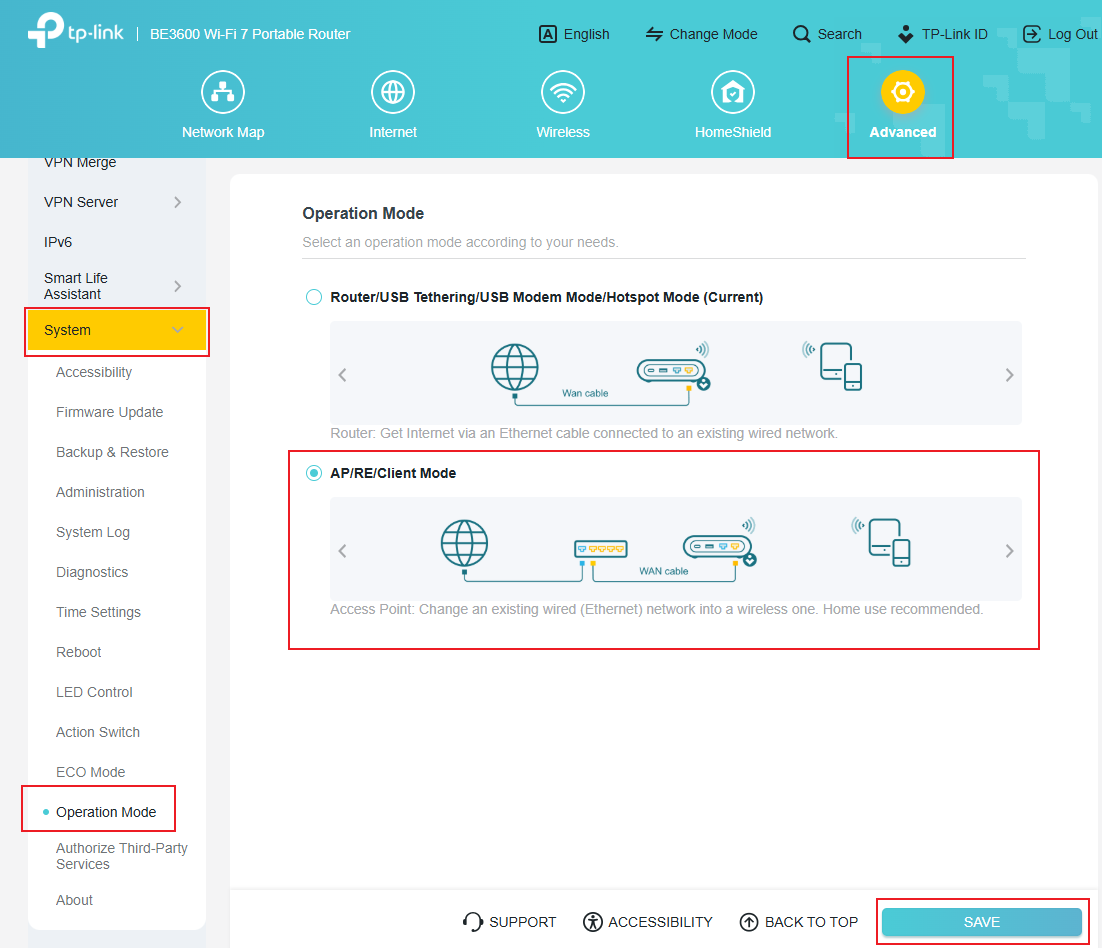
Step 6. Navigate to Advanced > System > Operation Mode, select AP/RE/Client Mode, and apply changes with SAVE.
Note: When switching from Access Point Mode or Range Extender Mode to Client Mode, navigate to Advanced > Network > Network Mode, select Client as the active configuration, then confirm the changes by clicking SAVE. (Configuration requires a system reboot to activate new parameters.) Then go to Step 8.
Step 7. In the next confirmation window, revalidate the Client mode selection, then execute REBOOT and wait for the successful configuration deployment.
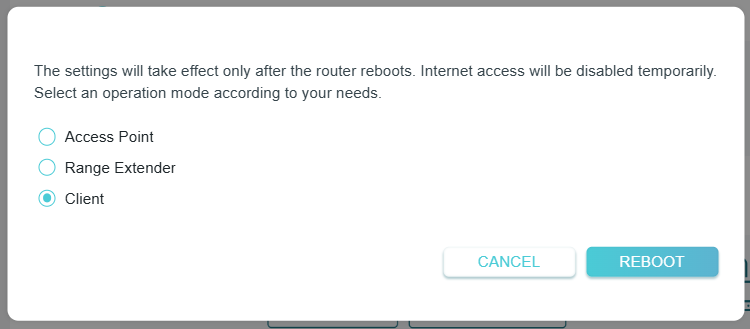
Step 8. Connect the device to the travel router’s LAN port, then try accessing the web management page at tplinkwifi.net and authenticate with the local password.
Step 9. Set your time zone, configure the Client as the network mode, then click NEXT.
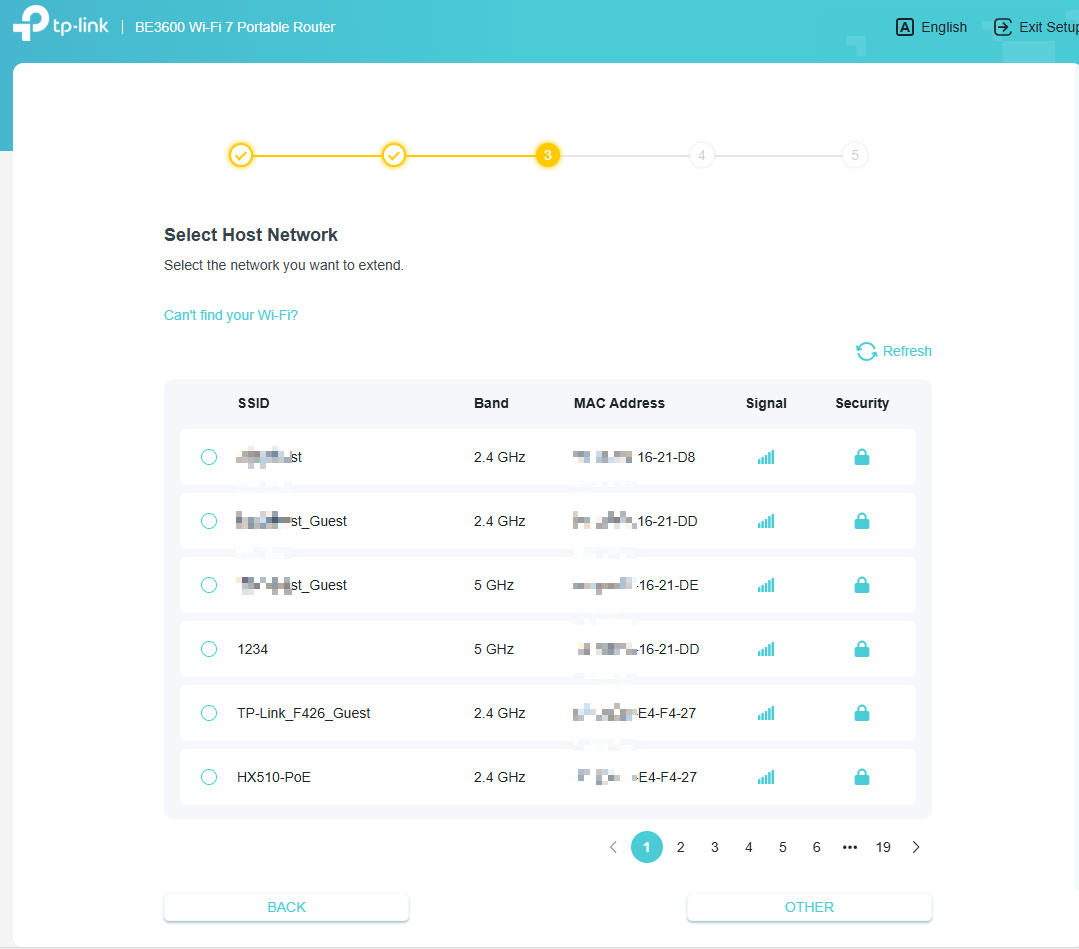
Step 10. Select the network signal of the main AP, then enter the correct Wi-Fi passwords.
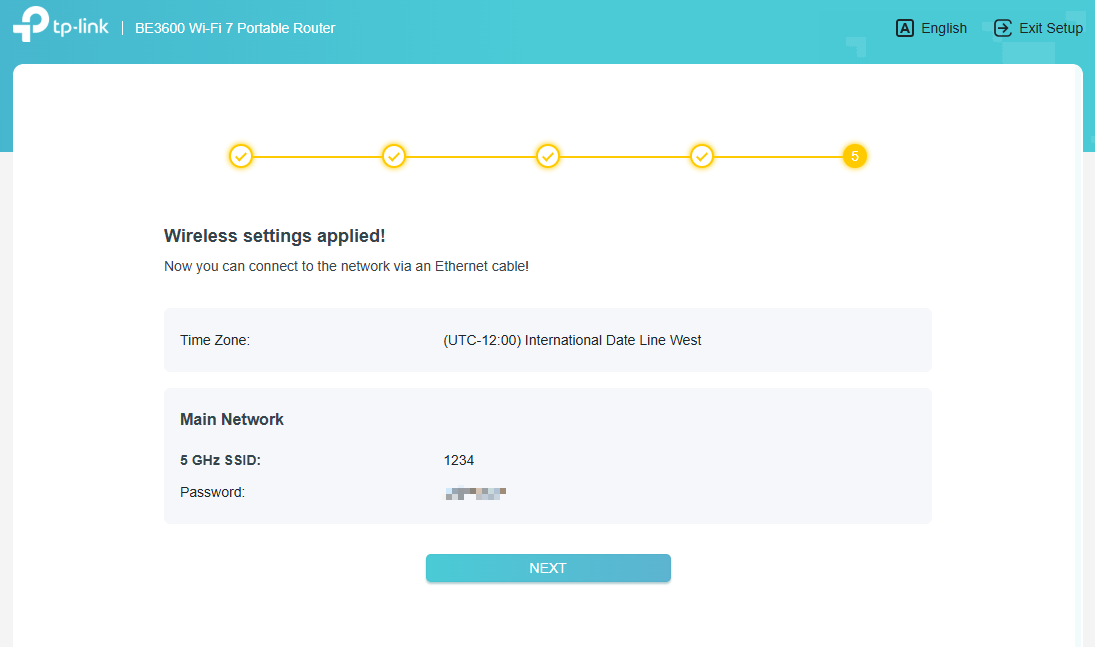
Step 11. Review firmware update preferences, confirm with NEXT, and then wait for it to apply the settings.
QA
Q1: Can I still connect to the travel router’s Wi-Fi when it is in client mode?
A1: No. In client mode, the router will not broadcast a Wi-Fi signal, so you can only connect your devices to it via a wired connection.
Get to know more details of each function and configuration. Please go to the Download Center to download the manual for your product.
Byla tato FAQ užitečná?
Vaše zpětná vazba nám pomůže zlepšit naše webové stránky
-3.0-package_normal_1584497266805j.png)
3.0-L-D-2000px_normal_1584496942417r.png)