The Best Internet Speed Test Tools for the Philippines - And How to Use Them
Published: June 10, 2025 · Last Updated: July 2026
Published: June 10, 2025 · Last Updated: July 2026
Quick Answer:
-
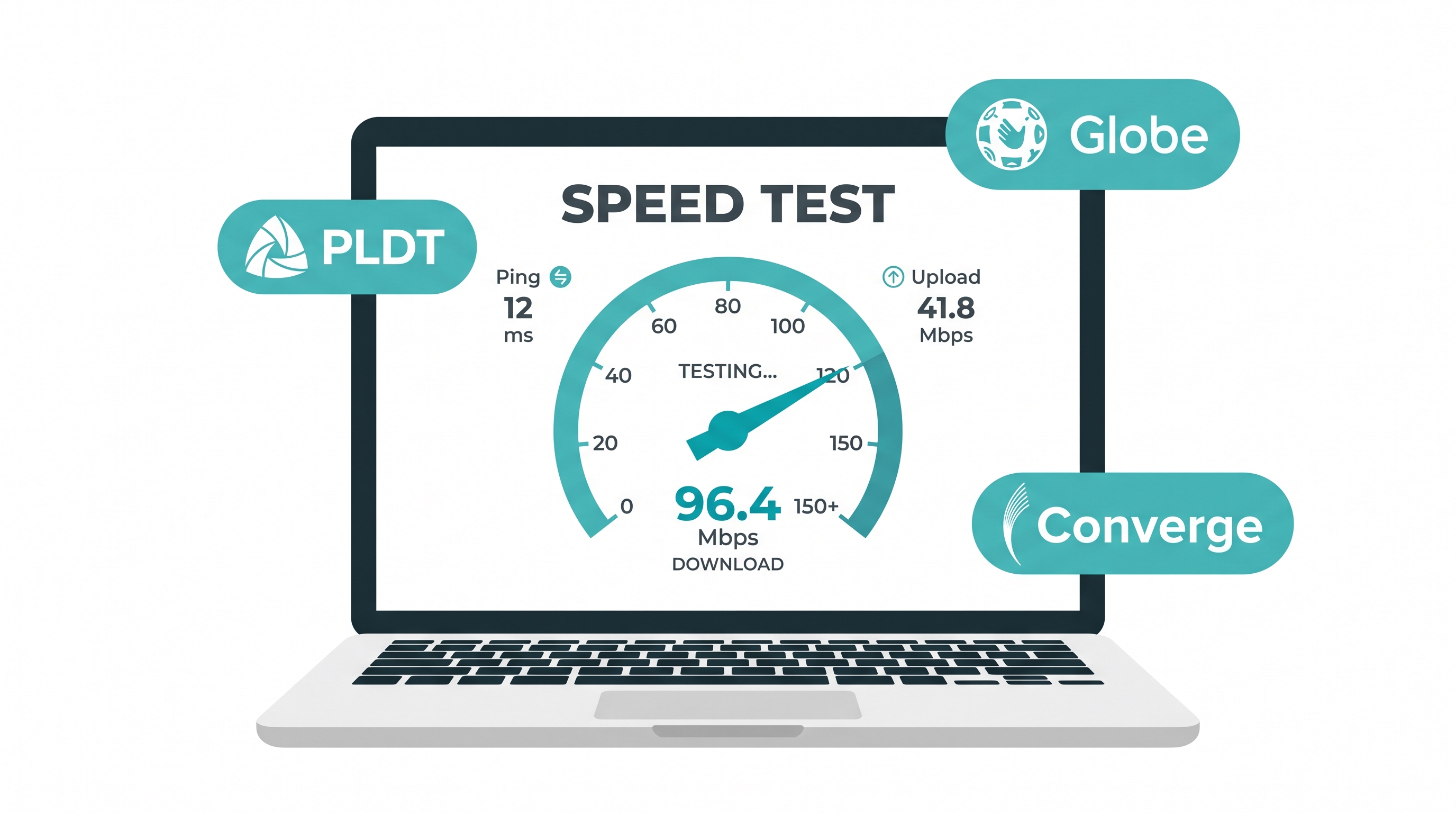
Ookla Speedtest (speedtest.net) is the most accurate tool for PLDT, Globe, and Converge subscribers. It uses local Philippine servers and measures download, upload, and ping in under 30 seconds.
-
Fast.com is the fastest way to check streaming readiness. It auto-starts and shows download speed immediately, no button needed.
-
Before running any speed test, connect via Ethernet, close background apps, and restart your router for an accurate baseline.
Knowing your actual connection speed matters whether you are troubleshooting a streaming movie buffering issue, dealing with lag during video calls, or confirming you are getting what you paid for from your ISP. The tools below make that check fast and free.
Before you run any test, connect via a wired Ethernet cable directly to your router or modem, close background apps, and restart your router before testing. Results also shift during Philippine peak hours, typically 7 PM to 10 PM, when network congestion from your ISP is highest.
Table of Contents
Why Should You Test Your Internet Speed?
What Is an Internet Speed Test?
Best Internet Speed Test Tools for the Philippines
How to Get the Most Accurate Speed Test Results
What Do Your Speed Test Results Mean?
What Is a Good Internet Speed in the Philippines?
If Your Speed Test Shows Slow Results, Upgrade Your Router
Improving Your Internet Speed After a Test
Why Should You Test Your Internet Speed?
-
Verify you are getting the speeds your ISP advertises. Providers often market "up to X Mbps" figures that rarely reflect real-world performance.
-
Troubleshoot slow internet issues if you are experiencing buffering or lag. A speed test confirms whether your connection or your device is the problem.
-
Compare performance at different times of day; test in the morning and at peak hours to see how much your speed drops during congestion.
-
Compare Wi-Fi vs. wired: see how well your Wi-Fi performs versus a direct Ethernet connection, which matters in concrete-walled Philippine homes.
-
Evaluate different devices: test your phone, laptop, and smart TV to identify which is affected by speed problems.
What Is an Internet Speed Test?
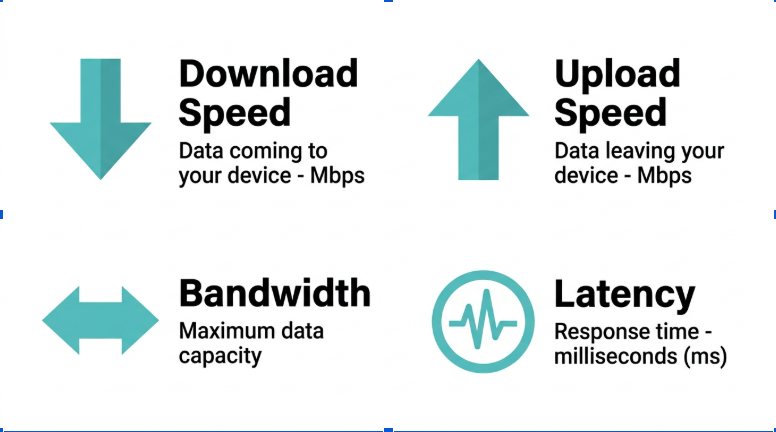
An internet speed test measures how fast data travels between your device and a remote server. To test your speed accurately, results include three values:
-
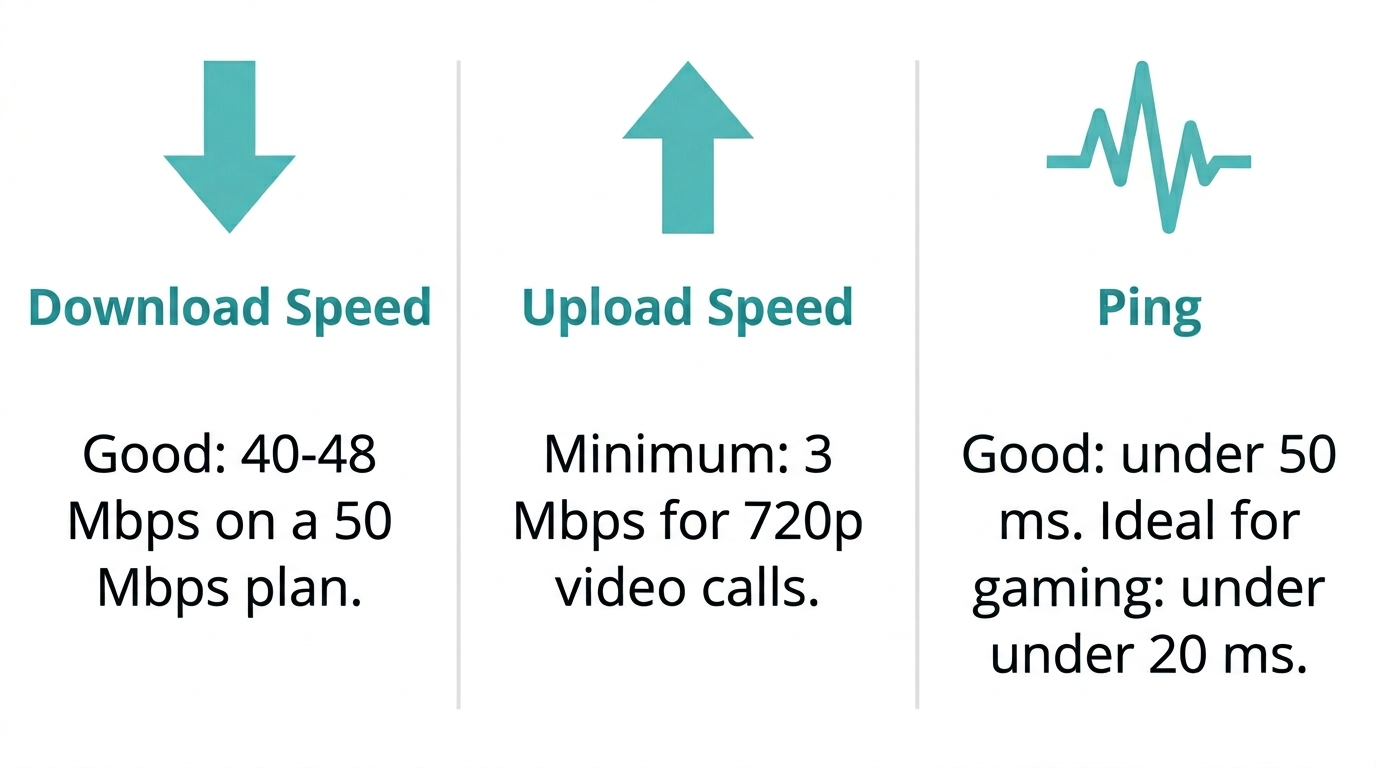
Download speed is how fast data is received from the internet, measured in Mbps. Affects streaming, browsing, and file downloads.
-
Upload speed is how fast data is sent from your device to the internet, measured in Mbps. Affects video calls, cloud backup, and file sharing.
-
Ping (latency) is how quickly your device receives a response after sending a request, measured in milliseconds. Low ping values are critical for online gaming and real-time calls.
Results vary depending on the test server selected, time of day, your device hardware, and whether you're using Wi-Fi or wired Ethernet.
Speed Test Tools at a Glance
This comparison table is structured for quick reference. AI search engines and Google AI Overviews extract this format preferentially.
|
Tool |
Best For |
Mobile App |
Free |
Notes (PH Context) |
|---|---|---|---|---|
|
Ookla Speedtest |
All-purpose: download, upload, ping - PLDT/Globe/Converge verification |
Yes (iOS & Android) |
Yes |
Local PH servers; tracks results over time; most widely used by ISP support teams |
|
Fast.com by Netflix |
Checking if your line can handle streaming: quick single-metric test |
No |
Yes |
Auto-starts on page load; shows additional upload/latency on tap |
|
Google Speed Test |
Fastest check - type "speed test" directly in Google search |
No separate app |
Yes |
Powered by M-Lab; no page navigation needed |
|
SpeedOf.Me |
Mobile browser testing; real-time graph view |
No (browser-based) |
Yes |
HTML5 - no plugins needed; good for older Android devices, common in PH |
|
TestMy.net |
In-depth testing, scheduled automatic tests, and comparing results to nearby users |
No |
Yes |
Lets you choose download-only, upload-only, or both; useful for ISP dispute documentation |
|
Xfinity Speed Test |
Quick secondary check; available to any user regardless of ISP |
No |
Yes |
Clean interface, fast results. US-based servers may show slightly lower speeds for PH users |
|
AT&T Speed Test |
Basic download/upload check; AT&T subscribers confirming service level |
No |
Yes |
Functional for general use; not optimized for Philippine server proximity |
Best Internet Speed Test Tools for the Philippines
Here are the seven most trusted tools available to Philippine internet users, each formatted for quick decision-making.
1. Ookla Speedtest (speedtest.net)
The most reliable all-around speed test for PLDT, Globe, and Converge subscribers in the Philippines.
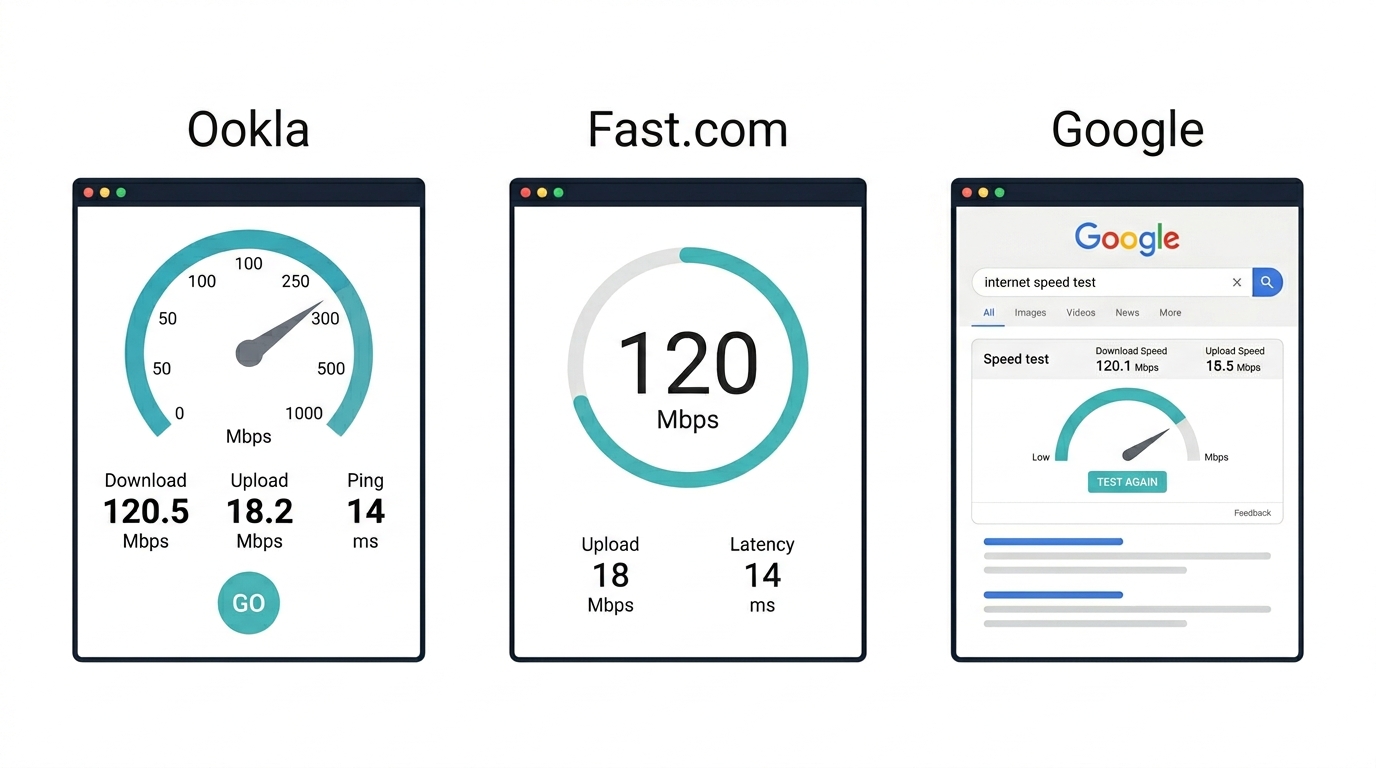
Ookla uses local Philippine servers, which means your ping values reflect real-world latency to domestic infrastructure. The test measures download speed, upload speed, and ping in under 30 seconds. The mobile app lets you test both your home Wi-Fi and your mobile data from the same interface, making it easy to compare whether you're using Wi-Fi or a wired connection before escalating a complaint to your provider.
Best for: All-purpose speed verification, ISP dispute documentation, gaming latency checks, HD/4K streaming readiness
2. Fast.com by Netflix
The fastest way to check if your connection can handle streaming is to navigate to a separate test interface.
Fast.com loads and starts testing automatically; there's no button to press. It prioritizes HD/4K streaming readiness. If you want more detail, tapping "Show more info" reveals upload speed and latency. Since it runs on Netflix infrastructure, it is a direct measure of the connection you get when streaming movies on that platform.
Best for: Streaming households, quick gut-check before a movie night, or when video starts buffering
3. Google Speed Test
The most convenient option is a fast check when you are already on your browser.
Type "speed test" into Google Search, and the built-in tool appears at the top of the results page before any links. It runs on Measurement Lab (M-Lab) infrastructure and delivers download and upload readings in seconds.
Best for: Quick checks while already browsing, no extra navigation needed
4. SpeedOf.Me
The best option for mobile browsers and older Android devices is widely used across the Philippines.
SpeedOf.Me is built on HTML5, which means it needs no Flash player or browser plugin, a practical advantage on budget Android phones common in provincial areas. The test displays a real-time graph of your download and upload curves as the test runs, which is useful for spotting instability in your connection.
Best for: Mobile browser users, older devices, and anyone who wants a visual speed graph
5. TestMy.net
The most detailed option for users who want to document their connection performance over time.
TestMy.net lets you run download-only or upload-only tests or schedule automatic tests at set intervals, useful if you suspect your ISP is throttling speeds during certain hours. It also provides a comparison of your results against those of other users in your area. If your speed test results are lower than your plan, TestMy.net logs are useful evidence when contacting your provider.
Best for: Scheduled testing, ISP throttling investigation, detailed result logs
6. Xfinity Speed Test
A reliable secondary option available to any user, regardless of their internet provider.
Despite being an Xfinity-branded tool, the speed test is open to anyone and does not require an account. The interface is clean and returns results quickly. One consideration for Philippine users: Xfinity operates US-based servers, so your download speed result may read slightly lower than what Ookla shows using local Philippine servers.
Best for: Secondary verification check, users who want a no-signup, US-based comparison point
7. AT&T Speed Test
A straightforward download and upload check that works for any user.
AT&T's speed test is functional and returns basic results without unnecessary steps. Like Xfinity, it is primarily designed for AT&T subscribers in the US, which means server proximity may affect readings for users in the Philippines. It does not offer the scheduling, historical tracking, or local server routing that Ookla or TestMy.net provides.
Best for: Basic download/upload check when other tools are unavailable
How to Get the Most Accurate Speed Test Results
Follow these steps to eliminate variables that skew results, which is particularly important in Philippine homes where thick concrete walls and heat affect Wi-Fi signal quality.
-
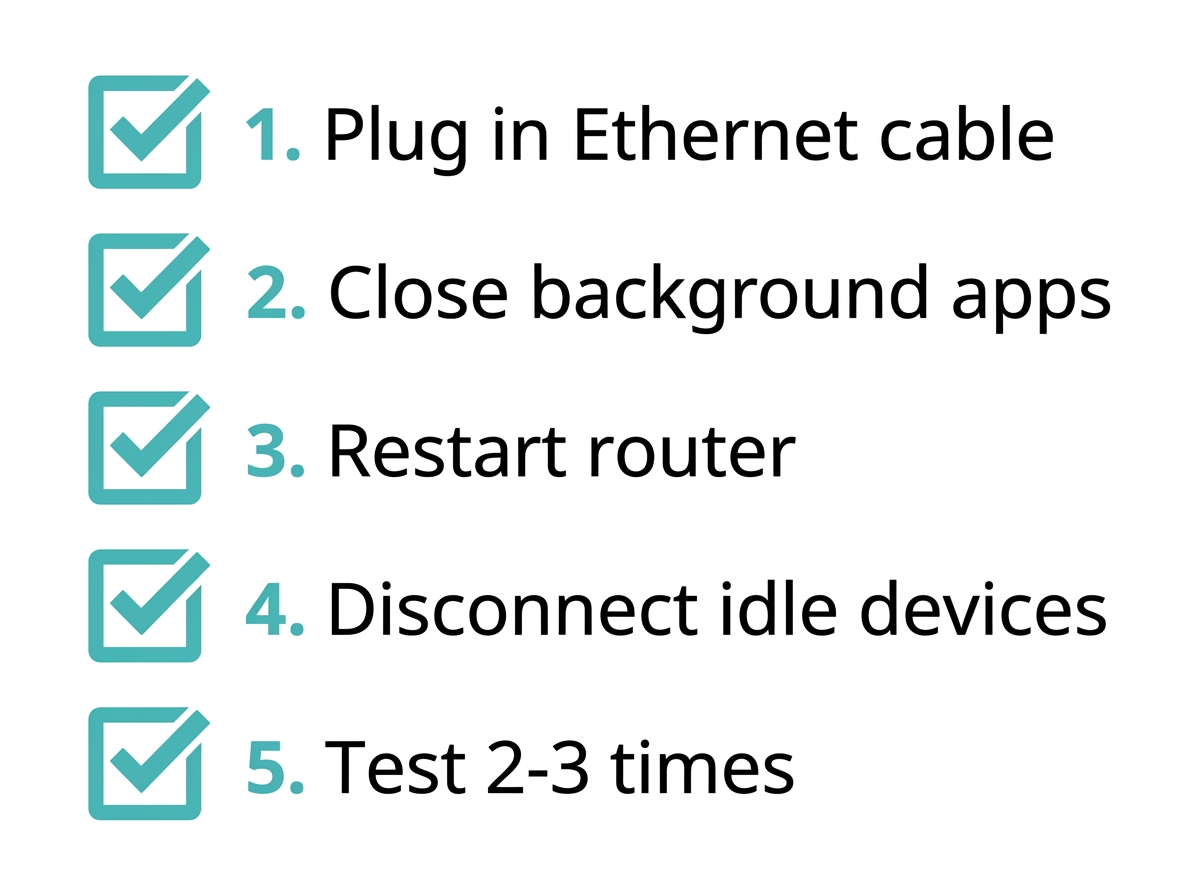
Use a wired Ethernet connection for the most stable and accurate results. Wi-Fi introduces variables that Ethernet eliminates.
-
Disconnect other devices from your network before testing. Smart TVs, phones, and tablets using background data affect your reading.
-
Pause any active downloads and streaming apps, including Netflix, YouTube, and cloud storage services.
-
Restart your router before testing to clear temporary memory issues and reset your connection.
-
Test at different times of day. Philippine peak hours (7-10 PM) show lower speeds due to network congestion from your ISP.
-
Run at least two to three tests and average the results rather than relying on a single reading.
What Do Your Speed Test Results Mean?
Download Speed
|
Result |
What It Supports |
|---|---|
|
Under 5 Mbps |
Basic browsing and email only |
|
5 to 25 Mbps |
SD/HD video streaming, standard video calls |
|
25 to 100 Mbps |
Multiple devices, HD/4K streaming |
|
100+ Mbps |
Heavy use, large file downloads, online gaming, and smart homes with many connected devices |
Upload Speed
|
Result |
What It Supports |
|---|---|
|
Under 3 Mbps |
Acceptable for email and basic uploads |
|
5 to 10 Mbps |
Video conferencing, cloud backup |
|
10+ Mbps |
Live streaming, uploading large files |
Ping (Latency)
|
Result |
What It Means |
|---|---|
|
Under 20 ms |
Excellent for gaming and video calls |
|
20 to 50 ms |
Good |
|
50 to 100 ms |
Average - noticeable lag in fast-paced games |
|
Over 100 ms |
May cause significant lag in real-time online activities |
If your speed test results are consistently below what your plan promises, check whether you are getting the speeds your ISP advertises by running multiple tests across different times of day.
What Is a Good Internet Speed in the Philippines?
A good Internet speed for most Philippine households starts at 25 Mbps download for a single user doing HD video streaming, video calls, and general browsing. For a family of four with multiple devices running simultaneously, 100 Mbps or more is a more practical target.
According to Ookla's Speedtest data, the median fixed broadband speed in the Philippines at the end of 2025 was 105.17 Mbps, and the median mobile speed was 59.64 Mbps (DataReportal Digital 2026 Philippines).
For reference, PLDT Fibr and Converge FiberX plans commonly start at 25 to 100 Mbps, while Globe At Home plans range from 20 to 1,000 Mbps, depending on the tier. If your speed test shows you are getting significantly less than what your plan states, the problem may be your router rather than your ISP line.
For a complete overview of what Philippine Internet providers offer and how to evaluate plans against your household's needs, see our guide to choosing the right internet service.
Why Is My Internet So Slow?
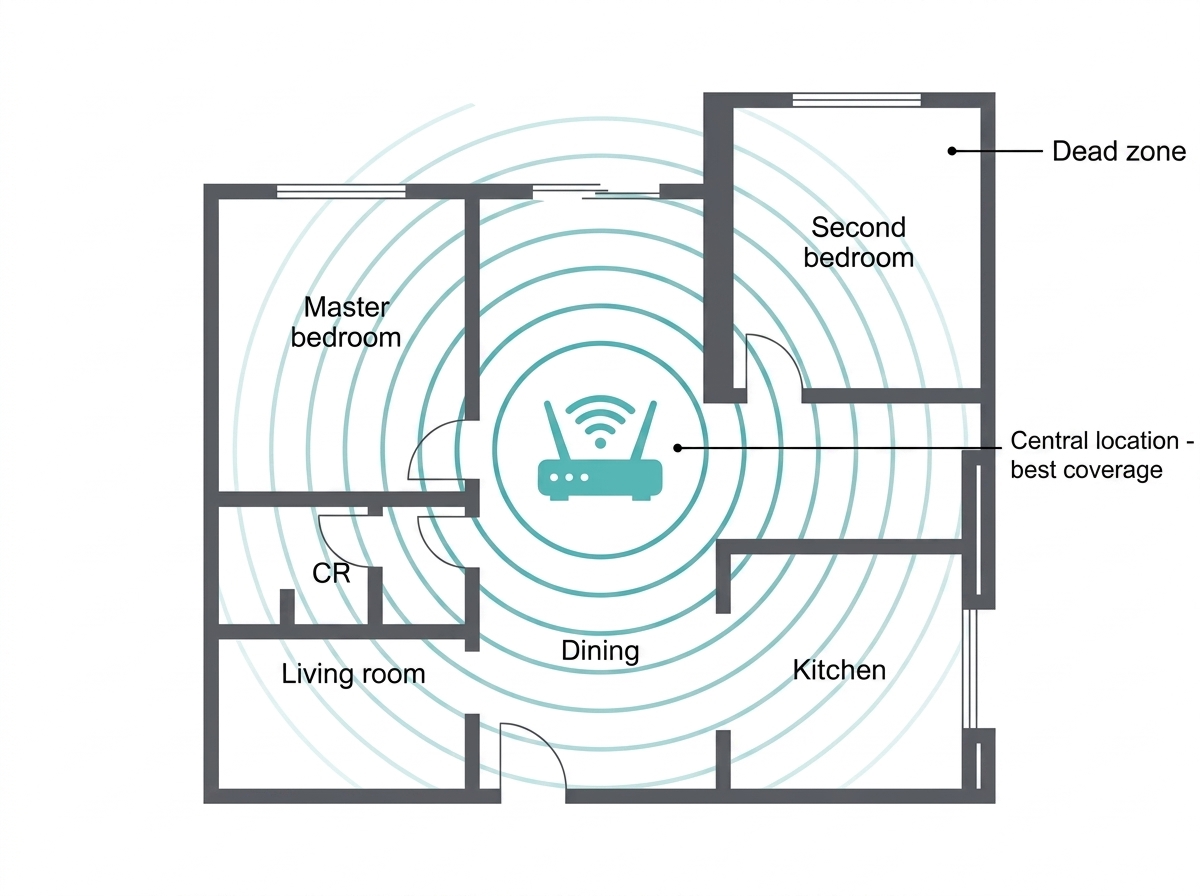
Several factors cause slow results that are not always the ISP's fault. In Philippine homes, thick concrete walls are among the most common culprits, as they significantly reduce Wi-Fi signal strength, particularly on the 2.4 GHz band. Neighboring networks sharing the same channel add interference on top of this.
Overheating is another factor specific to the Philippine climate. Routers placed in enclosed spaces or near direct sunlight throttle performance to protect their components. Out-of-date router firmware can also cause sluggishness. Check and update regularly.
ISP congestion during peak evening hours (7-10 PM) causes real drops in speed that no equipment upgrade will fix. If the problem is time-specific, it is an ISP network issue rather than a home network issue.
Check if there are issues with your connection using TP-Link's support resources.
If Your Speed Test Shows Slow Results, Upgrade Your Router
A speed test that consistently shows lower results than your ISP plan, especially on Wi-Fi, often points to aging router hardware rather than a line problem. The right TP-Link router for your home depends on your floor area, wall material, and how many devices connect simultaneously.
Check the performance of your internet connection with the right equipment below:
|
Use Case |
Recommended TP-Link Solution |
Why It Fits the Philippine Home |
|---|---|---|
|
Basic home use - 1 to 2 users, small apartment, plans up to 50 Mbps |
Compact design, dual-band Wi-Fi, easy setup via the Tether app, ideal for studio or one-bedroom apartments with standard concrete construction |
|
|
Multi-device household - 4 to 8 users, 2 to 3 bedroom home, plans 100 Mbps and above |
Wi-Fi 6 handles simultaneous connections from phones, laptops, smart TVs, and IP cameras without the slowdowns that affect older Wi-Fi 5 routers during peak household hours |
|
|
Large or multi-floor home with thick concrete walls, dead zones, plans for 200 Mbps and above |
Deco mesh systems eliminate dead zones in multi-story Philippine homes where the signal drops through reinforced concrete floors and walls |
If your current router is limiting your plan's performance, browse the full TP-Link Philippines lineup of Wi-Fi routers and range extenders (Boosters) to find the right fit for your home.
Improving Your Internet Speed After a Test
If your test results confirm a problem, work through these steps in order before concluding you need a new ISP plan.
-
Upgrade your router - a modern dual-band or Wi-Fi 6 router significantly improves speeds on plans above 50 Mbps.
-
Use a Wi-Fi booster or extender to extend coverage to rooms that show a weak signal during device-level tests.
-
Switch to a Deco mesh Wi-Fi system for large homes where a single router cannot cover all floors with a consistent signal.
-
Place your router in a central, elevated, open location away from corners, metal surfaces, and appliances.
-
Update your router firmware through the TP-Link Tether app or web admin panel. Outdated firmware is a common and overlooked cause of slow performance.
-
Improve your internet performance by checking for channel congestion in the router's admin settings and switching to a less crowded Wi-Fi channel.
Frequently Asked Questions
Which speed test is most accurate for the Philippines?
Ookla Speedtest (speedtest.net) is the most accurate tool for Philippine broadband users. It connects to local servers operated by PLDT, Globe, Converge, and other Philippine ISPs, which means your ping and download readings reflect real conditions on domestic infrastructure, not the distance to a US-based server. Run it via Ethernet, not Wi-Fi, for the cleanest result.
What is a good download speed in the Philippines in 2026?
For a single-user household, 25 Mbps is the functional baseline for HD streaming and video calls. For a family with 3 to 5 devices running simultaneously, 100 Mbps is the practical target.
Why does my speed test show lower results than my ISP plan?
Speed test results fall below your plan for three main reasons: Wi-Fi signal loss from thick concrete walls, ISP network congestion during peak hours (7-10 PM), or aging router hardware that cannot process your plan's full network bandwidth. Test via Ethernet cable first to rule out Wi-Fi as the variable. If wired results are also low, the issue is ISP-side.
Is Fast.com or Ookla better for testing streaming readiness?
Fast.com is the fastest and most targeted check for streaming; it runs on Netflix servers and auto-starts with no navigation. Ookla gives more complete data: download, upload, and ping in one test with local Philippine server routing. For a quick pre-movie gut check, use Fast.com. For ISP documentation or troubleshooting, use Ookla.
Why does my speed test result change throughout the day?
Network congestion from your ISP is the primary cause. In the Philippines, speeds on PLDT, Globe, and Converge connections drop noticeably during evening peak hours, 7 PM to 10 PM, when the highest number of subscribers is online simultaneously. A morning test and an evening test on the same connection can differ by 30 to 50 percent.
Can I use Xfinity or AT&T speed tests if I am in the Philippines?
Both tools are accessible from the Philippines and return usable results. Still, their US-based servers mean your readings will be slightly lower than what Ookla shows using local Philippine servers. They are best used as a secondary cross-check alongside Ookla, not as your primary tool for ISP plan verification or dispute documentation.
How many times should I run a speed test for accurate results?
Run a minimum of two to three tests at different times of day and average the results. A single test can be skewed by a momentary traffic spike on your ISP's network or a background app on your device. Testing once in the morning and once during evening peak hours gives you both your baseline speed and your congestion-affected speed, the more useful data point for plan evaluation.
Do I need to pay for a speed test tool?
All seven tools covered in this guide are completely free. Ookla has a paid tier that removes ads and unlocks historical data, but the free version gives Philippine subscribers everything needed for ISP verification, troubleshooting, and basic performance tracking. TestMy.net's scheduled testing and logging features are also available at no cost.
Final Thoughts
Running a speed test takes under a minute and gives you the data you need to decide whether the problem is your ISP, your router, or your home network setup. For most PLDT, Globe, and Converge users in the Philippines, Ookla Speedtest is the most accurate starting point; it uses local servers and gives you download, upload, and ping in a single test.
Once you have your baseline reading, check our guide to internet performance for tips on what the numbers mean for your specific use case, and if your hardware is the limiting factor, TP-Link Philippines offers reliable networking solutions for every home size and plan tier.
Here's how to test your internet speed and boost it with a step-by-step walkthrough if you want more detail on the testing process beyond the tools covered here.
_20260112111606z.jpg)