
Indoor vs Outdoor Security Cameras: Which Fits Your Home?
Published: November 4, 2024 · Last Updated: September 15, 2026
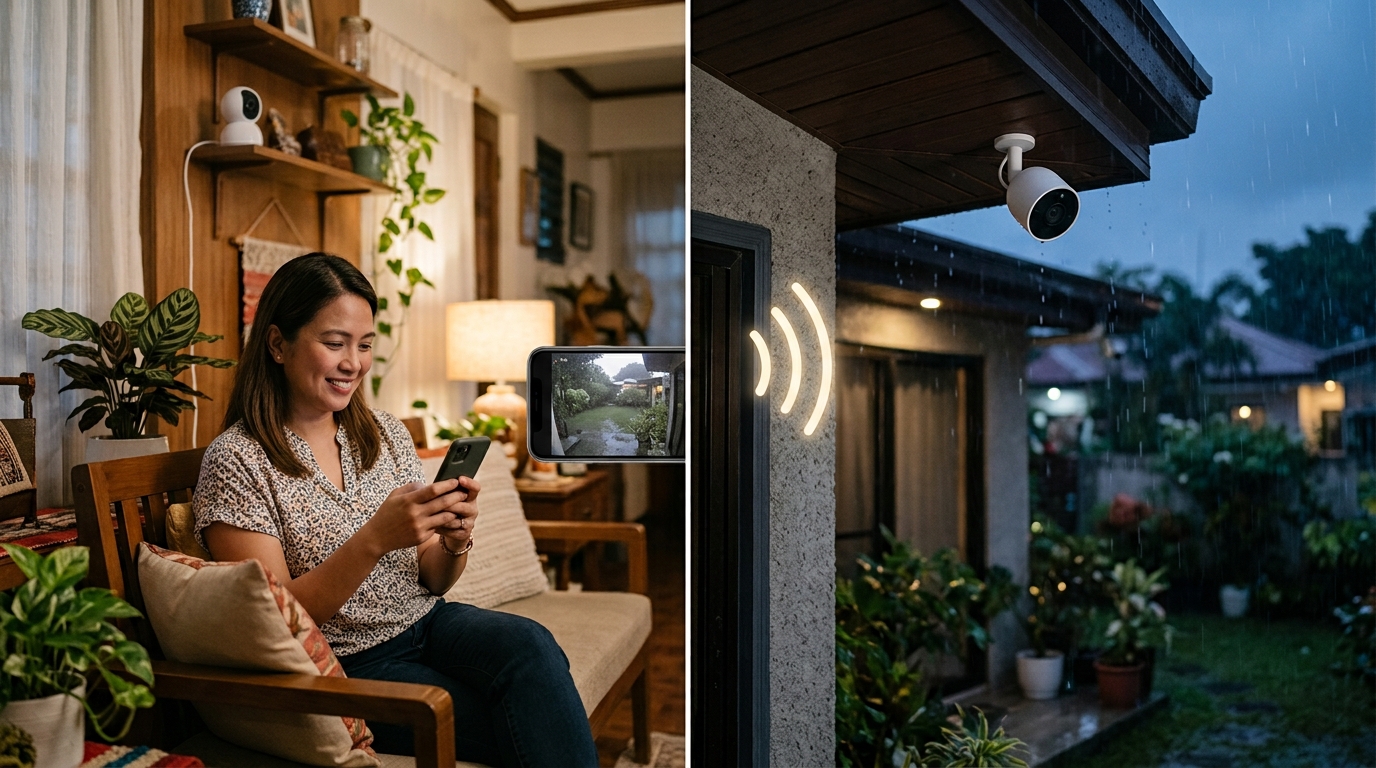
Quick Answer
-
Indoor cameras are compact and budget-friendly but are not built to survive rain, dust, or extreme heat.
-
Outdoor cameras carry an IP65 or higher weatherproof rating and are designed for driveways, gates, and entrances exposed to Philippine weather.
-
Most Philippine homes get the best coverage from a mix of both: outdoor cameras at entry points and the perimeter, and indoor cameras for interior rooms.
Indoor cameras are compact, affordable, and built for interiors, but they fail fast in heat, dust, or rain. Outdoor cameras cost more and carry a weatherproof rating built for the Philippines' June-to-November rainy season, and most homes end up needing both.
Table of Contents
What Are Indoor Security Cameras
What Are Outdoor Security Cameras
What Is the Real Difference Between Indoor and Outdoor Cameras
How Do I Choose Between Indoor and Outdoor Cameras
Can I Combine Indoor and Outdoor Cameras
What Are Indoor Security Cameras
Security cameras protect your home, office, or any other valuable space, and act as a visible deterrent that most burglars prefer to avoid. The first decision to make is choosing the right security cameras for your home or office, built for interiors or for outdoor exposure, since that single distinction shapes almost everything else about which model you should buy.
Indoor security cameras are designed for monitoring spaces within a building, such as entryways, hallways, storage rooms, and other interior areas. Common features include:
- Compact design: Indoor cameras are smaller and less intrusive than outdoor models, blending into home or office decor.
- High resolution: Many indoor cameras offer high-definition video to capture details clearly, even in low light.
- Two-way audio: A built-in microphone and speaker enable two-way communication with family members, employees, or pets.
- Wide-angle lenses: A wide field of view lets one camera cover an entire room or hallway.
Indoor cameras are ideal for checking on valuables, monitoring children or elderly family members, and watching entry points from inside. They are affordable and simple to install, but they aren't built for outdoor conditions, and the heat and humidity common across most of the Philippines will shorten their lifespan quickly if used outside.
Best indoor security cameras from TP-Link:
- Tapo C200 (Pan/Tilt): 1080p resolution with 360-degree pan and 114-degree tilt coverage, two-way audio, and local microSD storage. A strong value pick for one-camera rooms.
- Tapo C100 WiFi Camera: A budget-friendly fixed camera with 1080p resolution, motion and person detection, and night vision, suited to bedrooms or entryways.
- Tapo C210 (Pan/Tilt 2K): 2K resolution with 360-degree pan coverage and two-way audio, a sharper option for larger rooms.
Key takeaway: Indoor cameras win on cost and ease of setup, but they stay indoors for a reason. Exposure to Philippine heat and humidity will shorten their lifespan fast.
What Are Outdoor Security Cameras
Outdoor security cameras are rugged devices built to withstand weather and harsher conditions. Filipino homeowners place them at driveways, yards, entrances, and perimeters. Outdoor cameras typically include:
- Weather resistance: Weatherproof ratings (IP65, IP66, or higher) protect against rain, dust, and heat, which matters across the Philippines' June-to-November rainy and typhoon season.
- Night vision or infrared: Outdoor cameras offer clear footage even in complete darkness.
- Motion detection: Alerts for unusual movement around your property.
- High durability: Built with more durable materials to resist physical impact and tampering.
Outdoor cameras are best for monitoring areas around the home, deterring intrusions, and capturing activity that might otherwise go unnoticed. For the fuller buying breakdown by IP rating and installation type, see Outdoor CCTV cameras.
Best outdoor security cameras from TP-Link:
- Tapo C310 WiFi Camera: 2K (3MP) resolution, IP66 weatherproofing, night vision up to 98 feet, and both wired and wireless networking options.
- TP-Link Tapo C320WS: 2560x1440 resolution with full-color starlight night vision, IP66 weatherproofing, and microSD storage up to 512GB.
- Tapo C400S2 (Wire-Free Outdoor): Wire-free with a 180-day rechargeable battery and IP65 weatherproofing, useful where running a cable is impractical.
Key takeaway: Outdoor cameras cost more upfront, but they are the only option built to survive direct sun, rain, and the humidity swings common across the Philippines.
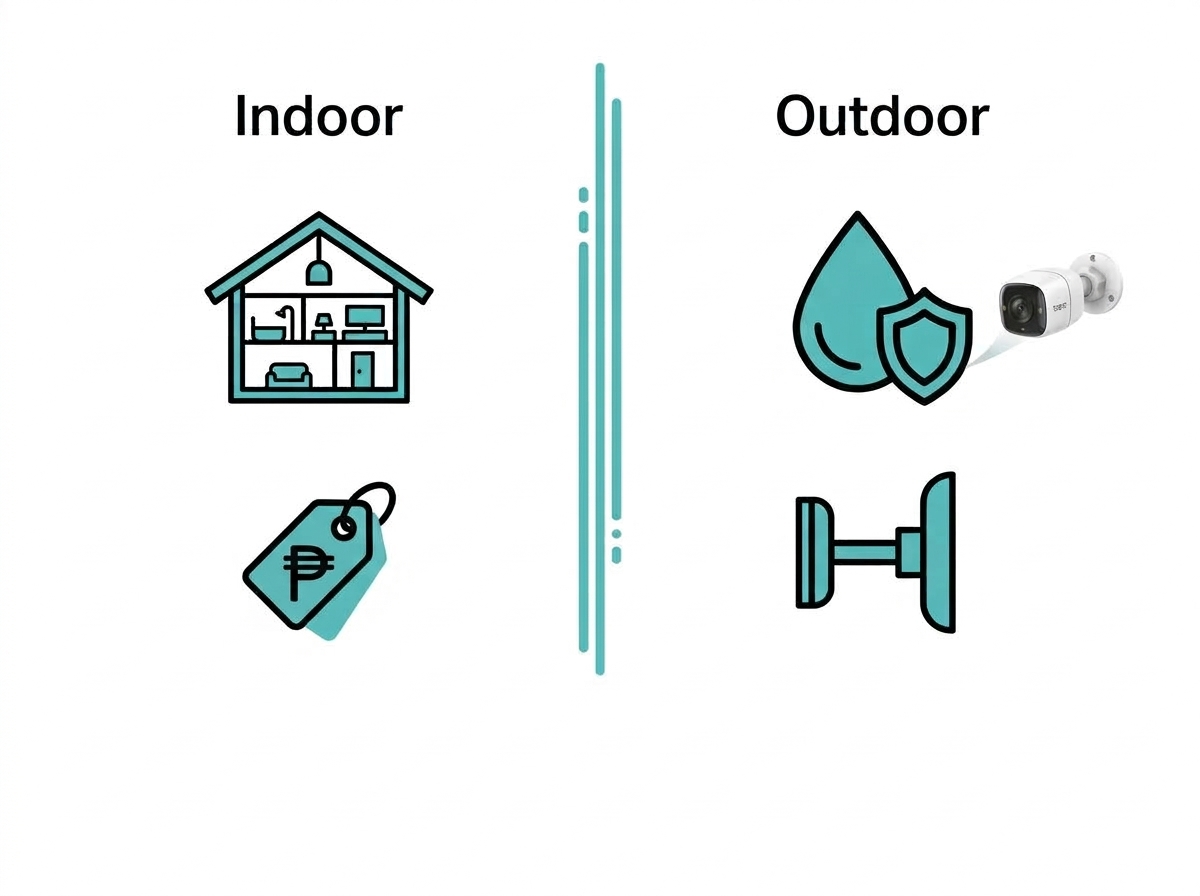
What Is the Real Difference Between Indoor and Outdoor Cameras
|
Factor |
Indoor |
Outdoor |
|
Weatherproofing |
Not required |
IP65 or higher required |
|
Typical cost |
Lower |
Higher |
|
Installation |
Minimal wiring |
May need mounting, weatherproof cabling |
|
Best for |
Interiors, valuables, family monitoring |
Perimeters, entrances, driveways |
|
Deterrence features |
Limited |
Provide extra security with sirens or floodlights |
Knowing these differences matters when choosing the right outdoor security camera for your space, since indoor and outdoor models are built on different assumptions from the start.
How Do I Choose Between Indoor and Outdoor Cameras
Location and coverage. If you are monitoring interior spaces like living rooms or hallways, indoor cameras give you adequate coverage without needing weatherproofing. Outdoor cameras are for anywhere exposed to the elements: garages, backyards, gates.
Weather conditions. Outdoor cameras are built to withstand heat, rain, and dust. Always check the IP (Ingress Protection) rating before buying. Given the Philippines' rainy and typhoon season runs roughly June through November, TP-Link Philippines recommends an IP65 rating or higher for reliable year-round outdoor performance.
Security level. Outdoor security cameras act as visible deterrents, often paired with smart motion-sensor lights or alarms. Indoor cameras are more discreet and better suited to monitoring valuables or family members inside the home.
Power source and connectivity. Both indoor and outdoor cameras can run wired or wireless. Indoor units often use a standard AC outlet; some outdoor models run on battery power instead. WiFi is convenient but can be affected by walls and distance from your router; Ethernet (wired) connections are more stable but may limit placement.
Key takeaway: Match the camera to the environment first, weatherproofing and power source, then layer in features like audio or resolution based on budget.
Can I Combine Indoor and Outdoor Cameras
Yes, and for most Philippine homes, a mix is the most practical setup. Use outdoor cameras to cover entry points and the perimeter, catching suspicious activity before it reaches the property. Place indoor cameras in essential interior areas, living rooms, hallways, and near valuables, to monitor movement inside the home.
TP-Link Philippines recommends starting with outdoor coverage at your main entrance and gate, then adding indoor cameras for interior rooms as your budget allows. If you are weighing a full household setup rather than a single camera, the best home security cameras in the Philippines breaks down complete kits by budget, and security cameras for a home office covers the added considerations when you are also protecting business equipment.
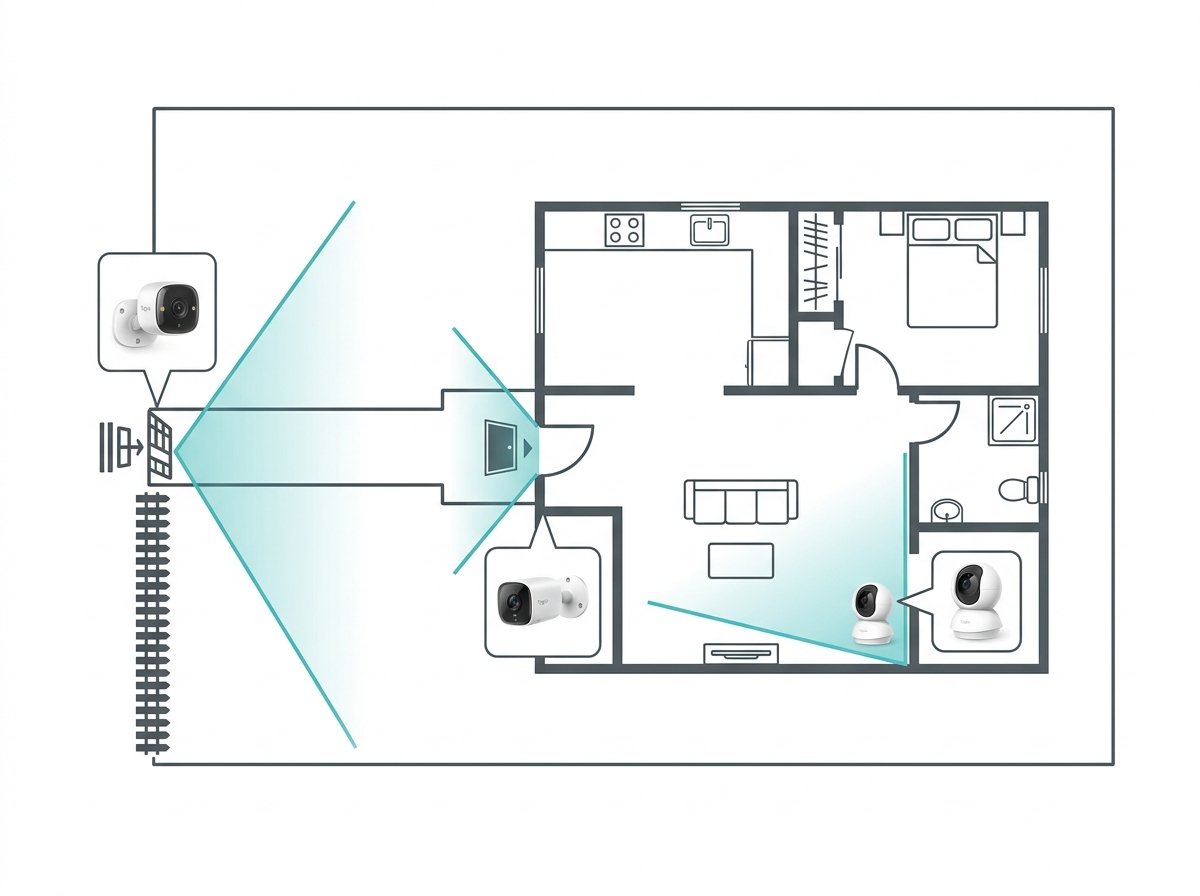
Once you know your mix, the indoor and outdoor security cameras category page is a good place to compare current models side by side before you buy.
Frequently Asked Questions
Can indoor cameras be used outdoors? No. Indoor cameras are not built to withstand the elements, and exposure to moisture, dust, or extreme heat can damage them within weeks, especially during the Philippines' rainy season. Stick to models rated for outdoor use anywhere exposed to weather.
Are outdoor cameras more expensive than indoor cameras? Generally, yes. Outdoor cameras cost more due to added features like weatherproofing, enhanced night vision, and motion detection. Pricing varies by brand and specific model, so compare the IP rating and storage options before deciding on price alone.
Are wireless outdoor cameras reliable in the Philippines? Wireless outdoor cameras can be reliable, but performance depends on WiFi signal strength. If your camera sits far from your router, you may run into connectivity issues; a Wi-Fi extender placed closer to the camera usually resolves this.
How do outdoor security cameras improve business security? Outdoor cameras act as both a deterrent and a monitoring tool. Visible cameras discourage theft and vandalism around entrances, parking areas, and loading zones, spaces often targeted after business hours. Pair this with clear signage for the strongest deterrent effect.
Why is night vision important for outdoor cameras in the Philippines? Many security incidents happen after dark. Night vision lets cameras capture clear footage in total darkness, helping you identify faces or activity at night. This matters given how consistently early it gets dark year-round in the Philippines, so check the rated night vision distance before buying.
Do I need a WiFi extender for an outdoor camera near my gate? If your gate or driveway sits far from your router, a weak signal can cause dropped footage or lag. A mesh system or WiFi extender placed closer to the camera location usually resolves this and keeps footage recording without gaps.
What is the difference between IP65 and IP66 ratings on outdoor cameras? Both protect fully against dust; IP66 adds protection against powerful water jets, not just rain, making it the stronger choice for exposed installations. For most home driveways and gates, either rating holds up through the rainy season, but IP66 gives extra margin during storm-driven wind and rain.
Can I mix different camera brands or models indoors and outdoors? Yes, but pairing cameras from the same ecosystem, such as the Tapo app, keeps setup, notifications, and footage review in one place instead of juggling multiple apps. Mixing brands works technically but adds friction to daily use.
Final Thoughts
Not sure where to start? Match the camera to the space first: indoor for interiors, IP65-or-higher outdoor models for anything exposed to the weather, then combine both for full coverage. Ready to boost your home's security? TP-Link offers a range of indoor and outdoor security cameras designed for reliable performance across Philippine conditions.