
What Is Network Infrastructure and Why It Matters
Published: July 3, 2024 · Last Updated: September 21, 2026
Quick Answer
-
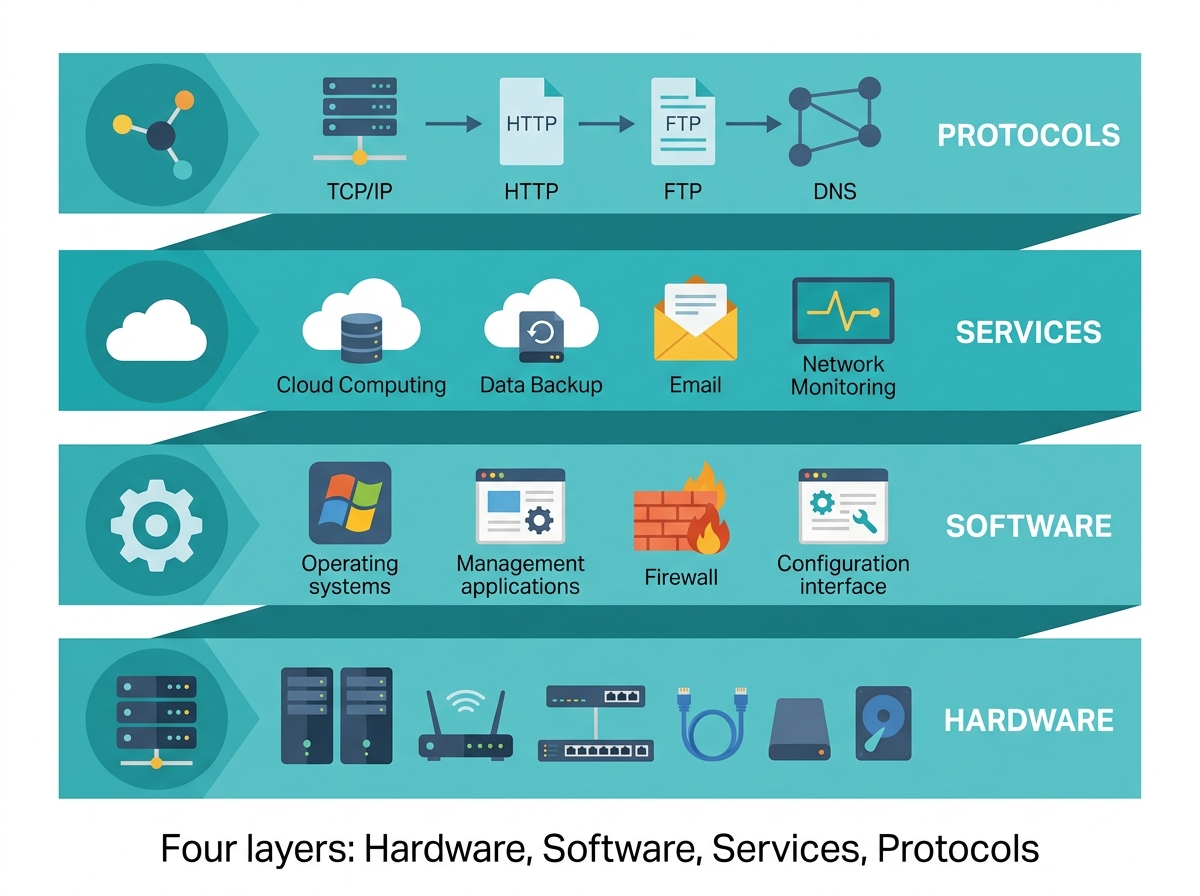
Network infrastructure includes hardware (routers, switches, servers, cables), software (network operating systems, management tools), services (DNS, DHCP, email), and protocols (TCP/IP, HTTP/HTTPS, FTP).
-
It matters because it directly affects communication speed, data security, business scalability, and overall uptime.
-
The biggest ongoing challenges are security threats, scalability limits, performance bottlenecks, and cost management.
Network infrastructure is the complete set of hardware, software, services, and protocols that let devices connect, communicate, and share data, including hardware such as modems, switches or routers, and it matters because nearly every business function today depends on it working reliably.
Table of Contents
What Is Network Infrastructure
Components of Network Infrastructure
Types of Network Infrastructures
Why Is Network Infrastructure Important
Top Challenges for Network Infrastructure
Best Practices for Managing Network Infrastructure
Future Trends in Network Infrastructure
What Is Network Infrastructure
Network infrastructure refers to the complete set of hardware and software components that enable network connectivity, communication, operations, and management within an organization or across the internet. It acts as the foundation of any IT system, allowing data to move smoothly between users, devices, servers, and external networks. Understanding network infrastructure is crucial for businesses of every size, since it directly impacts efficiency, security, and overall productivity.
Components of Network Infrastructure
Several key components make up network infrastructure.
Hardware
- Servers: These are powerful computers that store and manage data for other devices on the network. They handle a wide range of functions, from hosting websites and managing emails to running applications and storing files, ensuring that data is accessible to authorized users whenever needed.
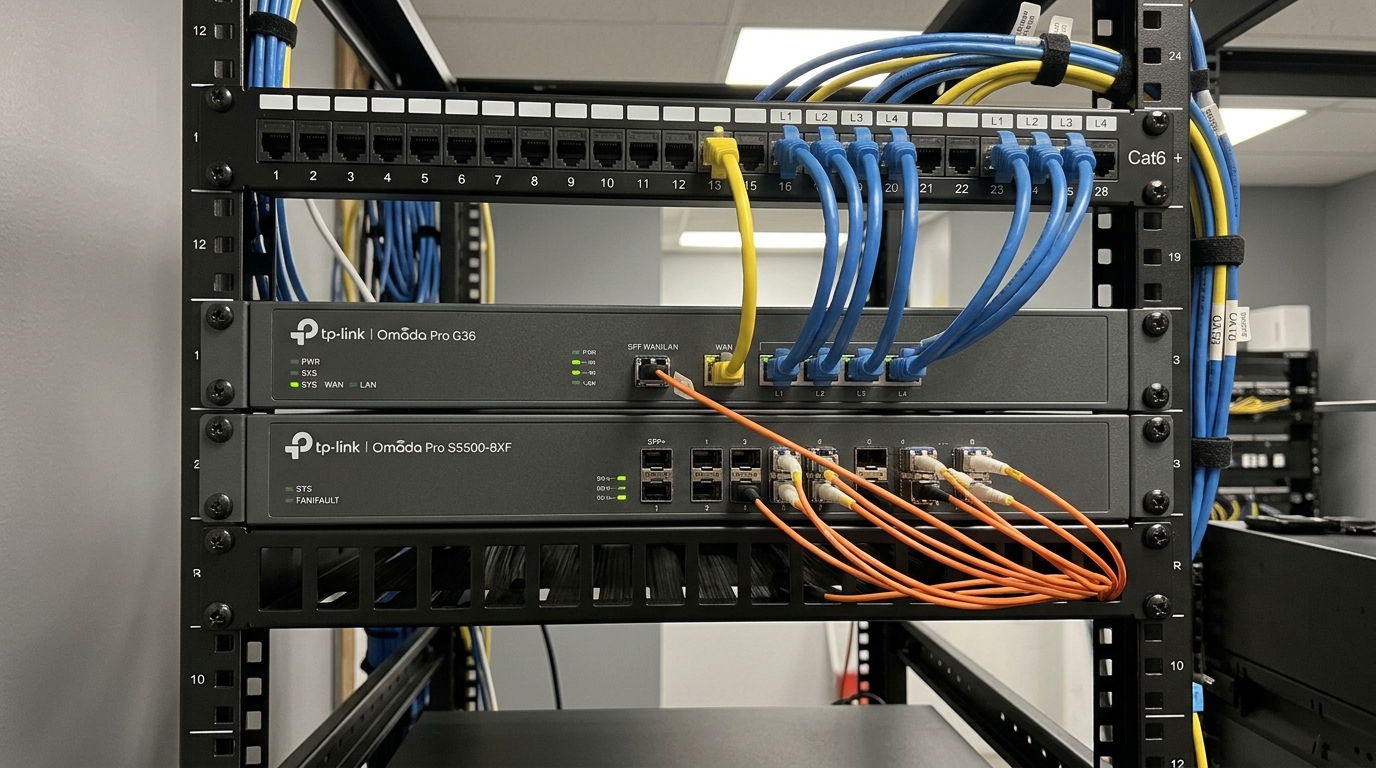
- Routers: Routers like the Omada Pro G36 Gigabit VPN Router direct data between different networks. They ensure that information reaches its correct destination quickly and securely. Modems and routers also help in managing traffic congestion and maintaining network performance.
- Switches: Switches like the Omada Pro 8-Port SFP+ L2+ Managed Switch connect devices within a single network, facilitating communication between them.
- Cables: Physical wires, such as Ethernet cables, connect hardware components and transmit data.
Software
- Network Operating Systems: These operating systems are specialized software platforms designed to manage network resources and facilitate communication between connected devices. They provide essential services such as file sharing, printer access, and user authentication to ensure that all devices within the network can interact seamlessly and securely.
- Network Management Software: This comprises a suite of tools used to monitor, maintain, and optimize network performance. These tools enable administrators to track network activity, detect and troubleshoot issues, and manage configurations.
Services
- Domain Name System (DNS): DNS is a crucial service that converts human-readable domain names, like www.example.com, into IP addresses, which are numerical labels used by computers to locate websites and resources on the internet.
- Dynamic Host Configuration Protocol (DHCP): DHCP is an essential network service that automatically assigns IP addresses to devices on the network.
- Email Services: Email services are vital for enabling the sending and receiving of electronic mail within and outside the network. These services manage email traffic, moving data securely over the internet between users.
Protocols
- Transmission Control Protocol/Internet Protocol (TCP/IP): TCP/IP is the foundational protocol suite for internet communication, providing the essential framework for data exchange across interconnected networks. This ensures reliable transmission by breaking data into packets, routing them efficiently, and reassembling them at the destination.
- Hypertext Transfer Protocol/Secure (HTTP/HTTPS): These are crucial protocols for transferring web pages and data securely over the internet. HTTP facilitates the communication between web browsers and servers, enabling users to access websites and web applications.
- File Transfer Protocol (FTP): FTP is a standard network protocol used for transferring files between devices on a network. It allows users to upload, download, and manage files on remote servers.
Types of Network Infrastructures
Network infrastructures can vary greatly in size and complexity, from small local setups to vast global networks.
- Local Area Network (LAN): A LAN is characterized by its limitation to a small geographic area, such as a single building or campus. It is commonly used in homes, offices, and schools to connect computers and devices within close proximity.
- Wide Area Network (WAN): A WAN is a network that spans a large geographic distance, connecting various LANs or individual devices across cities, countries, or even continents.
- Wi-Fi: WiFi, or wireless fidelity, is a common type of wireless network used in homes and businesses to connect to the internet without physical cables.
- Cellular Networks: Used by mobile devices to connect to the internet via cell towers.
Why Is Network Infrastructure Important
A well-designed network infrastructure is important for many reasons. One of these is that it enhances communication by enabling seamless interaction between employees, clients, and systems. It also ensures faster data transfer, reducing lag and downtime so that you can get to information quickly.
Another advantage is that the infrastructure can easily expand to accommodate new devices and users without requiring a complete overhaul. In addition, it helps prepare for the future by being able to add new tools and apps as they come out.
A robust network infrastructure protects sensitive information by securing data from unauthorized access and breaches. It also prevents unauthorized access by utilizing firewalls, encryption, and other security measures to secure the network. A well-secured internet connection is the starting point for all of this, since infrastructure security is only as strong as the connection it runs on.
A well-maintained network infrastructure reduces downtime by ensuring continuous operation and avoiding costly interruptions. It also streamlines operations by automating routine tasks, thereby reducing the need for manual intervention. Securing your network properly from the start is what makes this reliability possible, and doing so consistently helps in ensuring business continuity even when something does go wrong.
Top Challenges for Network Infrastructure
Network infrastructure may also face different challenges that can affect performance, security, and reliability.
- Security Threats: Cyberattacks like DDoS, phishing, ransomware, and malware can happen on networks. Unauthorized access to sensitive data can lead to severe consequences. A well-secured internet connection, proper practices, and security tools protect network infrastructure against cyberattacks.
- Scalability Issues: An organization's network infrastructure must be able to scale properly in order to accommodate the growing number of devices and traffic as the company expands.
- Performance Optimization: The presence of high traffic volumes might result in congestion, which can have a negative impact on both performance and the user experience.
- Cost Management: Deploying and upgrading network infrastructure can be costly, and there are additional costs for maintenance, energy consumption, and staffing.
Best Practices for Managing Network Infrastructure
Effective management of network infrastructure involves several best practices:
Regular Maintenance. Network performance and security depend on keeping software and hardware up-to-date. Schedule regular updates to address vulnerabilities and ensure smooth operations. Use monitoring tools to identify and resolve potential issues before they snowball into larger problems.
Security Measures. Firewalls act as the first line of defense, filtering traffic and blocking unauthorized access. In addition, encrypting sensitive data with strong encryption like WPA3 adds an extra layer of protection by safeguarding it from unauthorized interception, and following security best practices consistently matters as much as any single tool.
Training and Support. By educating employees on secure network practices, you can significantly reduce security risk. Additionally, having access to skilled technical support personnel ensures timely troubleshooting and assistance when needed.
Scalability Planning. Networks should be built with the future in mind. Anticipate growth and design your network infrastructure to handle increased capacity. Using scalable solutions allows for easier adaptation as your requirements evolve.
Future Trends in Network Infrastructure
The networking industry is undergoing a significant transformation, fueled by the convergence of three powerful technologies:
5G Technology. Promoting fast internet speeds, 5G significantly improves the performance of mobile devices and other gadgets. This paves the way for groundbreaking applications in fields such as virtual reality, where seamless data transfer is crucial, autonomous vehicles that rely on real-time communication, and the development of smart cities with efficient infrastructure management, all powered by 5G networks reaching further into everyday devices.
Internet of Things (IoT). The world is becoming increasingly interconnected, with a growing number of devices joining the internet. This surge in connectivity necessitates a robust network infrastructure capable of handling the ever-increasing flow of data. The IoT also promotes the creation of a network of smart devices, such as smart sensors or smart bulbs, that can automate tasks, collect valuable data, and improve efficiency in homes, industries, and urban environments.
Artificial Intelligence (AI) in Networking. AI is poised to revolutionize network management. With the advent of intelligent algorithms, AI can automate routine tasks, optimize network performance, and even predict potential issues before they arise through data analysis. This approach translates to a more efficient and proactive network management system, minimizing downtime and ensuring smooth operation.
Frequently Asked Questions
How do you secure network infrastructure? Securing network infrastructure involves using multi-layered security protocols, regular security audits, strong encryption like WPA3, access controls, and employee training on security best practices. No single layer is enough on its own; the combination is what actually keeps a network protected.
Why does scalability matter for network infrastructure? Scalability lets a network grow and adapt to new devices and more traffic without slowing down. This matters most for businesses that want to keep up with technological advances and business growth without a costly, disruptive network overhaul every time they expand.
How are new technologies changing network infrastructure? New technologies like AI, machine learning, IoT, 5G networks, and blockchain are making network infrastructure faster, safer, and easier to manage. Businesses that adopt these tools early typically see lower operational overhead as their network grows.
What is software-defined networking (SDN)? Software-Defined Networking (SDN) is a modern approach to networking that separates the control plane (how data is routed) from the data plane (how data is forwarded). Instead of managing each device individually, SDN allows network administrators to control the entire network through software, using a centralized controller, which significantly cuts down on manual configuration work.
What security measures are essential for protecting network infrastructure? Securing your network is a layered process. Combining tools like firewalls, VPNs, and encryption with user education and constant monitoring is key to keeping threats at bay and ensuring business continuity even during an active attempted breach.
Final Thoughts
Not sure whether your current setup can keep up with where your business is headed? Network infrastructure is a critical component of modern technology, supporting communication, data transfer, and overall business operations. Understanding its components and importance helps organizations build and maintain robust, secure, and scalable networks. With TP-Link networking devices, you can transform your home or office into a connected, reliable environment, empowering you to work, learn, and operate without limitations. Explore TP-Link's extensive range to find the perfect solution to improve your space's networking capabilities.