


CCTV Installation Cost in the Philippines (2026 Guide)
Published: August 11, 2026 | Last Updated: August 11, 2026
Quick Answer
-
The cost is three things, not one: equipment, labor, and any network or cabling work the building needs. Quotes vary most on the third, which is also the one buyers rarely ask about.
-
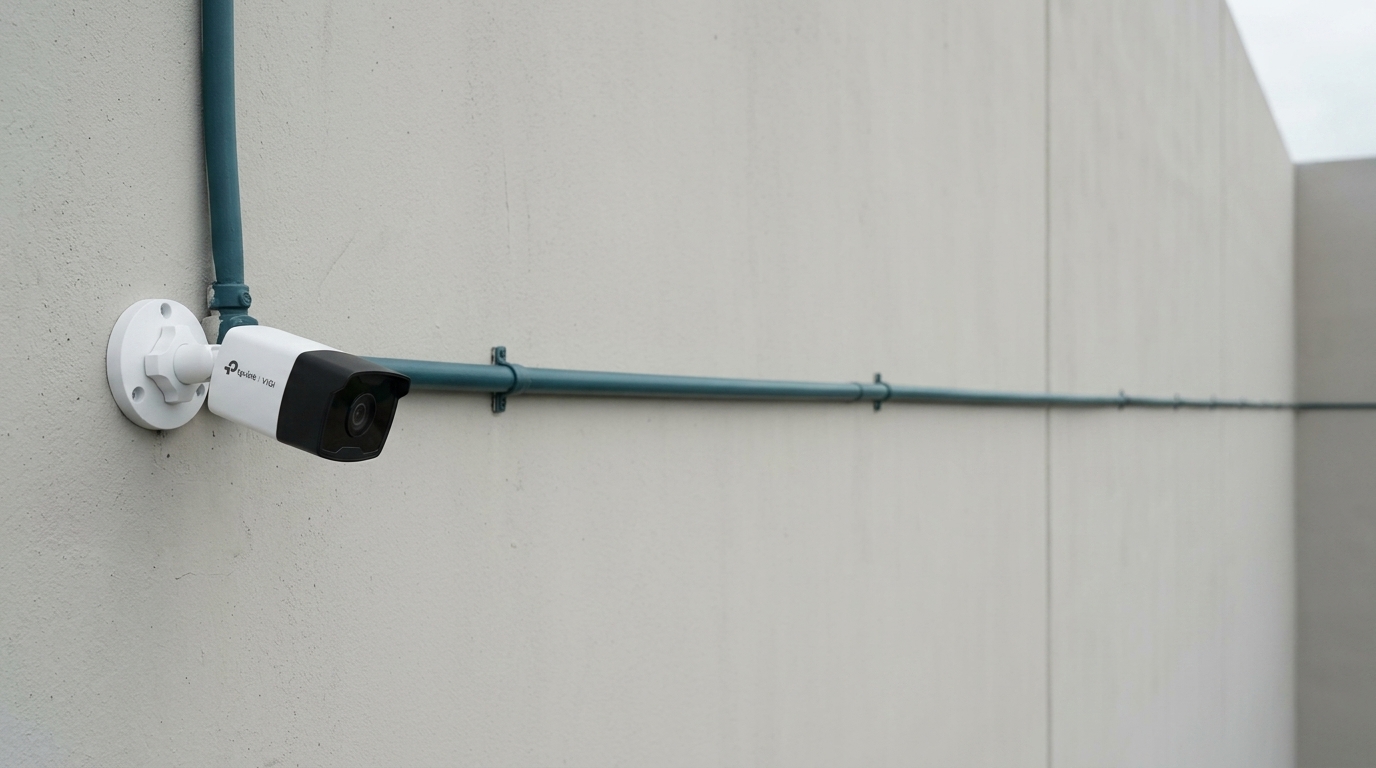
Cable run difficulty moves the labor line more than camera count does. Two cameras through conduit across a concrete wall can cost more to fit than four in an accessible ceiling.
-
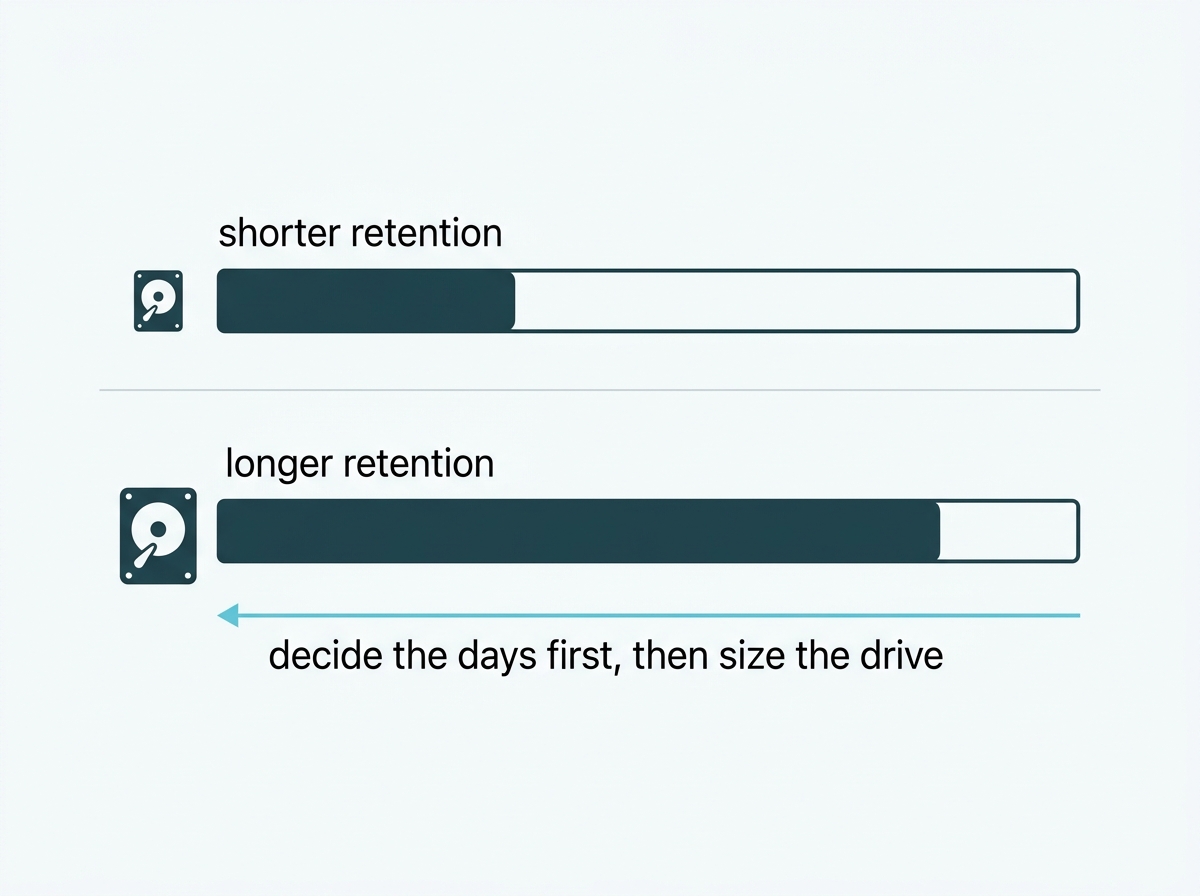
Decide your retention period before requesting quotes. It sets the storage; storage is a real cost, and Philippine privacy rules require you to have decided it anyway.
There is no single answer, and any page that gives you one is quoting a number that will not survive contact with your building. What a CCTV installation costs in the Philippines depends on how many cameras you need, whether the system is analog or IP, how difficult the cable runs are, how much footage you need to store, and where you are. The useful thing is not a benchmark. It is knowing what a quote should contain, what tends to be left out, and how to put two quotes side by side so you are comparing the same job twice rather than two different jobs.
Table of Contents
What Does a CCTV Installation Actually Cost?
What Are the Three Parts of the Cost?
What Pushes the Price Up or Down?
What Does a Bundled Package Actually Include?
What Gets Left Out of a Quote?
How Do You Compare Two Quotes Fairly?
Is Installing It Yourself Cheaper?
What Does a CCTV Installation Actually Cost?
More than the cameras, and the honest answer is that a national average would mislead you. The same four-camera brief priced in Metro Manila and in a provincial city, in a new fit-out and in a finished concrete building, produces genuinely different numbers, and averaging them produces a figure that describes neither.
That is not a dodge. It is the reason this article is about structure rather than a price. A number you cannot check is worth less than a method you can apply to the two quotes actually in front of you.
What you can pin down before talking to anyone is the shape of the job: how many positions need covering, how far each is from where the recorder will sit, whether cable can run in an accessible ceiling or has to be surface-mounted in conduit, and how many days of footage you need to keep. Those four answers are what any competent installer will ask for, and having them ready is what makes two quotes comparable.
What it means for you: do not start by asking what CCTV costs. Start by writing down those four answers, because until they exist, every quote you receive is pricing a slightly different job.
What Are the Three Parts of the Cost?
Equipment, labor, and infrastructure. Most buyers price the first, negotiate the second, and forget the third until it appears as a variation.
Equipment is the cameras, the recorder, and the storage drive. It scales with camera count, with resolution, and with features such as pan-tilt movement or onboard analytics. It is the most visible part of a quote and the easiest to compare, because you can look the models up.
Labor is mounting, running and securing cable, terminating connections, configuring the recorder, and testing every camera. It scales with difficulty far more than with count. A camera in an accessible ceiling void is quick. The same camera on a concrete external wall with conduit and a long run is not.
Infrastructure is whatever the building needs that it does not already have: additional switch ports, PoE capacity, cable pathways, sometimes power. This is the line that differs most between two quotes for the same cameras, because one installer may have assumed your existing network can carry it and another may have priced the upgrade.
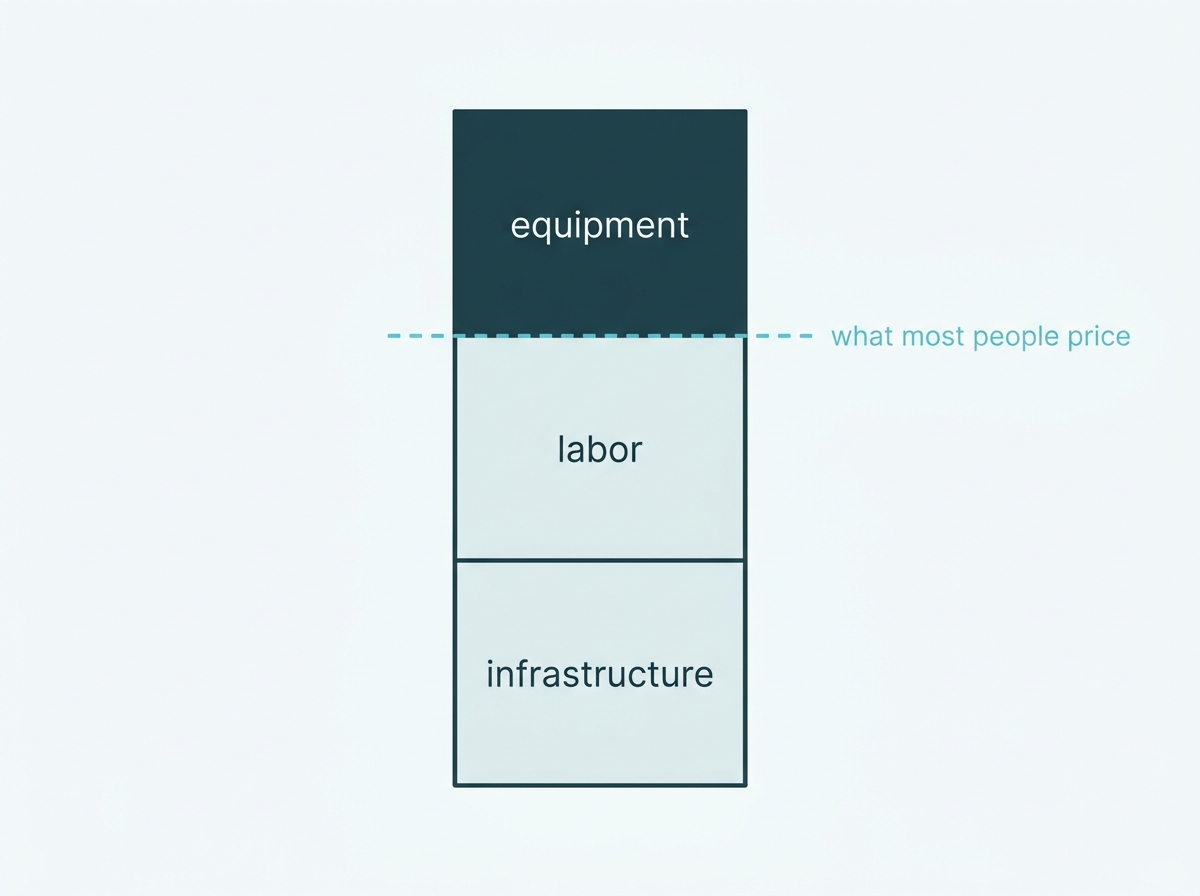
What it means for you: ask every installer to break their quote into those three lines. A quote that gives one total is not necessarily hiding anything, but it cannot be compared against another quote, which amounts to the same problem.
What Pushes the Price Up or Down?
Six things, and the one that surprises people is that difficulty of access matters more than the number of cameras.
Feature-to-Benefit: What Moves the Number
|
Driver |
Effect |
Who controls it |
|
Camera count |
Raises equipment and labor roughly in step |
You, by deciding coverage before quoting |
|
Analog or IP |
IP generally costs more per camera and delivers more capability |
You, at the specification stage |
|
Resolution and features |
Higher resolution, pan-tilt, and analytics all add per unit |
You, per position rather than across the board |
|
Cable run difficulty |
The largest swing in the labor line, and often the largest single variable |
The building, mostly |
|
Retention period |
Sets storage capacity, which is real money |
You and privacy rules require you to decide it |
|
Region |
Metro Manila labor generally runs above provincial rates |
Not at all |
Camera count and specification are yours to decide and move the equipment line predictably; cable difficulty is set by the building and moves the labor line hardest, retention period sets the storage you have to buy, and region sets a baseline you cannot change. The two worth spending thought on are specification per position and retention, because they are the ones where a decision made carefully saves money without costing capability.
On specification, resolution is not a setting to maximize across every camera. A position that only needs to show that something happened does not need the resolution of a position where you must identify a stranger, and VIGI's lens calculator will tell you which is which before you pay for either. What each position actually needs to be capable of, and which requirements are legal rather than optional, is set out in CCTV System Philippines Buyer's Guide.
What it means for you: walk the building and note which runs are easy and which are hard before requesting quotes. If an installer's price surprises you, that difference is usually where it lives.
What Does a Bundled Package Actually Include?
A fixed price covering hardware, labor, and basic setup, with limits written into it. The limits are the part worth reading, because they are where a fixed price stops being fixed.
A representative listing currently advertised by a Davao Region installer bundles four cameras, a recorder, a 1TB drive, standard cabling, mobile app setup, and professional installation at one fixed price, adds a per-kilometer charge for sites beyond its home city, and includes a one-year warranty covering both parts and labor. That is a well-formed package, and its structure is what to look for.
Two things about that example matter more than its price. It is an entry-level analog DVR system with FHD cameras, which sits at the bottom of the market and is not comparable to an IP system on either capability or cost. And it is one installer's listing at one moment, in one region. Quoting it as a national benchmark, which is how figures like this usually get repeated, would tell you almost nothing about what your own job should cost.
What transfers is the checklist it implies. A bundle should tell you the camera count, the recorder and its channel count, the storage capacity, how much cabling is included as standard, whether app setup is covered, what the service radius is before travel charges apply, and what the warranty covers and for how long. Any of those left unstated is a question to ask rather than an assumption to make.
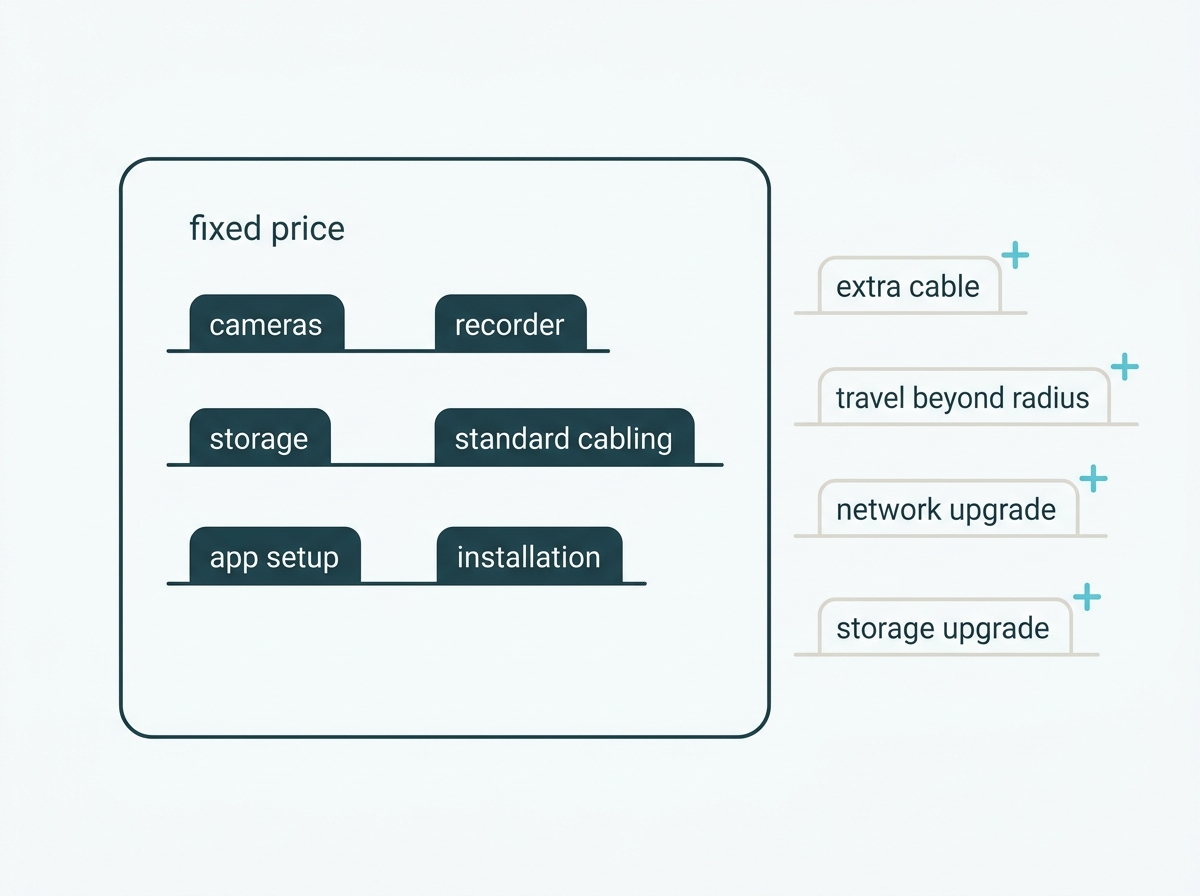
What it means for you: treat a package price as the answer to a defined question, and find out what the question was. The service radius and the cabling allowance are the two limits that most often turn a fixed price into a variable one.
What Gets Left Out of a Quote?
Four things, none of them dishonest, all of them capable of arriving later as a cost you did not plan for.
Network capacity. An IP system needs somewhere to plug in and enough capacity to carry the streams. If your existing network cannot take it, that is switch ports, PoE capacity, or cabling, and whether it sits inside the quote varies by installer.
Storage sized to your actual retention period. A bundled drive is sized to the bundle, not to you. Higher resolution and longer retention both consume more, and running short partway through a retention period is a cost you pay twice, once for the drive you bought and again for the one you needed. VIGI's capacity calculator works this out from resolution, bit rate, camera count, and the number of days you want, so you can check a quoted drive against your own requirement before agreeing to it.
Warranty terms, and specifically whether labor is covered. Parts and labor are separately warranted, and a return visit is the expensive half. A cheaper quote excluding labor coverage can cost more within a year than a dearer one including it.
Compliance items. If you are a business, NPC Circular 2024-02 requires visible notice that a CCTV system is operating. It is little money, and it is routinely missing from quotes, which makes it a fair test of how thoroughly an installer has thought about your situation rather than their equipment list.
What it means for you: ask each installer directly whether network upgrades are included, what the drive is sized for, whether labor is warranted, and whether notice signage is covered. Four questions, and the answers will usually explain the gap between two prices.
How Do You Compare Two Quotes Fairly?
Make both prices the same for the job. Almost every unexplained gap between two quotes turns out to be a difference in scope rather than a difference in rate.
Bring your own equipment list. If you decide the camera positions and specifications yourself, both installers price the same system rather than each proposing their own. VIGI's designer tool produces a floor plan, an equipment list, and a coverage map, which gives you that list independently and makes the comparison a like-for-like one.
Insist on the three-line breakdown. Equipment, labor, infrastructure. A single total cannot be compared with anything.
Check the assumptions, not the prices. Same camera count, same resolution per position, same recorder channel count, same storage capacity, same retention period, same cabling allowance, same warranty. A cheaper quote is only cheaper if all seven match.
Ask what happens when it does not fit. What does an extra ten meters of cable cost, what is the charge beyond the service radius, and what happens if the building turns out to need conduit where the quote assumed a ceiling void? These are the variations that arrive mid-job.
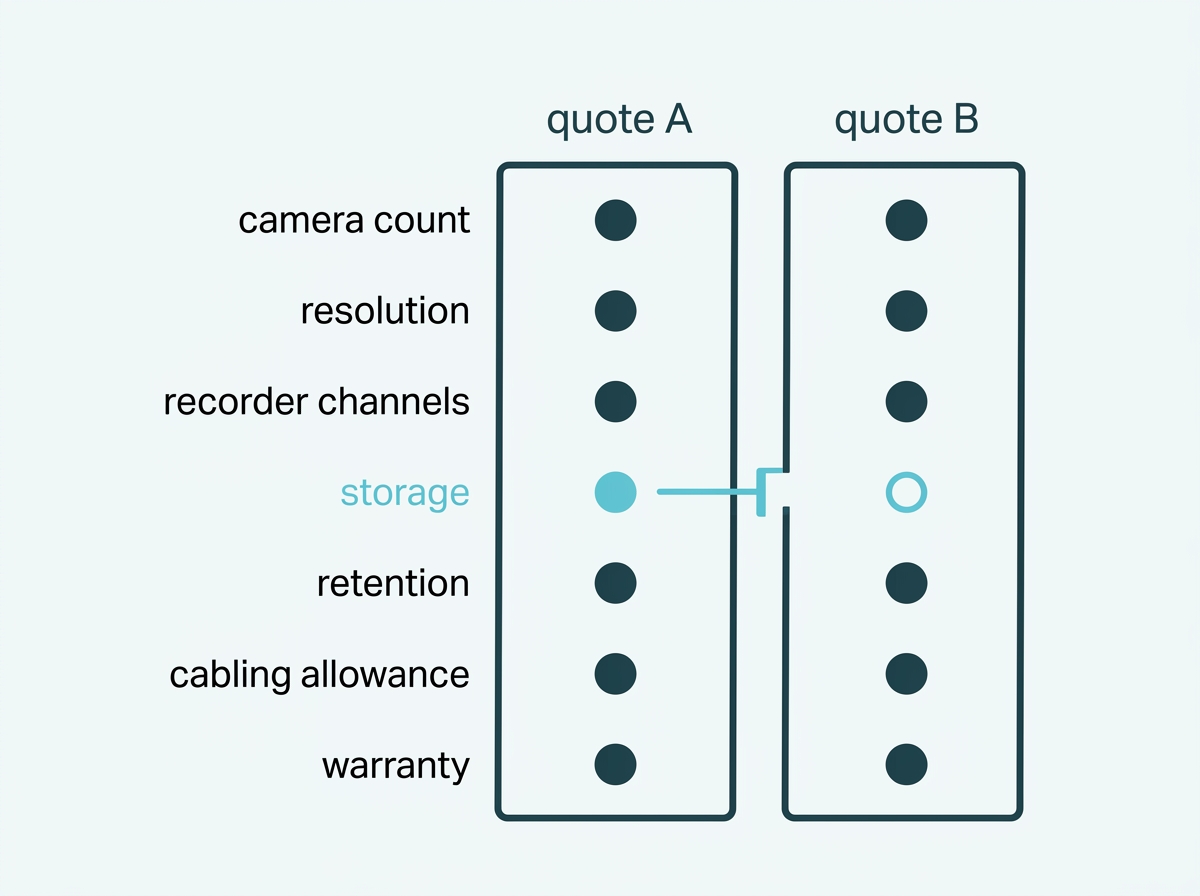
What it means for you: if one quote is meaningfully cheaper, find the row where they differ before assuming you have found a better deal. It is usually storage, cabling allowance, or a network upgrade; one of them is priced, and the other is not.
Is Installing It Yourself Cheaper?
On the day, yes. Over the life of the system, it depends on whether the planning was right, because the expensive mistakes are all planning mistakes rather than mounting mistakes.
Doing it yourself removes the labor line, which is real money. What it does not remove is the need to work out the lens for each distance, the bandwidth the recorder has to carry, and the storage your retention period needs. Those calculations are what decide whether the system produces usable footage, and getting one wrong means buying equipment twice.
The realistic dividing line is scale and difficulty rather than skill. A few cameras in an accessible building with short runs is a reasonable self-install, particularly with PoE where each camera needs one cable and no separate power. Long runs, conduit, multiple buildings, or anything at height moves the balance toward paying someone, because a cable pulled twice costs more than a cable pulled once by someone with a ladder and a fish tape.
To see cameras and recorders and their published specifications, browse VIGI cameras and VIGI network video recorders, or explore VIGI's camera and NVR lineup.
What it means for you: if you self-install, spend the saved labor budget on doing the calculations properly. The planning is where the money is actually won or lost.
Frequently Asked Questions
How much does CCTV installation cost in the Philippines?
There is no reliable single figure, because the total varies with camera count, whether the system is analog or IP, how difficult the cable runs are, how much storage your retention period needs, and the region. The more useful approach is to fix your own requirements first, then ask each installer to break their quote into equipment, labor, and infrastructure so two quotes can be compared against the same job.
Why do two quotes for the same number of cameras differ so much?
Almost always because they are pricing different jobs. One may assume your existing network can carry the system while the other prices the switch or cabling upgrade, or one may include a larger drive, a longer cabling allowance, or warranty on labor as well as parts. Check the scope rows before comparing the totals.
Is CCTV installation more expensive in Metro Manila than in the provinces?
Generally yes, since labor rates and market prices in Metro Manila tend to sit above provincial ones. Region is also the one cost driver you cannot influence, which is why it is worth focusing effort on the drivers you can, such as specification per position and retention period.
What should a bundled CCTV package include?
At minimum, the cameras, the recorder, a storage drive, a stated cabling allowance, app setup, and installation labor. Read the limits as carefully as the inclusions: the service radius before travel charges apply, how much cable is covered as standard, the drive capacity, and whether the warranty covers labor as well as parts.
Does an analog DVR system cost less than an IP system?
Yes, generally, and the difference is capability rather than only price. Entry-level analog bundles sit at the bottom of the market, while IP systems cost more per camera and deliver higher resolution, better analytics, and easier expansion. Comparing an analog package price against an IP quote is comparing two different systems.
Should I budget separately for network upgrades?
Ask rather than assume, because this is the line that varies most between installers. An IP system needs switch ports and PoE capacity, and whether your building already has enough is something an installer should confirm rather than estimate. Getting it wrong turns into a variation after the work has started.
Is DIY installation cheaper than hiring an installer?
It removes the labor cost, which is real, but not the planning. The expensive errors are choosing a lens that cannot resolve what a position needs, or storage too small for the retention period, and those cost the same whoever mounts the camera. A few cameras with short accessible runs suit a self-install; conduit, height, or long runs usually do not.
Final Thoughts
There is no honest single price for CCTV installation in the Philippines, and the figures that circulate as national averages tend to come from one installer, one region, or one equipment tier, which is why they rarely match the quote in front of you. What is transferable is the structure. Equipment, labor, and infrastructure, with the latter two doing most of the varying.
So the work worth doing is upfront, and it costs nothing. Decide the camera positions and what each one must be able to see, note which cable runs are easy and which are hard, and decide how many days of footage you need to keep. Those three answers turn a set of incomparable quotes into a set of comparable ones, and the third one is a decision Philippine privacy rules expect you to have made regardless.
If you would rather have the equipment list checked before you go out to quote, bring a VIGI specialist three things: a rough plan of the site with the positions you want covered, the distance from each position to what it needs to see, and the number of days of footage you need. You will get back a specification you can put in front of several installers, a storage figure sized to your retention rather than to a bundle, and a note on any position where the cheaper camera will not do the job. Or explore VIGI's camera and NVR lineup to see what sits behind the equipment line of a quote.