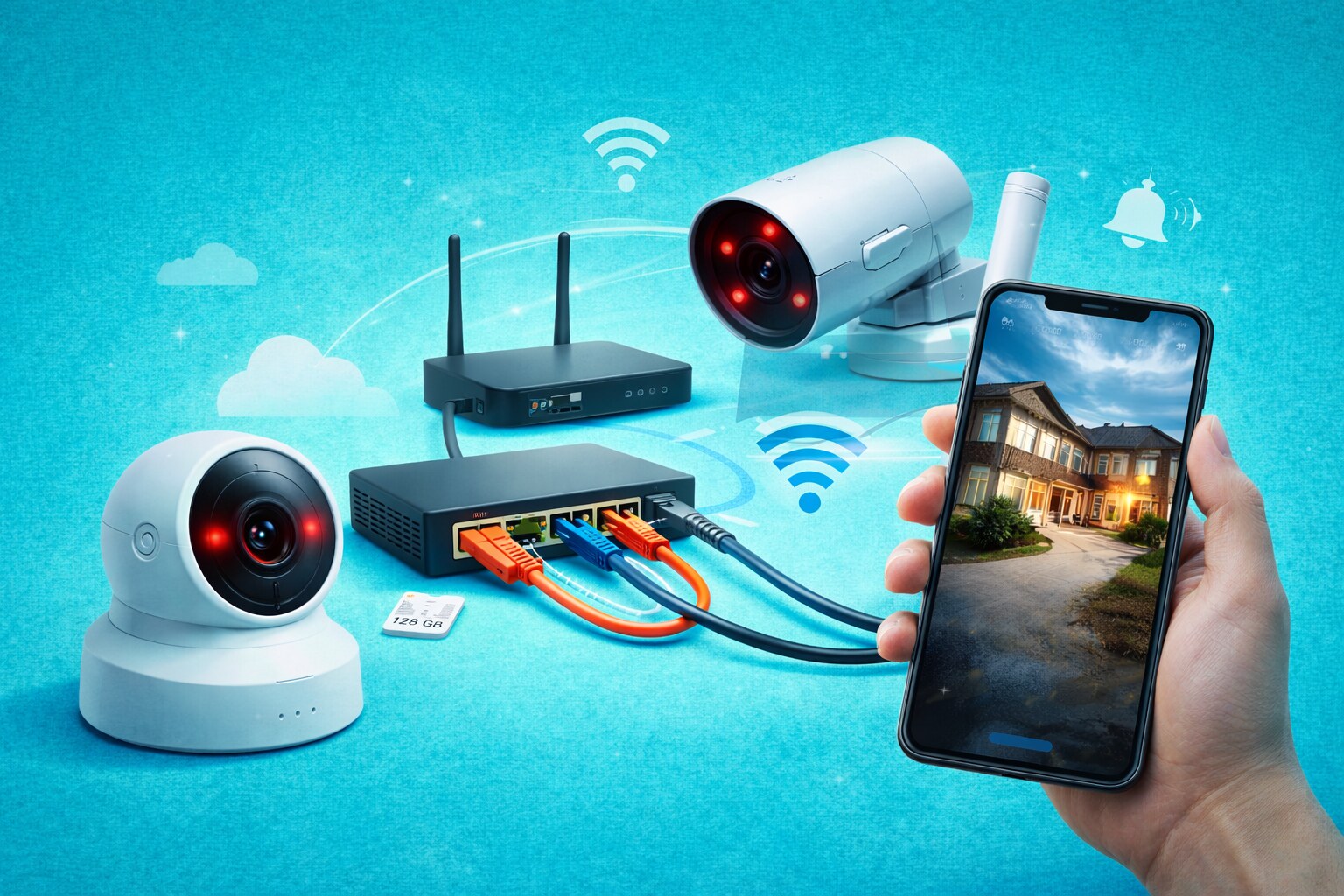
The Different Types of CCTV Cameras
A reliable security system starts with choosing the right CCTV cameras. With the rise in home and business security needs, understanding the types of CCTV cameras available is crucial for making an informed decision. Each camera type has unique features, installation requirements, and ideal use cases.
Let’s explore the different types of CCTV cameras, their benefits, and how to select the best option for your property. With the best cameras, you can enhance security, monitor activities, and ensure peace of mind.
What Are CCTV Cameras?
CCTV (Closed-Circuit Television) cameras are devices that capture video footage for surveillance purposes. Unlike regular cameras, CCTV cameras are designed for continuous monitoring, recording, and sometimes remote access.
These cameras help:
-
Prevent crime – Visible cameras deter potential intruders.
-
Provide evidence – Recorded footage can be used for investigations or legal purposes.
-
Monitor activities – Both homes and businesses can track movements in real-time.
According to Statista, over 70% of households in the Philippines consider CCTV cameras essential for protecting property.
Key Factors to Consider When Choosing a CCTV Camera
There are several factors to consider when choosing the best CCTV camera for your needs.
Determine Your Security Needs
Choose the areas for monitoring, for example, entrances, garages, and areas with less restriction, either inside the house or outside. Depending on your needs, you can buy a camera of the correct type and distance.
Choose the Camera Type
Camera placement, design, and usability aspects can determine whether to use dome, bullet, or PTZ cameras. PTZ cameras do all the movements, covering a larger area, and at the same time, allowing zooming, whereas dome cameras are small and suitable for indoor applications.
Check Resolution
Pick a camera that comes with a very high resolution (1080p, 4K, etc.) so that the pictures and videos taken will be easy to recognize. In case the area under monitoring is large or if small details are targeted, then it is better to choose a higher resolution.
Consider Night Vision and Low-Light Performance
It's important that you have a lot of IR LEDs or extra-sensitive low-light sensors if you're looking for a camera system to function for twenty-four hours a day. Verify the night vision area for your site.
Decide on Connectivity
Wired cameras make sure of stable connections, whereas wireless cameras give the freedom to be installed in a variety of places. The reliability of the network and the options for power supply should be taken into account.
Evaluate Weatherproofing
In case you want to set up cameras outside, then you should always check the IP rating first so that you can be sure that the gear is safeguarded against rain, dust, and very high or very low temperatures.
Plan Storage Options
Choose between local storage (DVR/NVR, microSD) and cloud storage based on the period for which you wish to store the footage and your budget.
Look for Smart Features
For better security coverage and convenience, consider features in your camera like motion detection, mobile alerts, two-way voice, and app control.
Set a Budget
Cost should be considered together with the features you want. Be aware that usually the price goes up with better resolution, enhanced night vision, and smarter functionalities.
Test Before Finalizing
Check the night vision, wide coverage, and image quality the camera offers before purchasing.
Following these steps ensures you pick a CCTV camera that meets your security needs effectively.
Different Types of CCTV Cameras
CCTV cameras come in various forms, each designed for specific applications. Choosing the right type depends on your security goals.
1. Dome Cameras
Dome cameras get their name from their dome-shaped housing. They are usually fixed onto ceilings or walls.
Features:
-
Discreet design that blends with surroundings
-
Wide coverage angles
-
Some models offer infrared night vision
Ideal For: Offices, retail stores, and indoor spaces where discreet monitoring is desired.
2. Bullet Cameras
Wall-mounted, they are cylindrical in shape, a characteristic that makes bullet cameras quite noticeable.
Features:
-
Long-range focus
-
Waterproof and weather-resistant models for outdoor use
-
Infrared night vision for low-light environments
Ideal For: Driveways, entrances, and large outdoor areas.
3. PTZ Cameras (Pan-Tilt-Zoom)
With PTZ cameras, users can control pan-tilt-zoom functions remotely. Thus, they can monitor large spaces freely.
Features:
-
Remote movement control
-
Zoom in on specific events
-
Can track moving objects automatically in advanced models
Ideal For: Large properties, warehouses, and parking lots.
4. IP Cameras
IP cameras are capable of sending their recorded digital picture through a network. They are commonly used together with NVRs (Network Video Recorders).
Features:
-
High-resolution images, up to 4K
-
Remote viewing via apps or web browsers
-
Motion detection alerts and cloud storage options
Ideal For: Smart homes, businesses, and modern security setups.
5. Thermal Cameras
Thermal cameras detect heat signatures rather than relying on visible light.
Features:
-
Detect humans or animals in total darkness
-
Effective in fog, smoke, or harsh weather conditions
-
Ideal for perimeter security
Ideal For: Outdoor security, industrial sites, and sensitive areas with low visibility.
6. Hidden/Spy Cameras
These are made to be discreet, often being disguised as everyday objects like clocks, smoke detectors, or USB chargers.
Features:
-
Compact and inconspicuous
-
Can provide covert monitoring
-
Often wireless for flexible placement
Ideal For: Monitoring nanny activities, office security, or sensitive indoor areas.
Wired vs. Wireless CCTV Cameras
Wired and wireless CCTV cameras have their own unique advantages that depend on the security needs of the area. The physical cables used in wired CCTV cameras allow for data transmission and power reception; they ensure a reliable, ongoing signal and good performance, which makes them ideal for extensive installations or areas where constant surveillance is crucial.
The only drawback is that they have a complicated installation and limited positions due to the wires. On the other hand, Wireless CCTV cameras transmit their video signal through Wi-Fi and are usually powered by batteries or Power over Ethernet, which makes their installation and positioning very easy and flexible.
Wireless cameras are ideal for small spaces, short-term installations, or spots where cabling is difficult. The main drawbacks of wireless cameras are the risk of interruptions in the signal and the hassle of replacing the batteries.
Factors That Affect CCTV Performance
When selecting your CCTV cameras, consider these key factors:
Resolution
High-resolution cameras will provide detailed images, which is very important for the recognition of faces, number plates, etc.
Night Vision
Infrared night vision gives the camera the ability to produce clear videos even in very low-light environments. Some models can detect things as far away as 30 meters in total darkness.
Field of View
A camera that has a larger field of view can cover a wide area but may produce lower-quality pictures of distant objects. Choose a camera that considers both the coverage and the clarity.
Weather Resistance
Outdoor cameras should have an IP66 to IP67 rating to withstand both rain, dust, and extreme temperatures.
Smart Features
The latest security cameras come with features such as motion detection and AI-assisted notifications, and they let you operate all these activities smoothly through your smartphone app.
How to Choose the Right CCTV Camera for Your Property
-
Assess Your Security Needs – Identify high-risk areas that require monitoring.
-
Determine Indoor or Outdoor Use – Choose weather-resistant cameras for outdoor placement.
-
Decide on Wired or Wireless – Consider convenience, installation complexity, and signal stability.
-
Check Resolution and Night Vision – Ensure clarity for both day and night conditions.
-
Consider Smart Features – Remote access, AI detection, and mobile alerts enhance monitoring.
By evaluating these factors, you can select the best CCTV cameras that meet your security requirements.
Maintenance Tips for CCTV Cameras
Here are some essential maintenance tips to keep your CCTV cameras functioning properly and extend their lifespan:
-
Clean the Lenses Regularly – Dust, dirt, and smudges can reduce image clarity. Use a soft, dry cloth or lens-cleaning solution to keep lenses clean.
-
Check Camera Positioning – Ensure cameras are still aimed correctly and haven’t been moved by wind, tampering, or accidental bumps. Adjust angles as needed for optimal coverage.
-
Inspect Cables and Connections – For wired cameras, check power and data cables for wear, fraying, or loose connections. For wireless cameras, ensure Wi-Fi signals remain strong.
-
Test Night Vision – Regularly test infrared or low-light performance to make sure night vision is functioning correctly. Replace any malfunctioning IR LEDs promptly.
-
Update Firmware – Keep camera firmware up to date to fix bugs, improve performance, and maintain security against potential cyber threats.
-
Check Storage and Recording – Monitor DVR/NVR or cloud storage to ensure recordings are saving correctly. Clear old footage if storage is full and back up important clips.
-
Protect Against Weather – For outdoor cameras, ensure housings remain intact and waterproof. Trim nearby branches or obstacles that could block the view.
-
Regular System Tests – Periodically review live feeds and playback footage to verify all cameras are recording properly and motion detection alerts are working.
Consistent maintenance ensures your CCTV system remains reliable, delivers clear footage, and provides effective security at all times.
Conclusion
Understanding the types of CCTV cameras is essential for creating a comprehensive security system. From dome and bullet cameras to advanced IP and thermal cameras, each type serves a specific purpose.
With VIGI Philippines, you can access high-quality CCTV cameras equipped with the latest features like HD resolution, night vision, motion detection, and mobile app access. Choosing the right cameras ensures your property is monitored effectively, giving you peace of mind.
Explore the full range of VIGI CCTV cameras for homes and businesses today!
Full‑Color Pan‑Tilt 4 MP Camera: Excellent all-around outdoor camera with pan/tilt movement for broader coverage, full-color video day and night, and smart detection features.
VIGI C250 Security Camera: This is a solid 5 MP dome camera with full-color imaging, smart detection, built-in audio, and strong weather protection (IP67).
VIGI C340I Outdoor Bullet Camera: Great outdoor bullet camera option with 4 MP resolution, human/vehicle classification, night vision, and an IP67 waterproof rating.
FAQs About the Different Types of CCTV Cameras
1. What are the main types of CCTV cameras?
Dome cameras, bullet cameras, PTZ (pan-tilt-zoom) cameras, Wi-Fi cameras, and night vision cameras are the five main categories. Each one with its specified surroundings and function, such as indoor or outdoor surveillance or even long-distance coverage.
2. What is the difference between dome and bullet CCTV cameras?
Dome cameras are suitable for indoor surveillance and are usually mounted on ceilings. Bullet cameras are cylindrical, very noticeable and best for monitoring over long distances outdoors. Bullet cameras serve as a warning to potential intruders.
3. How do PTZ cameras work?
PTZ cameras provide remote operation that includes panning, tilting, and zooming; they are able to efficiently cover large areas. They can follow the movement automatically, which makes them perfect for watching over large areas like gardens, parking lots, and storage places.
4. Are Wi-Fi CCTV cameras reliable for home security?
Yes. Wi-Fi cameras provide flexibility in installation and allow remote monitoring via mobile apps. They are perfect for homes, apartments, or properties where running cables is difficult. However, stable internet is required for optimal performance.
5. What are night vision CCTV cameras?
Night vision cameras are equipped with either infrared LEDs or low-light detectors that allow them to record even in very dim or totally dark environments. These cameras find perfect application in outdoor surveillance and security during the night.